Getting a Jump on Your Spring Garden
How to wind down your vegetable patch this autumn and prime it to provide plentiful produce next season.
If you’re a vegetable gardener, you’re likely still reaping the rewards. Tomatoes, greens, root vegetables and some herbs are still going strong in early fall. But once your crops begin to peter out, don’t retire your garden tools. Planning for future growth starts now, says Mark Gorski, owner of Erin-based Gourmet Garden Organics, a company that, among an array of services, creates vegetable gardens for clients. “Preparing your beds in the fall means you don’t have to wait for the weather to co-operate to start planting when the soil warms up in spring.”
Fall is the prime time to get your soil in shape, dabble in seed collection, plant some of next year’s crops and map out a garden expansion.
The final harvest and seed collecting
If you’ve planted carrots, beets, parsnips, turnips, kale and cabbages, you’ll know they can thrive into October and November. “The flavour of these vegetables can actually improve after a hard frost,” says Gorski. “But once temperatures consistently drop more than a few degrees below freezing, start pulling everything and empty your garden.”
One step to consider before yanking everything: collecting seeds or allowing some plants to self-seed. He says this practice can be as simple as letting dill plants flower and reseed themselves, or as complicated as hand-pollinating and tying squash flowers closed to ensure they don’t cross with another variety. “Pumpkins and squash have a propensity to cross-pollinate among themselves, so there is a decent chance the seed you get will not be true to the parent fruit,” he says. “I saved seeds from a giant pumpkin. The next year they’d crossed with a French Cinderella. I had several 40- to 70-pound Cinderella-type pumpkins.”
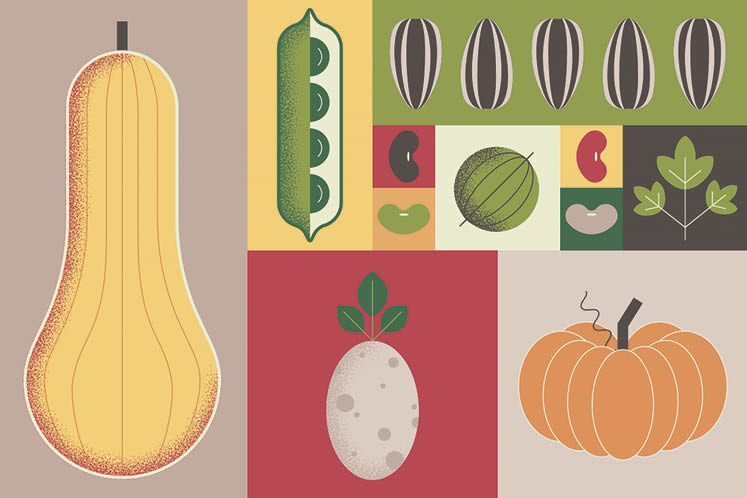
The seeds of some varieties of plants aren’t commercially available, he adds. “Saving and sharing seeds helps maintain a wide genetic diversity within plant types. If collecting is something you want to explore, find a local seed library that will have resources to get you started.”
Potatoes are more commonly grown by planting pieces of harvested tubers, but you can also collect seeds. “They actually will produce a fruit from seeds, but with those seeds, there is no guarantee of the next generation being true to the parent.”
Some other seeds and seed pods to stash for spring include cilantro pods, peppers, tomatoes, sunflowers and peas.
Expanding the garden
As you plan the next version of your garden, Gorski suggests making note of where everything was planted previously so you can rotate plant locations. This helps curtail diseases lurking in the soil and maintain steady nutrient levels.
And if you’re thinking of making your plot bigger, this is the time to do it. “I do the majority of garden construction in autumn because the ground is drier and easier to work with,” he says. “In most cases, you can complete the expansion of your garden footprint or build additional raised beds.” You’ve also just finished a growing season, so you have a more realistic idea of how much more garden you can maintain.
If you don’t already grow garlic, it’s a crop you might consider including in a garden expansion – and September is garlic-planting season, says Gavin Dandy, executive director of Everdale, a teaching farm near Hillsburgh. Garlic bulbs are hardy enough to survive the cold and send up shoots in early spring. Just drop individual cloves into your plot. Greens like spinach, mesclun mix and lettuces can also be planted. Expect to see these greens growing by April and ready to harvest by mid-May.
Enriching soil quality
Once your garden is cleared and cleaned of weeds and debris, or you’ve plotted out a new patch, turn your attention to giving your soil a boost. One way is to add a generous layer of compost or composted manure. Doing this in the fall allows the material time to break down and integrate into the soil. A second method involves planting grass cover crops, a step you can begin as soon as you’ve cleared larger sections of your garden.


“Having grass instead of bare soil in your garden over the winter helps protect microorganisms,” says Dandy. “Grass crops help shield against a wild swing in seasonal temperatures, and they slow bacteria growth. I like to describe it as dressing your soil in a light hoodie.”
He recommends planting oats or fall rye. Oats need to be seeded earlier – up until mid-September. The growth dies off in the winter, but still provides protection for your beds. Fall rye can be planted later, germinates well in the cold, and continues to flourish well into spring, when it can be turned under to serve as “green manure” to jumpstart next season’s garden.
“You can plant grass crops incrementally as the garden empties out or you can do it all at once when your patch is totally clear,” he says. “This is a smart, low-stress way to improve soil.”
Related Stories

Tree Talk
No matter what your goal – adding shade and beauty to your property, attracting wildlife or fighting climate change – planting more trees is a good idea.

Compost Confidential
The art and science of breaking down kitchen and yard waste to create your own blend of nutrient-rich natural fertilizer.
Goodnight Trees, Goodnight Garden
The latest thinking in garden and lawn cleanup is all about doing a little less – which in turn does a lot more for pollinators, birds and your soil.

Winter Preparedness for Rural Homes
How to prep your home, car – and psyche – for winter storm season and its inevitable hydro outages.