Snowy Owl Rescue
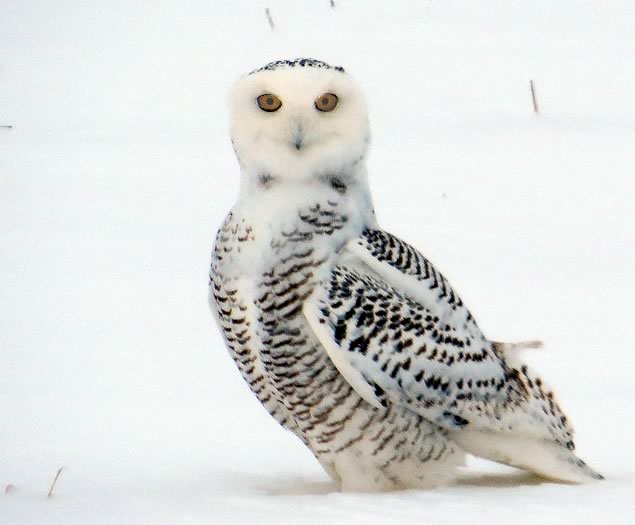
The winter of 2013-14 has seen a “the largest movement of snowy owls in four or five decades” into southern Canada and the United States.
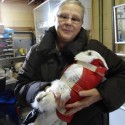
Bill and Sharon Rowe were travelling north to their home in Honeywood in early February when they noticed “something white” on the side of A Line just west of Orangeville.
The white “something” turned out to be an owl. Though dazed, and bleeding from a head injury, it was still very much alive. Now Bill and Sharon faced a dilemma – just what does one do with an injured snowy owl?
Well, for starters, take it home in the trunk of your car. Then make calls to find someone willing to care for it. In the meantime deal with an increasingly agitated bundle of feathered fury. As Bill related, the owl was all “piss and vinegar.” It clicked its beak menacingly when the trunk was opened.
The owl’s welfare became a family affair. Bill and Sharon enlisted the aid of their grown children. Their four-year-old granddaughter Natalie solemnly pledged she would pray for the owl.
The Owl Foundation in Vineland came to the rescue. Bill and Sharon were advised to put the owl in a box, which would offer it a sense of security. They then made the two-hour drive to Vineland.
At the Owl Foundation they met a biologist named Annick Rollick. Annick’s five-year-old son promptly christened the owl “Lightning” after “Lightning McQueen,” a talking racing car from the Pixar animated films, Cars and Cars 2.
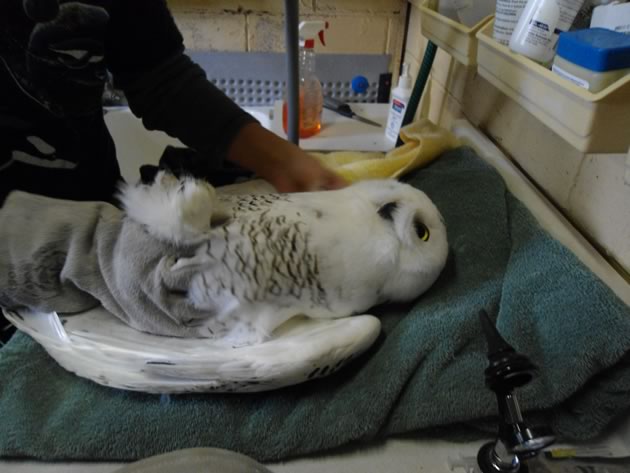
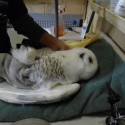
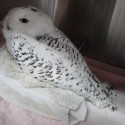
Lightning In Intensive Care. Photo by Bill and Sharon Rowe.
Lightning is now in intensive care at the Owl Foundation. He (Lightning is a two-year-old male) is being treated for head trauma. His eventual release will depend on whether a damaged right eye will recover sufficiently so that he can capture prey on his own.
Lightning is one of 17 snowy owls that the Owl Foundation has received this year, much greater than the average of about three per year. Most of the 17, like Lightning, are automobile casualties.
The winter of 2013-14 has seen a “the largest irruption [movement] of snowy owls in four or five decades” into southern Canada and the United States, according to Project Snowstorm.
Researchers believe this irruption has been fuelled by remarkable numbers of lemmings, plump little rodents that snowy owls feast on and ultimately convert into more snowy owls. The adult owls tend to stay in the Arctic. It is the youngsters that are visiting us this winter.
Many of these young birds suffer misadventures with automobiles or power lines, and never return north. Some, like Lightning, are fortunate. They are rescued by caring folks like the Rowes and given a second chance at life. Lightning, on a wing and a prayer, may just make it.
- Snowy Owls
- The Owl Foundation in Vineland
- Project Snowstorm
- See snowy owls at the Tundra Trek display at the Toronto Zoo
- Listen to their call and hoots on the Cornell Lab of Ornithology web site
- Learn more about the snowy owl on the Nature Conservancy of Canada web site
Related Stories