
Night Creatures
Most of the nocturnal critters my friends and I find are insects, but spiders, millipedes and amphibians also appear in our flashlight beams.
Joy for me at this time of year comes from many sources. The turning of the leaves, the brilliant autumnal days, the restful cadence of cricket voices.
Most of us know the appeal of those things. But being a rather eccentric soul, I also find joy in early autumn by searching for small animals after dark. I first wrote about this unusual pastime in a 2017 blog called “Night Hikes”.
Most of the nocturnal critters my friends and I find are insects, but spiders, millipedes and amphibians also appear in our flashlight beams.
This is a time of feverish activity for hungry caterpillars. A race against time to grow large enough to pupate before a hard frost. Katydids, walking sticks and preying mantids are engaged in the equally time-sensitive drive to reproduce.
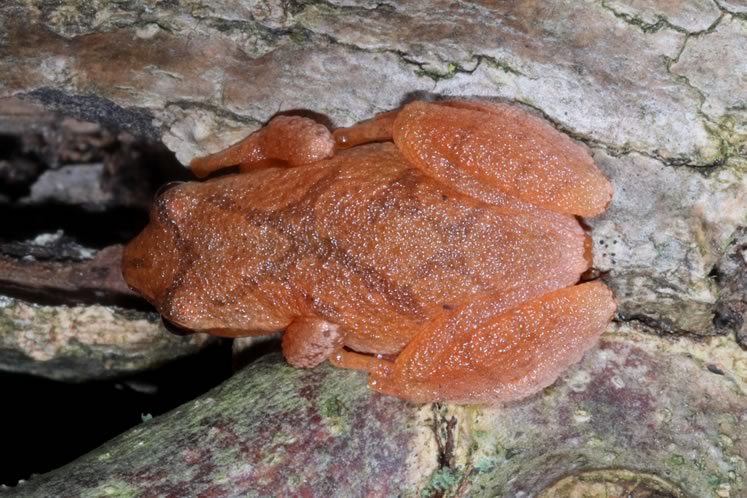
Spring peeper
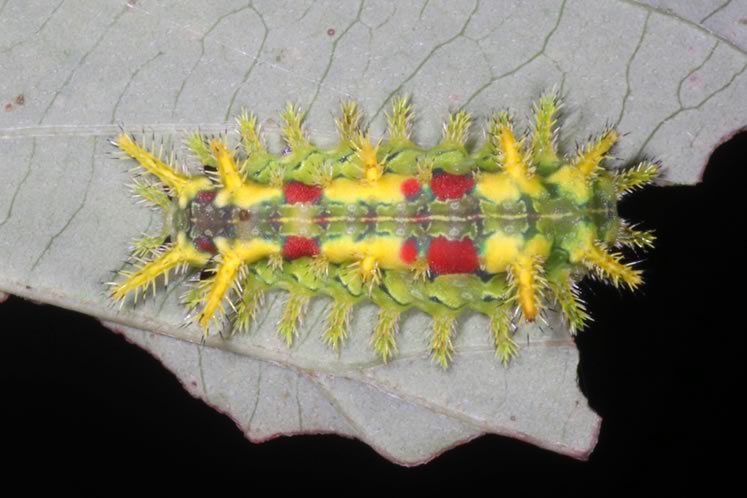
Spiny oak slug caterpillar
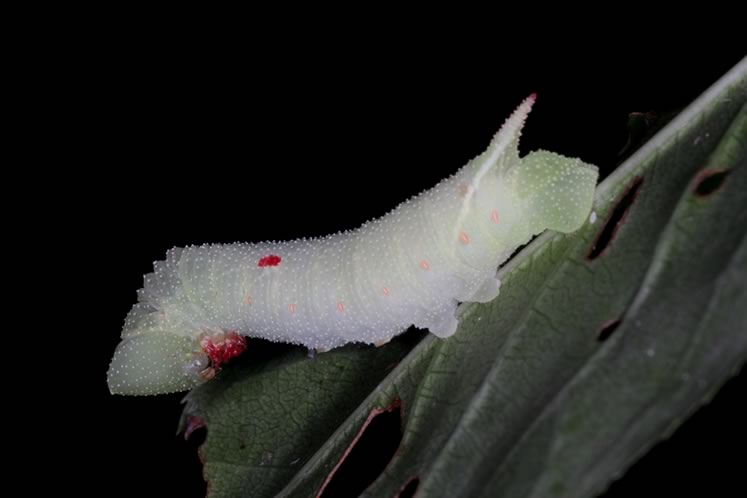
Small eyed sphinx moth caterpillar
And though the nocturnal activity of these invertebrates protects them from birds, they are still hunted by amphibians like spring peepers and gray treefrogs, intent on fattening themselves prior to their long winter torpor.
This fall I’ve employed a UV flashlight to assist my searches. In its beam many caterpillars and spiders fluoresce. They “pop” out from the background vegetation. This has enhanced my rate of discovery. Fascinating creatures I may have otherwise missed announce their presence.


Among the menagerie of night creatures are the diverse and beautiful tree crickets. They live in woodlands but also in suburban yards. Along with the large black crickets familiar to everyone, these tree crickets serenade us with chirps and trills on warm evenings.
Beetles, the most diverse group of insects on Earth, are also frequently encountered after dark. A new one for me this year was the aptly named calligraphic beetle, a ladybug-sized insect with whimsical markings on its carapace.
Nightfall summons a cast of exquisite creatures to nature’s stage. They await discovery by anyone with a dollop of curiosity and a discerning eye.
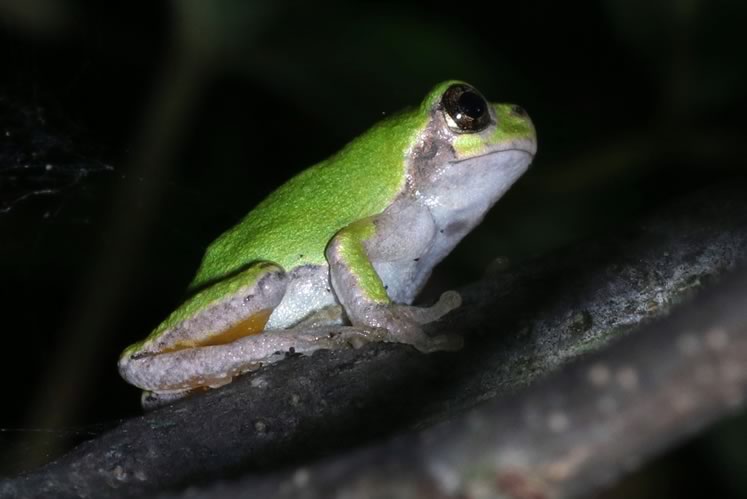
Gray treefrog
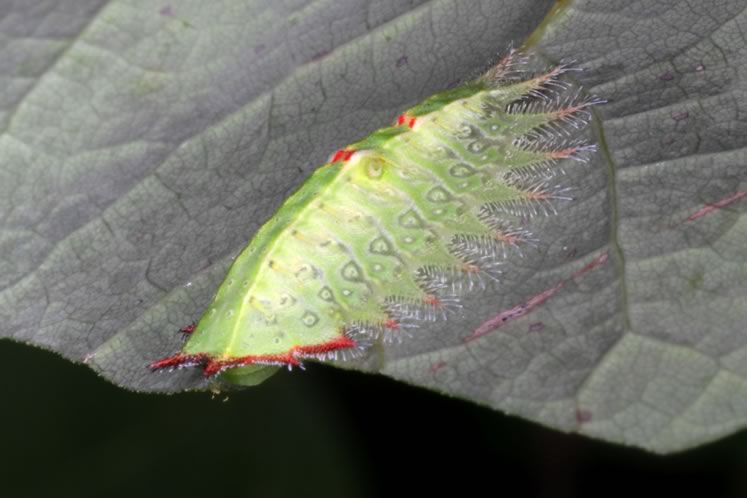
Crowned slug moth caterpillar
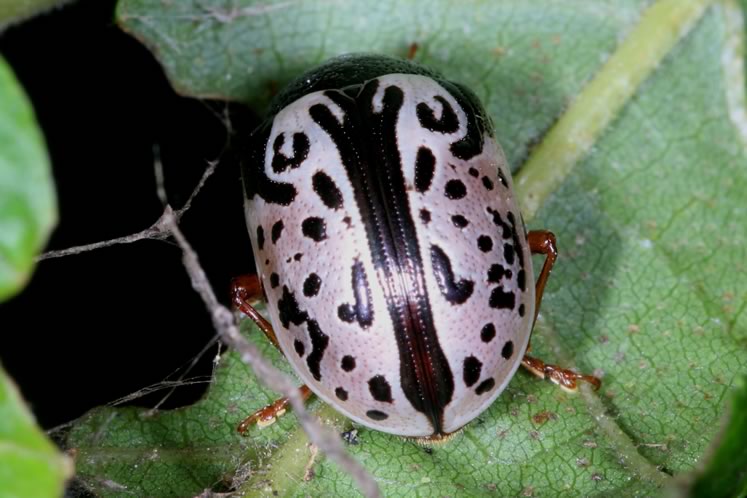
Caligraphic beetle
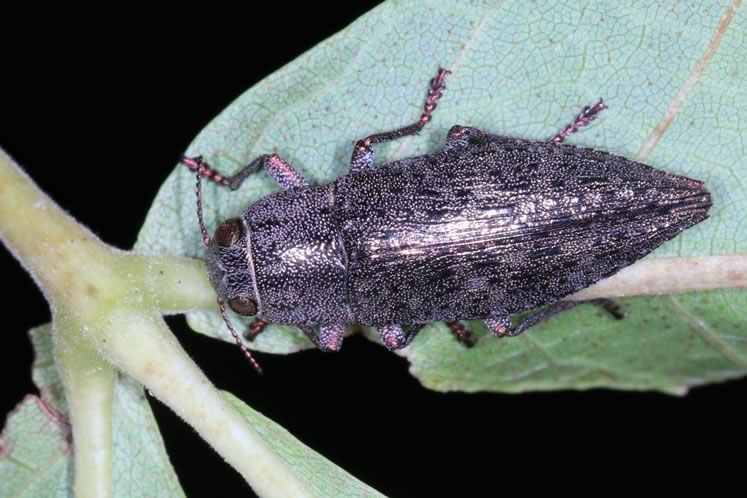
A borer beetle
Related Stories
Benthic Invertebrates
The abundance of these aquatic larvae in our streams and rivers is a good thing.
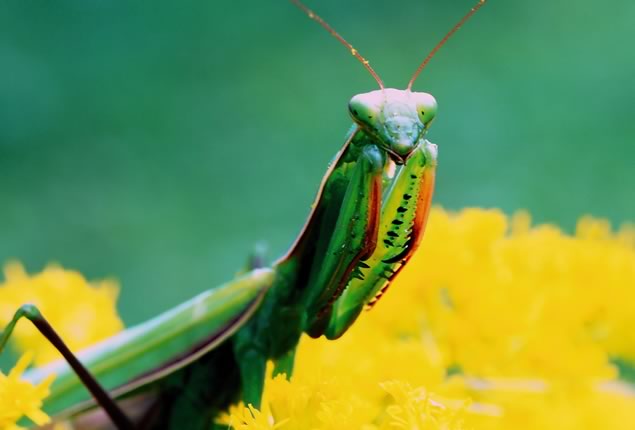
Exotic Species aka Mantis and Honeybee
What has our impact been on native North American wildlife? I think we know the answer to that.
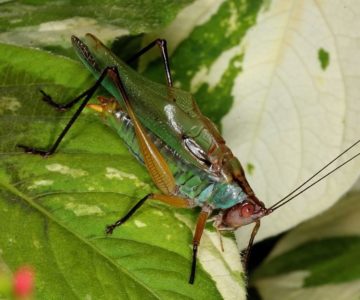
Katydids
Katydids are seldom seen, because they camouflage so well with greenery.
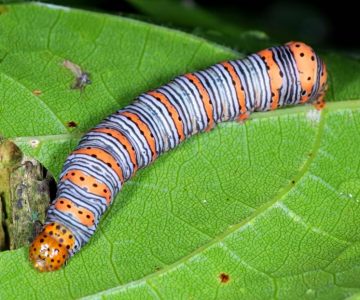
Night Hikes
Night Hikes – A purposeful walk along a path, playing a flashlight over leaves, branches and trunks will reveal wonders.
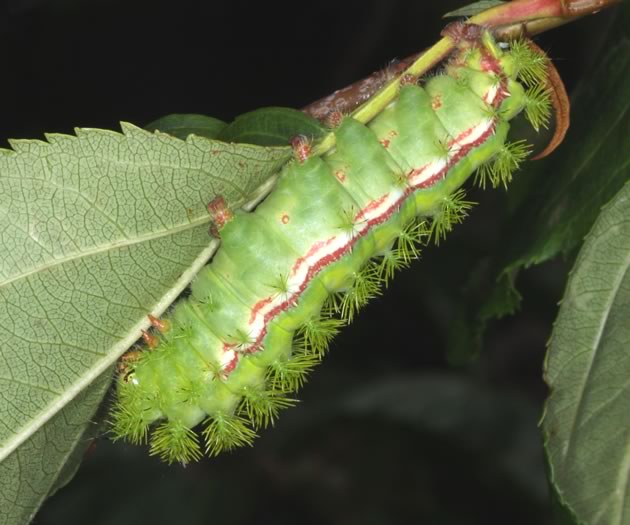
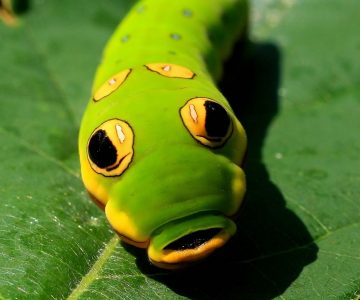
Spicebush Swallowtail Caterpillar
I’ve written about our remarkable caterpillars before, but so many interesting ones inhabit our hills that another look is warranted.