
Moths of the Limberlost
These furry little moths sporting tiny faces with big eyes are delightful companions in the garden.
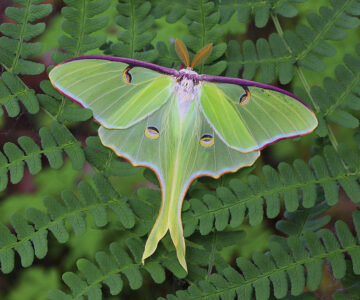
Gene Stratton-Porter’s Moths of the Limberlost was published in 1912. In it she waxes poetic about her childhood adventures with the beautiful moths that she encountered on her rural property in Indiana – moths like luna, cecropia and polyphemus.
I love Gene Statton-Porter’s nature writing. It brims with joy and passion in a bygone style now considered quaint and unscientific. She captures the wonder of discovery that all of us felt when we were new to this world, when everything was fresh and surprising.
One delightful story recounts her first experiences with day-flying, white-lined sphinx moths that sipped nectar from the flowers around her rural home. Breathless, she announced her observations to her father, who confidently identified the moths as tiny birds – smaller even than hummingbirds. Her dad called them “lady birds.”
This identification, backed up by her mother, didn’t sit well with Gene. She watched the curious creatures carefully, noted their lack of beaks and tails, and then captured one. Carefully holding it by the wings, she counted six legs and triumphantly announced to her parents that it was a moth, not a bird.
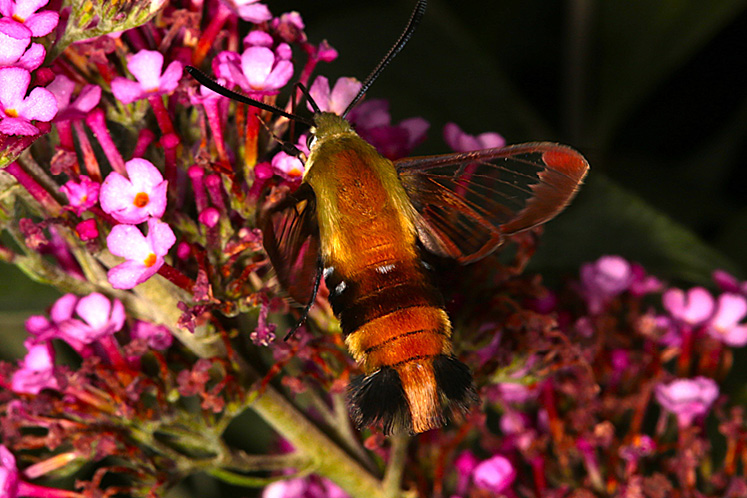
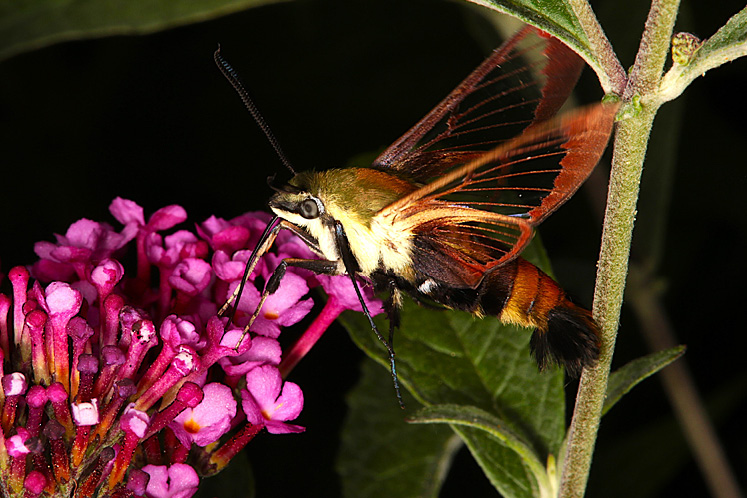
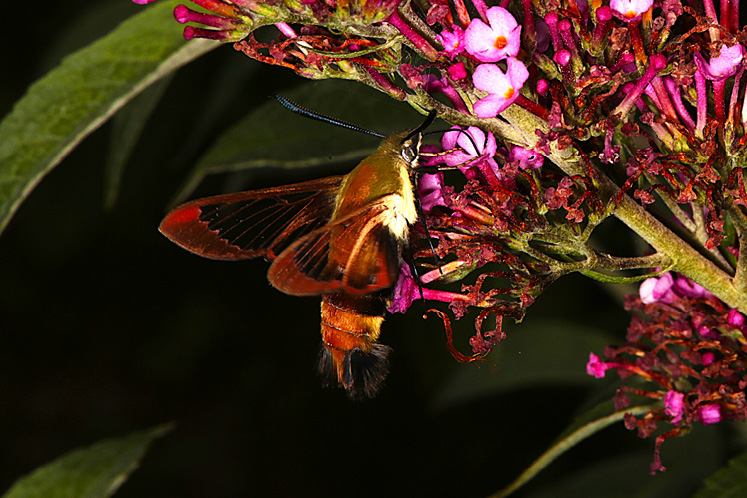
In another story, Gene writes about hummingbird moths, another species that flies during the day. In early August as I write this, these lovely little moths are visiting a butterfly bush in my front yard.
Like “lady birds,” hummingbird moths uncoil long tongues to sip nectar as they hover in front of blossoms. Here’s what Gene wrote about these sprites: “Talk about exquisite creatures! These little day moths, not much larger than the largest bumblebees, had some of their gaudiest competitors of moonlight and darkness outdone.”
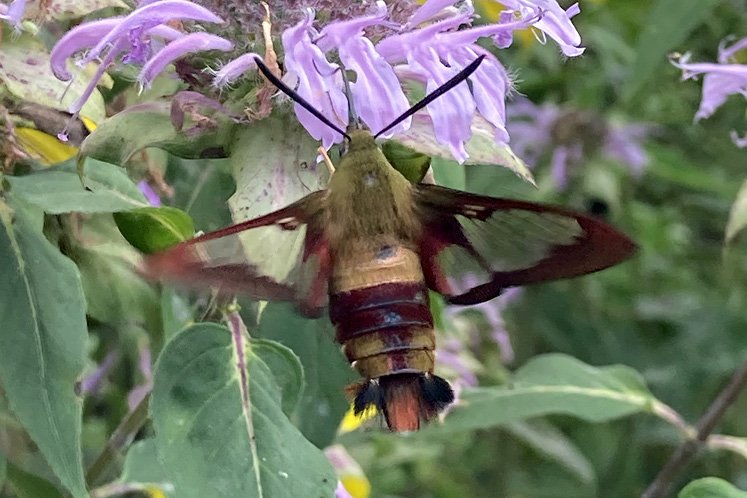
I understand Gene’s enthusiasm. These furry little moths, cloaked in olive, orange and black and carried aloft on transparent wings, are stunning. And their little faces and big eyes – to lean in Gene’s direction for a moment – are delightfully cute.
If you enjoy nature writing dripping with childlike wonder, I highly recommend Moths of the Limberlost.
Related Stories

Life in the Milkweed Patch
A milkweed patch thrums with life, full of moths, spiders, butterflies, amphibians and more.
If the Greenbelt Gives Way to Sprawl, Seven Headwaters Species Will Suffer
You may not know some of these magnificent species but they are our precious, fragile neighbours that cannot survive in a subdivision.
Transforming Turf into a Meadow Ecosystem
From a swath of turf grass came a thriving meadow ecosystem full of wild flowers, pollinators and biodiversity.
Promethea Moths
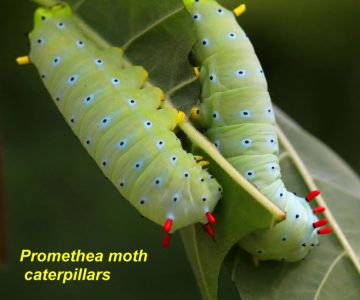
While most moths release their pheromones after dusk, promethea moth females are an exception.