
Letters – Our Readers Write: Autumn 2024
Want to share your thoughts or insights about our stories? Drop us a line – we love to hear from our readers!
Still Iain
Thank you to writer Gail Grant and photographer Rosemary Hasner for the very moving and informative article on Iain and Jane Richmond and their journey with Alzheimer’s disease [“Still Iain” summer ’24]. When my wife and I moved to Orangeville in 1971 so I could begin my teaching career at Orangeville District Secondary School, Iain, as a drama and English teacher, became a mentor and good friend. He and Jane were exceptional hosts, and ensured that my wife, Trish, and I felt welcomed and included in the community.

During those years at ODSS, Iain and I collaborated on a couple of musical productions (You’re a Good Man, Charlie Brown and The Wizard of Oz). His leadership and patience with cast and crew were enviable. His natural ability to encourage and bring out the best in his students was evidenced by the affection students had for him.
Sometime in the late 1970s or ’80s, Iain and I played Oscar Madison and Felix Unger respectively in a Shelburne Little Theatre production of The Odd Couple. The reviews weren’t sensational, but the rehearsals and performances were.
Gail Grant’s description of Alzheimer’s disease, and Jane Richmond’s comments on the role of the caregiver, emphasize how much work needs to be done both for those suffering from the disease and those who care for them. Jane’s sentence, “[Iain] is still the easygoing, gentle soul he always was” is belied by the work she does to sustain that state.
I wish them both well. The photograph of Jane and Iain was wonderful – who would guess what they were experiencing? They are fortunate, as Jane says, to have family and community to support them.
— Rick Chambers, Waterloo
I read with much interest, and some sadness, Gail Grant’s article “Still Iain.”
Iain Richmond was my beloved English teacher at ODSS back in the 1970s. He taught with compassion, humour and insight. He directed me in the school musical You’re a Good Man, Charlie Brown. I remember, as a bussed student from Palgrave, that he and Jane would occasionally have me to their home for dinner. It made the hours from school dismissal to rehearsal time much more bearable. They were so very kind.
As a result of Gail’s article, I contacted Jane and arranged a visit with them both. It was a delightful afternoon. Iain was in fine form. Despite his diagnosis, he was charming, interested and full of fun.
The article further resonated with me as my own husband, Glenn, was diagnosed with Alzheimer’s in 2023, and we are currently navigating the same journey. Like Jane and Iain, we are taking it one day at a time. It is very hard watching a loved one’s world get smaller. Community support, as mentioned in the article, is important and necessary, especially for caregivers.
— Martha Wheelwright Griffin, Caledon
As a longtime reader of In the Hills, I was touched by the article “Still Iain” [summer ’24). I am so inspired when families share their stories, as vulnerable as this must feel. I appreciate the challenges Jane and Iain faced, yet the wonderful supports they were able to engage. It is a terrifying, stressful and exhausting time for everyone, including the patient.
In 2019, I joined the national board of the Women’s Brain Health Initiative after learning that, until 2012, there was no gender-specific research, meaning that any diagnosis for women was based on research conducted on male rodents.
Did you know?
• Approximately 70 per cent of Alzheimer’s sufferers are women?
• Women are twice as likely as men to suffer from depression, stress, and anxiety?
• Up to 40 per cent of all cases of dementia can be avoided or delayed if we make ongoing healthy lifestyle choices?
Check out wbhi.org, where you will find a wealth of resources, including our groundbreaking Brainable program, aimed at educating young minds about the importance of brain health, including the harmful effects of excess social media and tips on preserving mental wellness, upcoming events and our online magazine, MOM (Mind Over Matter), that can also be ordered in hard copy. There is so much to learn, and it starts with education and communication. After all, our brain matters.
— Brenda Dee, Singhampton (former proud chair of Family Transition Place and Mono resident for 27 years)
EDITOR’S NOTE
We received letters from readers who expressed disappointment the article did not deal with certain treatments advanced as having the potential to stop or reverse Alzheimer’s and other forms of dementia, particularly treatments related to genetic and diet-related factors. Notably mentioned were the Bredesen Protocol and research by scientists Dr. Georgia Ede, Dr. Mary Newport and Dr. Anthony Chaffee. However, it was outside the scope of the article to assess the merits of such treatments, particularly since they have not been proven by comprehensive clinical studies or, as in the case of the Bredesen Protocol, not endorsed by the Alzheimer Society of Canada.
Nevertheless, although there is currently no cure for Alzheimer’s, some anecdotal evidence is encouraging, and the field of brain health is rapidly advancing with regard to genetic, dietary and lifestyle factors. The Mayo Clinic, for example, has reported connections between Alzheimer’s and a gene variant that causes insulin resistance, referred to as Type 3 diabetes. As Headwaters-based gerontologist Kiddy Klair advised in the article, it is important to keep up to date on brain health research published by reputable journals. The Alzheimer Society of Canada website includes a page offering tips for finding reliable dementia health information (alzheimer.ca).
Pity the poor spider
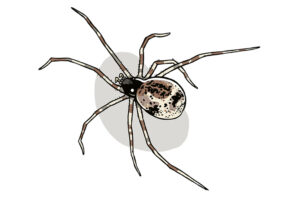
I read Anthony Jenkins’ article “Bugged!” [summer ’24] with interest. Just the right amount of information to not give me the creeps and well illustrated. I do have a question for him though.
In the article, he says a common house spider is “most happy indoors where it remains warm and safe…” I’ve been taking them outdoors and releasing them, believing they would become trapped in the house and I was making them happy by putting them outside. Evidently I was wrong. Would Mr. Jenkins let me know what I should be doing instead of taking them outside? I have no desire to have them crawling over me, but don’t want to be mean to them either. All help appreciated.
— Dorothy Pedersen, Orangeville
ANTHONY JENKINS RESPONDS
See this from the National Wildlife Federation website: “Common house spiders will live just about anywhere. They can be seen in gardens, backyards, basements, attics, barns, sheds and any other type of man-made structure.” Kim van Oosterom, who was interviewed in the article, had this to add: “House spiders also live near human dwellings, so putting them outside is fine. I’ve seen them out in our woods, so they can also live ‘rough.’ They might make their way back inside though! I’d be loath to put them out in the winter, as I wouldn’t want them to freeze.”
Life jackets?
I think the photo promoting the Island Lake Bass Fishing Derby is irresponsible [“Field Notes” summer ’24]. Three guys standing in a small aluminum boat and not a life jacket in sight.
— Brent Binkley
EDITOR’S NOTE
The writer has a point. Caution might dictate that life jackets be worn at all times. However, provincial regulations require only that a life jacket for each passenger be available in the boat. We’re sure they are in this photo supplied by Credit Valley Conservation.
CORRECTION
In “Roadside Attractions” [summer ’24], a photo caption identified two plants as chicory and yellow hawksbeard. In fact, the plant with the yellow flowers is sow thistle.
Related Stories

Still Iain
When Iain Richmond was diagnosed with Alzheimer’s disease, everything changed for him and his wife, except their commitment to face it together.

Bugged!
Insects and their kith are essential to life on earth – but that doesn’t mean we want to share our houses with them. Here’s a closer look at some of our unwanted house guests and how to politely usher them out.

Roadside Attractions
Each year our roadside verges erupt in a bloom of wildflowers, only to be leveled by municipal mowers. Is there a better way to manage these habitats?

Field Notes for Summer 2024
Jump into the swing of summer with a fishing derby, archery competition, and outdoor concerts.