Explainer: Why Is Controversy Swirling Around Caledon’s ‘Swan Lake’?
While activists and their allies fight to protect a body of water at a rehabilitated gravel pit, the Town of Caledon is considering new bylaws that could alter future land use regulations.
A proposal to fill a 44-acre body of water on a former gravel pit with soil trucked in from construction sites is the focus of a heated debate in Caledon.
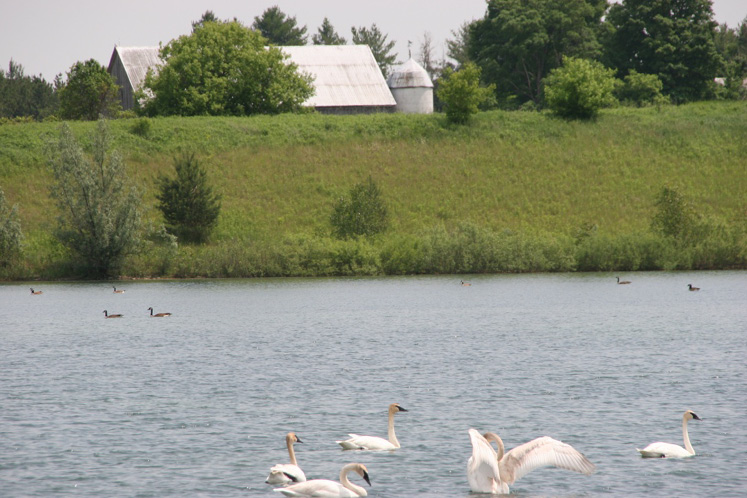
A loose coalition of councillors, residents and activists opposes filling the pond. Since its rehabilitation in 2023, the pit has become known to neighbouring property owners as “Swan Lake,” named for the trumpeter swans that now call it home. Meanwhile, a new Town of Caledon bylaw proposal could alter how private land in Caledon, including pits, is regulated in the future, potentially setting the stage for more battles of this kind.
In Caledon there are more than 20 licensed active aggregate pits and quarries. Elsewhere in Headwaters, Concord-based Strada Aggregates recently applied for a licence to quarry below the water table of their 360-acre sand and gravel pit in Melancthon. Residents and local activist groups there have drawn attention to the risk of damage to the water table, air quality and endangered species.
How did “Swan Lake” go from a pond on a gravel pit to a hot political issue?
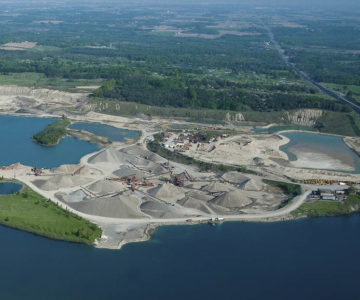
The body of water sits in the middle of a decommissioned gravel pit at the southeast corner of Shaws Creek Road and Charleston Sideroad. The pit was mined for aggregate until 2023 by Warren Paving & Materials Group Limited, a subsidiary of Calgary-based Lafarge Canada Inc., and then rehabilitated. Today, according to Town of Caledon documents, the lot is 80 per cent water, 15 per cent grassland and 5 per cent woodland.
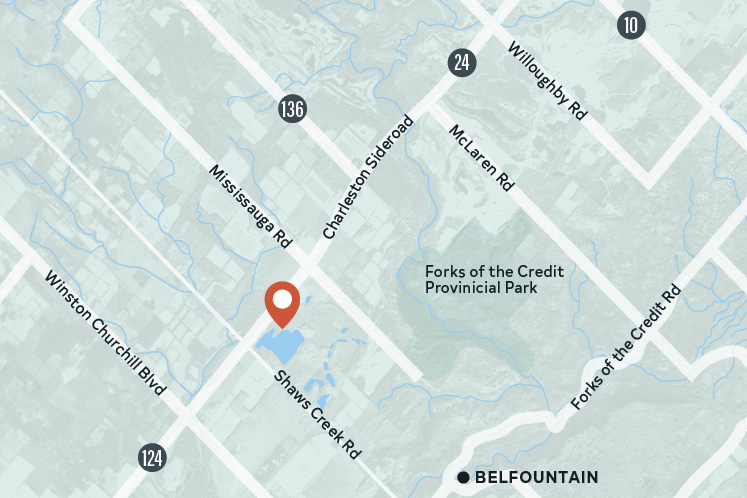
At a Town of Caledon planning and development committee meeting on May 13, Mayor Annette Groves brought forward a motion on behalf of the current owner, an unnamed “prominent developer” – now known to be Calvalley Farms Ltd – about “rehabilitating an old aggregate pit located on the property with fill created from their development sites across Caledon and the Greater Toronto Area.” The proposal directs the town’s director of engineering to enter into a grading agreement to import fill to the lot.
What was the response in council?
When it was brought to the May 20 council meeting, four councillors supported the motion, while four councillors opposed it, including Councillor Dave Sheen, who questioned the application and approval procedures. Groves broke the tie and the motion carried five to four. Sheen also asked why the mayor brought the motion forward rather than the landowner. Seven delegates at the council meeting also raised concerns about a significant increase in truck traffic and environmental degradation.
Sheen also said staff are working in a “strong mayor power environment” where there is an “enormous pressure on staff to give the mayor what she wants.” On September 23, Caledon integrity commissioner, David Boghosian, found that Sheen’s comments breached the town’s code of conduct and suspended his pay for 15 days. The councillor was also ordered to publicly apologize to two other staff members who attended the May 20 meeting.
Who is fighting for “Swan Lake”?
Local advocacy group Democracy Caledon strongly opposes the infilling plan, arguing that the rehabilitated ecosystem now supports thriving wildlife, such as snapping turtles, painted turtles, ducks, geese and the trumpeter swans. The group also contends that the fill, which opponents refer to as construction waste, could contaminate the groundwater, and compromise drinking water quality and safety.
“There probably is a right place for fill – but this project that they’ve embarked upon will put fill directly into a groundwater-fed lake that is connected to the wells of surrounding residents,” says Inglewood resident Keirstyn Parfitt, who started the Instagram page CaledonSwanLake. Parfitt fears that if the bylaws are changed to allow large-scale commercial fill operations, “Caledon is going to be used as a construction fill dumping ground.”
Nearby property owners, including Jean-Francois Morin and Jennifer Casu-Morin of Chickadee Hill Farm, located directly on the southwest border of the lot; Anna de Langley of Belain Farm; and Gail and Phil Winters of GoodLot Farm & Farmstead Brewing Co., are also opposed, and have supported awareness efforts and events. An online petition started by de Langley, “Save Swan Lake,” had more than 3,500 signatures as of early October. Caledon residents continue to attend council meetings in significant numbers to voice opposition.
What does the owner of the former gravel pit property say?
Calvalley owner Nick Cortellucci told the CBC in September that the company plans to further “rehabilitate” the property by bringing in clean, inspected soil from elsewhere in Caledon, and said that concerns are “unwarranted.” Calvalley’s interests also include the Brookvalley subdivision, located south of Old School Road in Caledon which they proposed to town council in January.
Are Caledon’s bylaws clear on the topic of fill and rehabilitation?
It’s complicated. The Town of Caledon’s current bylaw regulates the placing or dumping of fill, the storage and removal of topsoil, and the alteration of the grade of the land. In a social media post in July, Mayor Groves stated that the current bylaw does not apply to the lot because the current zoning regulations only apply to agricultural land. She also said that since no development application is required for this site, it is exempt from any approval under the provincial Planning Act.
On September 29, the Town of Caledon held an open house to discuss a new site alteration bylaw first proposed in 2020. It updates the current bylaw regarding issues such as delegation of authority, issuance of permits, prohibitions and exemptions and size-based thresholds. If passed, the updated bylaw would lift zoning restrictions and potentially make it easier for decommissioned pits, such as the Shaws Creek property, to be used for infill.
What conservation options exist to preserve “Swan Lake” as a natural area?
Credit Valley Conservation has stepped in with a possible solution. Its Pits to Parks Restoration Project works to restore the natural environment and create parks at former gravel pits.
CVC is preparing an offer to purchase the portion of the property that includes the pond. In an email interview, Jesse de Jager, the acting director of parks, lands and community engagement, says that the Town of Caledon and the Region of Peel support the purchase.
The most recent examples of CVC purchasing decommissioned pits are the Pinchin Pit in 2013 and the Flaherty West Pit in 2020. The northern tip of the Pinchin Pit sits adjacent to the Shaws Creek property, which the CVC has determined to be a suitable target for strategic greenspace acquisition, according to de Jager. Belfountain, Ken Whillans and Terra Cotta conservation areas are all examples of similar sites containing former aggregate extraction areas that have been successfully restored by the CVC.


Other pits in Headwaters rehabilitated and adapted for recreational use include the James Dick Construction-owned Caledon Sand and Gravel Inc. on Highway 10, south of Caledon Village. The C3 Canadian Cross Training Club trains there, and members of the affiliated private beach club use the area for swimming, playing beach volleyball and paddleboarding.
What’s next and when will the Town of Caledon council make a final decision?
De Jager of the CVC says he can’t comment further and asked “for patience to allow the resolution to be carried out.”
Feedback on the proposed bylaw was open to the public until October 31.
The next Town of Caledon council meeting is scheduled for November 25.
This article was updated on November 24.
More Info
RESOURCES
Town of Caledon Council and Committee Meeting Information: caledon.ca/en/government/agendas-and-minutes.aspx
Town of Caledon Meeting Calendar: pub-caledon.escribemeetings.com
Related Stories
Pit by Pit
As another battle over aggregate mining gears up in Cataract, the question remains: how do we balance our voracious demand for aggregates with the rights of local citizens and nature?

How Construction on Highway 413 Will Begin Much Sooner Than We Thought
With the passing of Bill 212 on November 25, the government plans to speed up land
appropriation and avoid an environmental impact assessment.

Building the Case Against Illegal Trucking Yards
How the rise of truck depots on Caledon land zoned for agricultural use has galvanized local governments and activists to work together to turn back the tide – if it isn’t already too late.