Ghost Writer
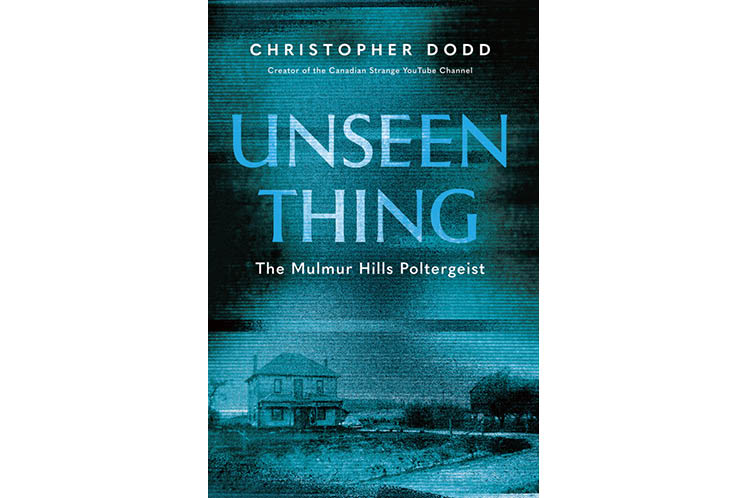
Objects flew, floors shook and a family fled their farm. Christopher Dodd revisits the Mulmur poltergeist in his book, Unseen Thing: The Mulmur Hills Poltergeist.
Author Christopher Dodd says his penchant for strange and frightening stories has endured since he was a boy in the 1970s and ’80s, an era that embraced paranormal books, offbeat documentaries about ghosts, Sasquatch, UFOs, the Bermuda Triangle, and TV shows such as In Search of … and Unsolved Mysteries.
“I found all that stuff fascinating,” says Dodd, whose own spooky debut book, Unseen Thing: The Mulmur Hills Poltergeist, was published in September. “Getting older is a process of stripping all of that away, but not for everybody. I guess I became more skeptical as I grew older, but my interest in why people believe in that weird stuff remained.”
A renovation at his Richmond Hill home in 2003 and 2004 brought Dodd himself face to face with the unexplained, he says: crashing sounds, “thudding footsteps that woke us in the middle of the night,” broken drinking glasses, voices intruding on the radio, and a white shape that passed by a backyard window that set off a motion-detector floodlight. “That experience made me keep an open mind about some of this stuff.”
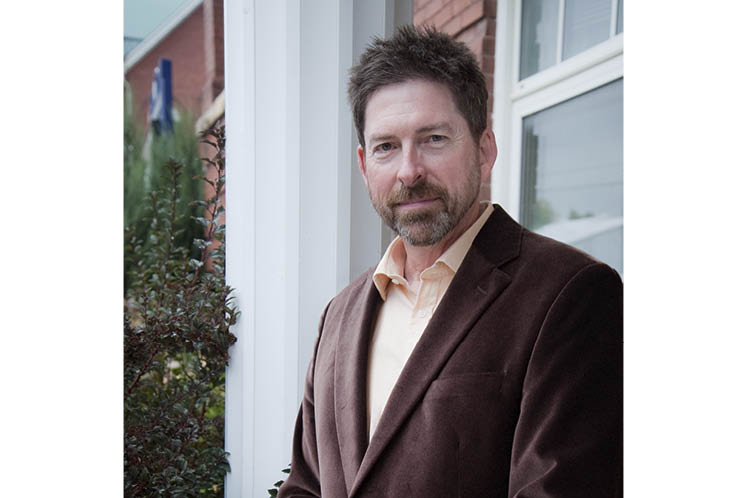
Although it is his first book, Unseen Thing is not the Creemore native’s first venture into writing. At York University, he received his bachelor of fine arts degree in film production. “I went in thinking I was going to be a movie director, and I got spit out the other end as a screenwriter,” Dodd says. After getting his second degree, in education, at the University of Toronto, he pursued his passion for writing scripts while teaching; he’s currently at a public school in Brampton. In 2010, he wrote the screenplay for the thriller film Wrecked starring Oscar winner Adrien Brody.
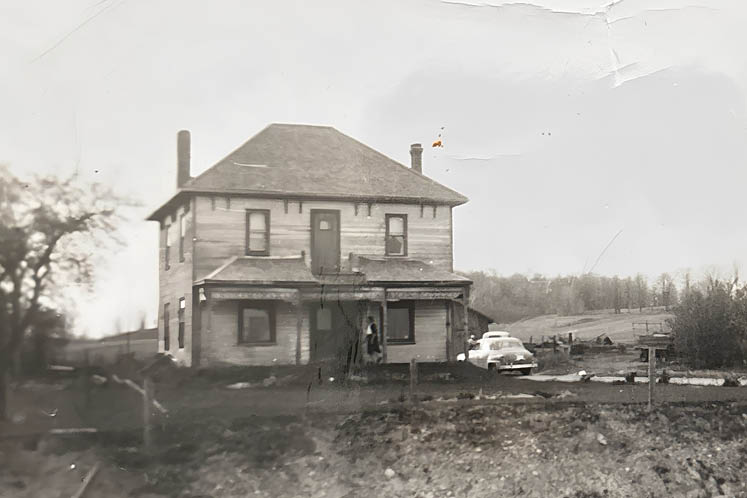
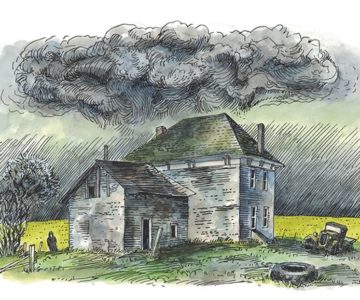
Unseen Thing examines the lives of the Dobson family, who began encountering bizarre activity on their 160-acre farm in Mulmur Township in January 1930, eight years after moving there. The father, Alfred, attributed the events – objects inexplicably moving, floors vibrating, items exploding – to an “evil influence.” Months later, the situation had escalated. Livestock were mysteriously let loose. A bolt left on the kitchen table shot through a window like a bullet. And there were personal injuries. Fearing for their safety, the Dobson family fled in May of that year. In their wake, the media and the curious flocked to the farm, hoping to witness the strange activity. The Dobsons returned in August to take part in a seance.
Dodd and his wife, Carolyn Lane, divide their time between Richmond Hill and Mulmur. It was soon after the purchase of their Mulmur weekend home in 2014 that Dodd began researching local paranormal stories and came upon John Robert Colombo’s Strange But True, which included the Mulmur tale. That led to Dodd digging up every newspaper article about the case, searching for property and other records, examining documents at the Museum of Dufferin, and talking with Dobson family descendants.
Dodd says he also recently discovered he has his own connection to Mulmur, dating to the mid-1800s; he is descended from several generations of Irish pioneer farmers. “My maternal great-great-great-grandparents are buried in the cemetery behind Christ Church Anglican in Whitfield,” he says. “That is still a baffling coincidence to me.”
I met with Dodd at a restaurant in Orangeville, a 25-minute drive from the Dobsons’ farm, to talk about everything from his writing influences to the history of poltergeist claims in Canada.
James Gerus: What grabbed you about the history of the Mulmur poltergeist once you discovered it?
Christopher Dodd: My proximity to a real local mystery inspired me to get the Colombo book and then seek out more information at the Museum of Dufferin archives. More newspaper articles there detailed some horrific horse mutilations in 1926 – also at the Dobsons’ farm. I became hooked on the mystery of what happened to this Mulmur family so long ago.
By 2016 I realized the story shared striking similarities and patterns with other, older, documented cases of rural poltergeists on farms in Canada – for example, the Baldoon Mystery in Ontario in 1829, the Amherst Mystery in Nova Scotia in 1878, and the Dagg Poltergeist in Quebec in 1889. That was when I thought it could be a book. I believed the Dobson story was worth preserving because of its intrinsic value as regional folklore and an important part of our cultural heritage.
I also found the Dobson story to be a very human one that I suspected we could all relate to: a family dealing with loss, strained relationships, financial problems, enormous stress, and then these inexplicable events happened that they could not understand.
JG: Now that you’ve written your first book, do you enjoy screenwriting or literary writing more?
CD: Well, I do like screenwriting, but that’s a very efficient and disciplined form of writing. There’s no room for self-indulgence in a screenplay. When you’re writing a screenplay, it’s architecture. You’re basically creating the blueprint for another thing that will be created, like a blueprint is a plan for a building. And there’s nothing extraneous when you’re creating the architecture for a building. Same with a movie. There’s much more freedom in writing a book, at least in my limited experience.
JG: Does your teaching background help you find all this historical information?
CD: Well, I had to teach myself how to research. I love to figure things out. Not only did I have to research the world of the 1920s, but I had to go back even further because the Dobson family was from the Bruce Mines area north of Lake Huron, at the turn of the 20th century. So I started there, and I had to go right up until the Second World War.
To know the characters, I had to get acquainted with their world. But I also had to figure out how to trace them through history, to basically create character profiles for each one of them. I had a file for each person in the story, and when I learned something new I would plug it into their profile. Eventually a portrait starts to take shape.
JG: Did you feel a particular connection to anyone in the Dobson family? Or did you want to know any of them better?
CD: Alfred Dobson, the patriarch, the elderly father – he did not shy away from talking to the newspaper reporters. There’s a lot of interaction in the articles between the reporters and him … and there are lengthy quotations from him. He was easier to get a sense of in terms of “this is how he talks, this is what he was talking about.”
Then there’s the youngest daughter, Irene Dobson. She’s in the background. She was in the house; she was there. And she’s almost a ghost in the story. She’s mentioned just briefly in a few of the articles. She never takes centre stage. She would have been the most powerless person in the family. But here was this girl who was 14 years old, on the verge of seeing her family collapse and disperse. If I could travel back in time and talk to one of them, it would be Irene Dobson.
JG: How would you explain what a poltergeist does, and how it’s different from a haunting?
CD: A traditional ghost, or a traditional haunting, is usually attached to a specific location. Typically, there’s a recurring sighting of a ghost or ghostly phenomena, and it’s always at this particular spot. And usually there’s repetition. Someone says, “I see a person going up the stairs,” or “something is turning on the faucet,” and it just continues in a cycle, over and over.


But a poltergeist is different. Many people who write about this agree that it’s some kind of transient spirit that has latched on to a person for some reason. There are different theories about why. The spirit might attach itself to you like a parasite, because you’ve got some kind of psychic energy, or there’s something about you that this spirit can use as a way to power itself. It’ll use up that energy, create a lot of mischief and spectacle, and then it fades away as that person’s energy is sapped or drained away.
Another theory is that there’s no spirit involved at all, and it’s the subconscious of a person lashing out on some psychic level – flipping tables without even knowing it. There’s some misunderstood, or not fully understood, aspect of the human mind involved.
JG: Are people still reporting poltergeists today? It seems more were reported back then.
CD: It’s a great question. What happened to the phenomenon? Is it something particular to a period of time? Or is it something that has the potential to evolve? Take the UFO phenomenon, which started with a pilot seeing some boomerang-shaped objects skipping across the sky near Mount Rainier in Washington. When he told the story to the newspapers, his description of their movement – “skipping like a saucer on water” – became “a flying saucer.” Now people are seeing flying saucers. Over time, that evolved into people seeing triangles and all sorts of things.
I don’t know if the poltergeist phenomenon has done that – if it has evolved – or if it has gone underground, and people are just choosing not to advertise their experiences. The Mulmur story, if you think about it, is a cautionary tale. What happens when something strange happens to you and you go public with it, go to the media with it? It blew up in the Dobsons’ faces. They became kind of a joke on the front page of the Toronto dailies.
So did the phenomenon go underground? Did people say, “Let’s keep this to ourselves”? That’s kind of what happened to my wife and me with our strange story at our Richmond Hill home. There was strange stuff happening every other day. You talk to your friends about it. You talk to the people you trust. But then what? I wouldn’t put that on Facebook. I wouldn’t call the Richmond Hill Liberal and say, “Hey, there’s crazy stuff happening.” Because as soon as you do that, you lose control of the narrative. Which is what happened to the Dobsons.
JG: When you write a book about the supernatural, how are you able to balance the rational, scientific view with the unexplained?
CD: Well, if the experience at our Richmond Hill home had not happened, this would be a different book. I would have been very tilted toward the science and skepticism, and that would probably have shown in how I wrote the story, because I have that in my background: my understanding of the scientific method, my appreciation for thinkers like Carl Sagan and James Burke. Those guys are kind of my heroes.
I tried to apply science to decipher the happenings in our home and came up empty-handed. So that leaves me right in the middle: between science and having an open mind that strange things can sometimes happen to people.
JG: At your book launch in Shelburne you reflected on authors who inspired you through this project, such as Canadian writer John Robert Colombo. Could you explain how they helped with Unseen Thing?
CD: Without Colombo, I don’t have a book, because he’s the one who found this story originally. But Colombo just tells it: here’s this weird story, and this is the form in which it exists. He doesn’t land on either side of it. That was important.
But the writers who really helped show me what might be possible were the authors I mentioned at the launch, like Truman Capote (In Cold Blood), where I thought, this is how I can recreate the past in a way that will be immersive for the reader. Because I knew this story so well, I could put myself in the house with this family and describe what happened the way they said it happened.
JG: Without revealing too much, could you give a hint of what your next book will be about?
CD: The next book will be another paranormal-themed story that takes place further back in time. It’s going to require a lot of research because the historical record gets fuzzier and fuzzier the further back you go. It’s another historical mystery with a paranormal heart, and I want to try to solve it through science. The next one’s going to be fun.
This interview has been condensed and edited.
Related Stories

Suddenly There Came a Tapping
I live in a haunted house. It’s been haunted for at least a century by all accounts, that is, by the neighbours’ accounts.
‘Spooks’ In the Hills
In 1930, a series of strange physical disturbances led a family to abandon their farm in Mulmur Township. Was a spirit at work? A poltergeist? Was it real?

The Year in Books 2026: New Releases by Headwaters Authors
Need some good reads? Stock your home library with these publications by local writers, including including small-town fiction, romance, horror, history and children’s books.