Giving Peace a Chance
After spending years in conflict zones all over the world, LeeAnn McKenna helps people break the cycles of violence. Her new memoir gathers her recollections of a life dedicated to this work.
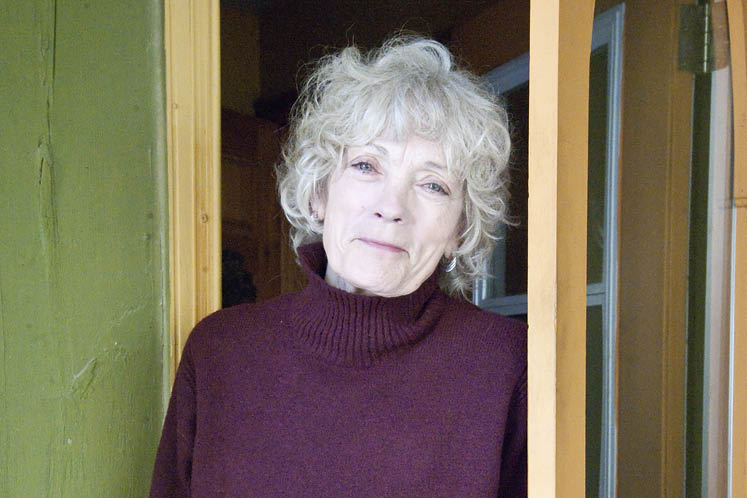
LeeAnn McKenna lives in Mono, but she spends a good deal of her time travelling. Not for business or pleasure, but rather for promoting and working toward international peace.
Born in 1954 in Ontario’s tobacco country to parents who were historians, McKenna studied Latin-based languages at university (she speaks, reads and writes Spanish fluently, as well as French). She married and raised her two daughters in Tottenham.
During this time, she returned to school to earn a master of divinity degree, spending a half term in India. A confirmed pacifist, she wasn’t sure where her calling would lead, but as opportunities arose, she came to dedicate herself to understanding conflict and nurturing peace.
In 1989, she accepted an invitation to be part of a rotating roster of volunteers in El Salvador. Their purpose? To provide a protective presence to progressive, dissident church leaders, those most in danger of being harmed by the country’s repressive government.
Just a few days after McKenna arrived, the people of El Salvador rose up against the military and the paramilitary death squads. For three weeks, she joined the staff of the church that was hosting her to provide food, housing and water to refugees, every day marked by tanks and gunfire in the streets, helicopter gunships thumping relentlessly overhead, neighbourhoods on fire, and bodies burning in the streets.
She took these experiences and stories back to Canada and spread the word. She called, wrote, delivered letters and speeches, and met with church leaders and journalists, politicians and bureaucrats. She told and retold the stories, seeking understanding, funding and support for the people of El Salvador.
El Salvador became just the first of many places she found herself in over the following years. Whether in Colombia, Northeast India, the Philippines, Sudan, Uganda or Iraq, the common factor she encountered was the collection of wealth and land into the hands of the few.
She listened to terrifying accounts of horrors sanctioned and carried out with impunity by those in power. These were the realities of everyday life for the people she met and the communities she visited.
“These places and people reshaped me irrevocably and continue to occupy a place in my heart,” McKenna says. “I learned much about the places I visited, and much about myself. Deposited into a place like El Salvador in 1989 with little understanding of what I was getting into, I was welcomed into a community used to military and government violence, death, loss – welcomed into their lives and work, invited into a situation beyond my imagining. As a result, I found myself ejected from my comfortable armchair of pacifism. And there was no turning back.”
McKenna speaks passionately about Partera, the not-for-profit organization she founded in 2002. The Spanish word for “midwife,” partera is a metaphor that is key to the work she has undertaken. It was meant to cast her in the role of companion rather than someone who has all the answers.
Over the years, McKenna kept diaries and notes, eventually organizing them into a book titled Midwifing Peace: Caught in the Crossfire, which was published this past summer.
In August, I spoke with her about the book and her dedication to peace building.
GAIL GRANT: What goals did you have in mind when you set out to write Midwifing Peace?
LEEANN McKENNA: There is a saying in Spanish I particularly identify with: “Se hace el camino en el caminar,” which translates as “It is in the walking that you make the road”; in other words, “You won’t know until you get there.” I had boxes full of binders that included notes on the courses I had attended and journals that recorded the experiences I had been part of.
As I started pulling the boxes off my shelves, I began to wonder if they might be worth culling, arranging, sorting into something useful. Midwifing Peace emerged from that process.
GG: You refer to your work as conflict transformation. What does this mean?
LM: While the goal of conflict resolution is to reach an agreement, resolve a dispute, conflict transformation assumes a broader palette. It encompasses root causes, underlying relationships, social structures and culture. CR is short-term and tends to focus on specific issues, but CT is long-term and continuing. It’s about taking the energy of violence and transforming it into the energy of sustainable peace.
The transformation is deep. It enables participants to gain insight into their shared humanity, to understand that conflict is normal and, if handled well, can spark positive and enduring change.
During the training sessions, which use play-based learning, participants come to understand that we are all part of the global economic system and that they are not without power to make change.


In Sudan and South Sudan, for example, a significant contributor to violence is a custom known as “bride price.” Wives are bought and sold – the currency is cattle. Men accumulate both cattle and wives, some by rustling, kidnapping and killing. The more cattle, the more wives, the more children and workers.
This fuels a growing underclass of impoverished, uneducated, angry young men, left out of the bride market, desperate and willing to do anything to get a foothold in the system.
And this creates a cycle of violence. These realities play out in trainings. Imagine two men sitting across from one another in a training room and each is thinking, your father killed my father or you stole my mother. These are events that are difficult to get over.
But seeds are planted. Barriers start to fall. This is the transformation. It starts internally and moves externally. It challenges the cycles of violence.
GG: How does a training session typically unfold? How do you create the conditions that encourage participants to transform the way they think about conflict?
LM: Mostly, I work with Christians, Muslims, women and men in the same room. These people are sometimes violating their own cultural code by simply walking into the room at the start of the session.
I would often arrive at a new venue set up with a lectern and rows of chairs – and we would talk about what kind of education happens in a setting like that: “You’re the teacher; we take notes.” But what if we were to make a circle? So we would move the chairs into a circle, and the conversation would go across the circle, around the room.
With everyone seated, I would introduce a game called The Big Wind Blows, a one-chair-missing kind of game. In the centre of the circle, I’ve placed a small pile of cards. Each card says something like, “The Big Wind Blows for all those wearing blue today” – or “all those who read the newspaper every day, who have fallen asleep in mosque or church, voted in the last election, play a musical instrument, are married, are a parent of children, are a child of parents,” all the way to “who have picked up a gun with the intention to shoot.”
No one is obliged to respond, but as people change seats to join others who have shared the same experience, two things have happened. Each had picked out a safe chair when they arrived, beside someone known, someone safe. The Big Wind shuffles the deck. Secondly, I have learned lots about them; from their movements, their participation, their laughing. No one has been to a training like this.
Mid-morning of the first day, I start walking the circle, assuming a late-term pregnancy waddle and making eye contact with both men and women. I say, “I am your midwife – not an expert but a companion – here to create the conditions within which you will labour together to bring to birth the future you desire. Everything you need to know has been gestating inside of you since forever. The stories we hear will be your stories, not mine. Giving birth is painful, but it will be worth it.”
Before long, we are all teachers, all learners. From that beginning, the people I worked with began to become peacemakers. One participant, a professor from a Northeast India seminary, took what he had learned from his training back to his school, where his students came up with the idea of Bikers for Peace. On borrowed and often cobbled-together motorbikes, these students travelled to the 10 most violent areas, inviting local organizations to work together for peace.
There’s so much more to tell. Thousands continue to train more thousands of peacemakers. I still receive their stories. They give me hope.
In January, McKenna will visit Cuba with a dozen women to celebrate a colleague’s milestone and to observe and document the fallout from the fuel blockade imposed by the current American administration. When she returns home, she will, as always, continue her work of midwifing peace by telling and retelling the stories of the people she met and what she witnessed.
Related Stories
The Year in Books 2026: New Releases by Headwaters Authors
Need some good reads? Stock your home library with these publications by local writers, including including small-town fiction, romance, horror, history and children’s books.

Empathy, Structure, and a ‘Tight Hug’ – Behind the Scenes at the Pine River Institute
For youth struggling with mental health and addictions, the rigorous treatment program in Mulmur offers security and compassion.