
Turtles
Only two of Ontario’s eight native turtle species are likely to be found here: midland painted turtles and common snapping turtles.
Headwaters wetlands are rich repositories of life but they don’t support very many turtle species. Only two of Ontario’s eight native turtle species are likely to be found here: midland painted turtles and common snapping turtles.
Blanding’s turtles and spotted turtles have been recorded in the past from Luther Marsh but, if they’re still there, their numbers are almost certainly very low.
No doubt the situation differed historically. Blanding’s turtles were undoubtedly more widespread in our hills. These lovely turtles, with high-domed shells and canary yellow throats, can live in all manner of wetlands. But they have an itinerant lifestyle that exposes them to the preeminent turtle “predator” of today – automobiles.
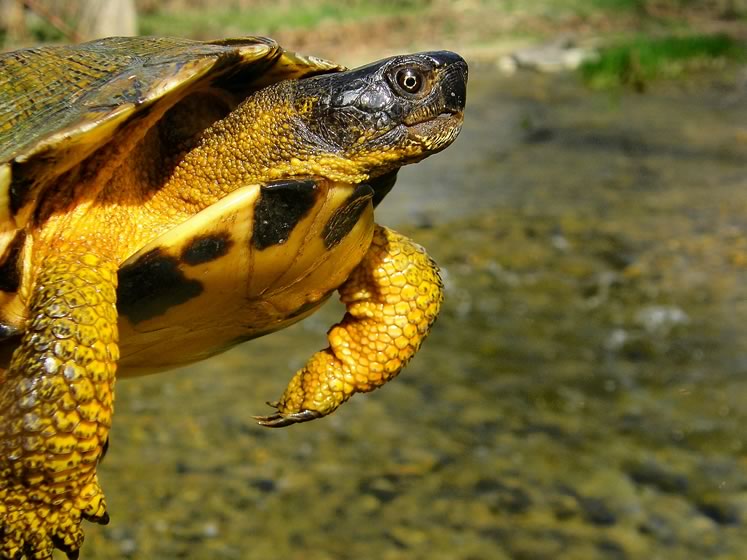
Wood turtle. Photo by Don Scallen.
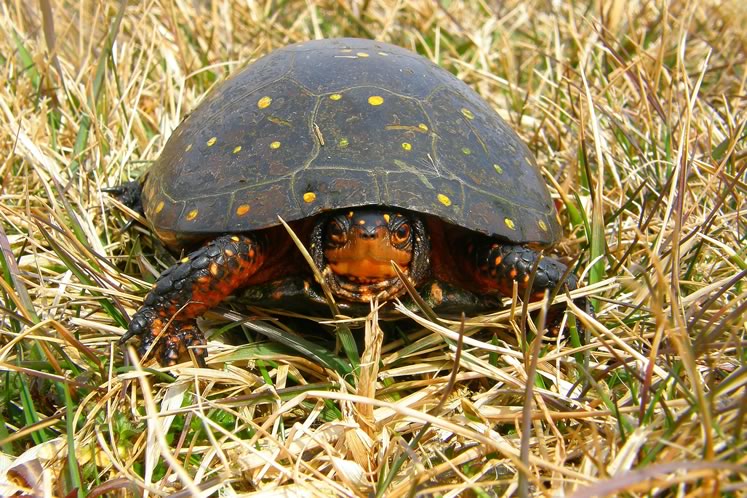
Spotted turtle. Photo by Don Scallen.
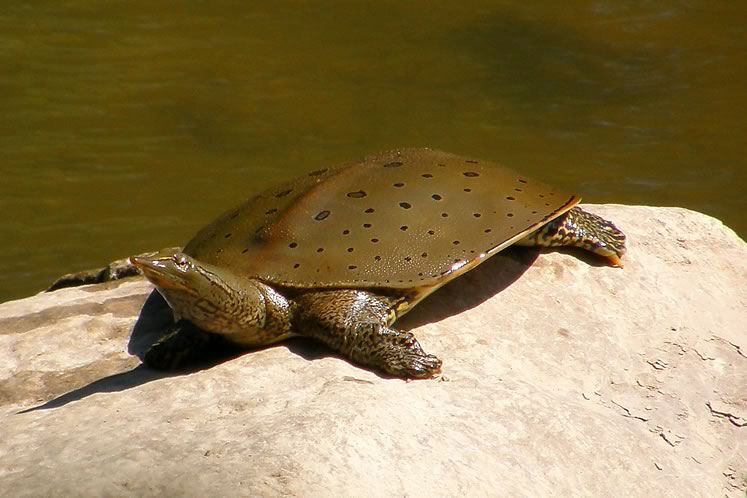
Spiny softshell. Photo by Don Scallen.
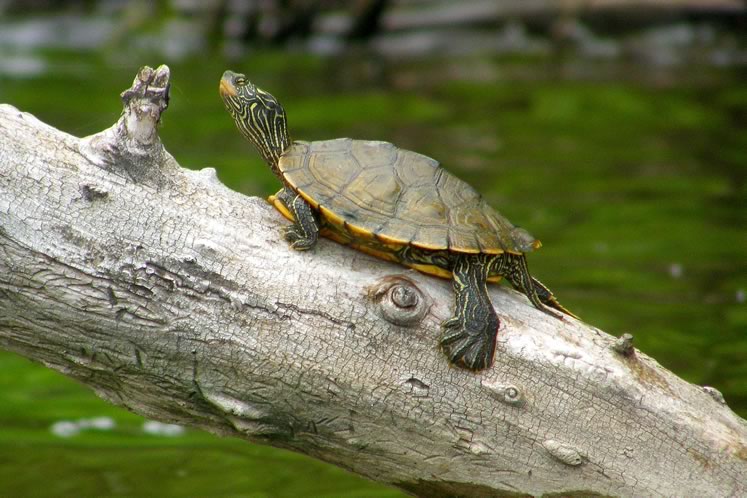
Northern map turtle. Photo by Don Scallen.
Spotted turtles may have been present in our hills beyond Luther Marsh too, but this species also dies on roads and is coveted by poachers. And since the cuteness factor of spotted turtles is off the charts, incidental collection by otherwise well-meaning people is also a threat.


Another species we’ve likely lost is the wonderful wood turtle, a creature with a shell that appears sculpted from fine oak. Noted for their intelligence, wood turtles in Algonquin Park have been observed summoning earthworms to the surface by tapping their forelegs on the ground.
Wood turtles live in and near streams – even small streams, and we have plenty of those in the Headwaters. But they also wander widely, bringing them into contact with cars, tractors, and ATVs. And like spotted turtles, they are highly prized by poachers.
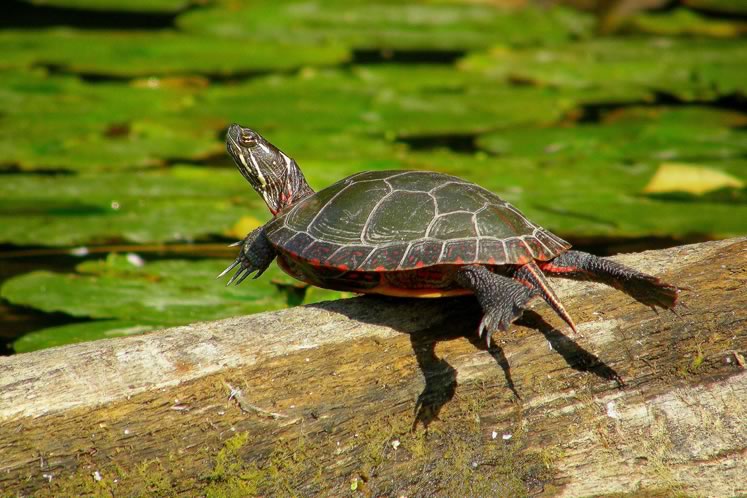
Midland painted turtle. Photo by Don Scallen.
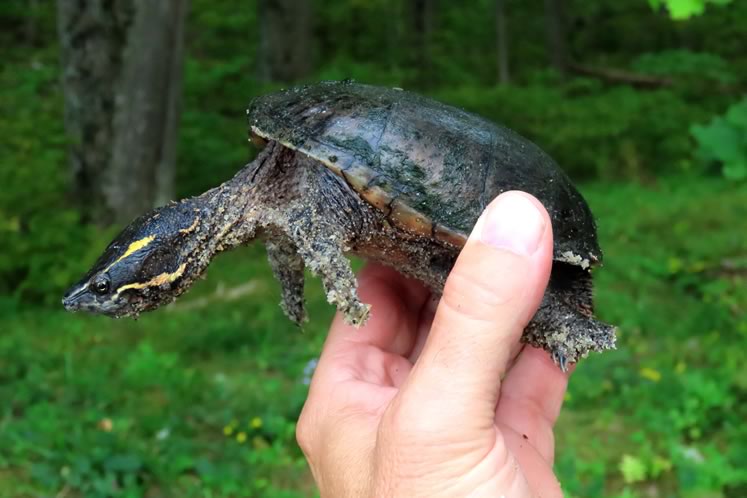
Eastern musk turtle. Photo by Don Scallen.
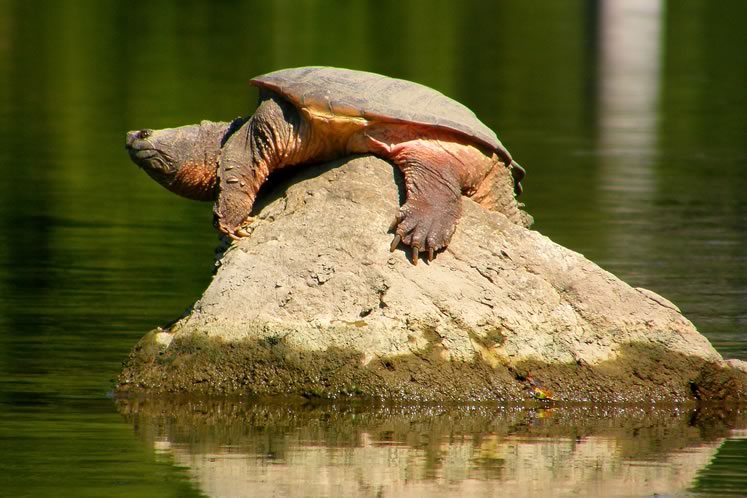
Common snapping turtle. Photo by Don Scallen.
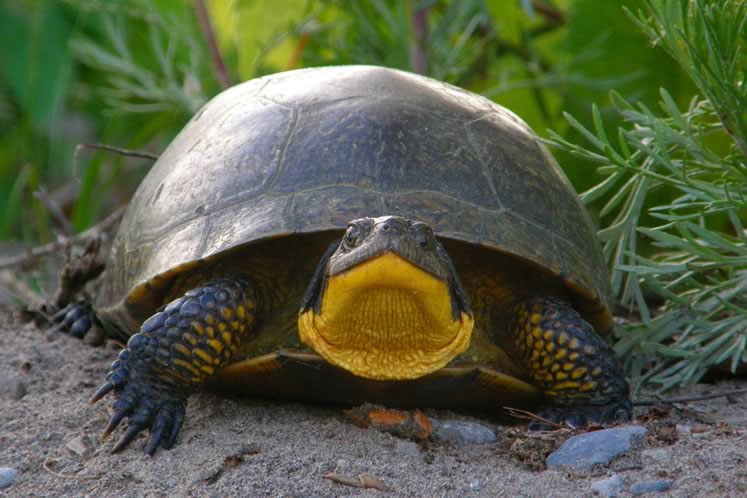
Blanding’s turtle. Photo by Don Scallen.
Three species of Ontario turtles that likely never inhabited our hills include northern map, eastern musk and spiny softshell turtles. All need the well oxygenated water of large lakes and rivers to survive, habitat in short supply here.
Should you find any species other than painted and snapping turtles in the Headwaters, consider yourself very lucky. And please share your discovery with the appropriate conservation authority.
Related Stories
Calling All Citizen Scientists!
All you need is a smartphone and a love of nature to make valuable contributions to conservation science.
Snapping Turtles
Grist for spinners of tall tales, snapping turtles are on the verge of becoming endangered. May these reptiles of prehistoric visage long patrol our wetlands.




Whenever I camp in Six Mile Lake Provincial Park, I love watching Midland painted turtles!
In Killarney Park on our first night we got a scare of our life when a huge snapping turtle suddenly emerged from the water as we were sitting on the shore. It turned out that like raccoons, they associated people (campers) with food!
I’ve also encountered a huge snapping turtle on a dirt road, its paw apparently run over by a car. It was difficult to help it, I had no cell phone then and I just left it there.
In the Massasauga Provincial Park I’ve seen many times turtles building their nests right in the middle of the parking/boat ramp! The park placed warning signs and markings. In some parks some campsites have special enclosures, where turtles laid their eggs.
Jack from Mississauga, ON on Jun 6, 2024 at 2:30 pm |