Grounded in Tradition, Steeped in Sustainability
How a home near Terra Cotta reflects its owners’ values – from the handcrafted furniture, quilts and art inside to the cut-flower plots outside.
Tucked into a cozy hollow near Terra Cotta, surrounded mostly by farmland, Amanda White and Steve Rollings’ 1930s farmhouse evokes the same spirit of place as Anne of Green Gables.
Indeed, after Sunday services at the nearby Union Presbyterian Church, Lucy Maud Montgomery, creator of Anne and many other well-loved characters, is said to have enjoyed tea and quilting in the dining room of the house. At the time, Montgomery’s husband, Ewan Macdonald, was a Presbyterian minister whose dual pastoral charge included that nearby church and the church in Norval, where the Macdonald family lived.
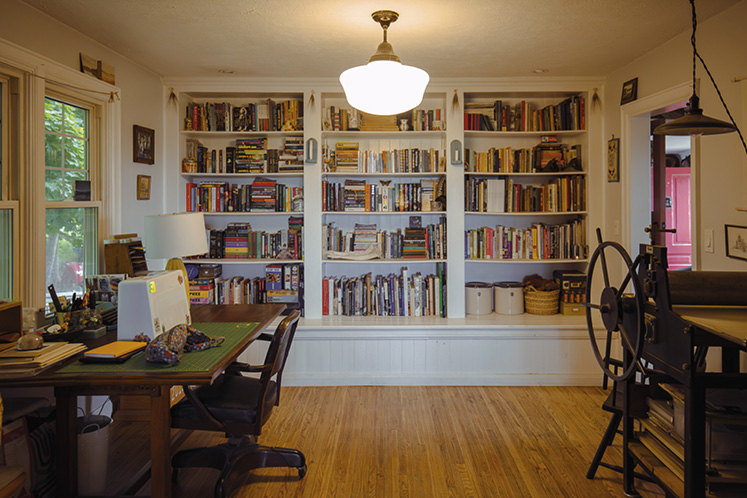
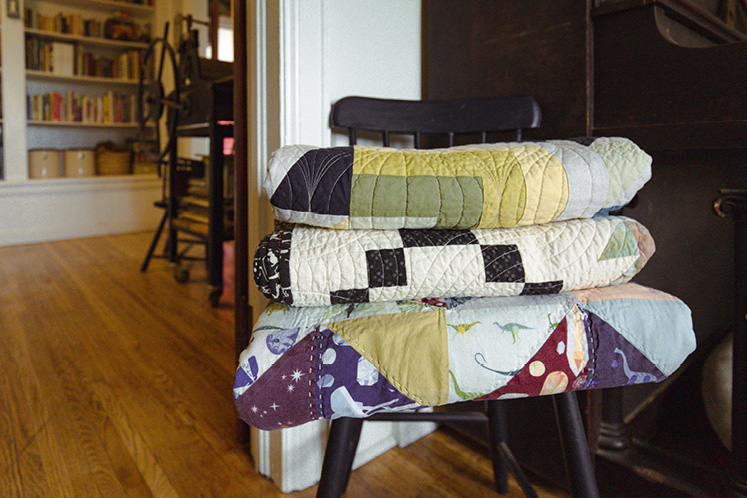
Nearly a century later, White continues the quilting tradition in the same room, which is largely unaltered. With gleaming honey-coloured wood floors, the space is warmed by the woodstove in the adjacent living room. And the couple’s love of reading is evident in the wall-to-wall bookshelves featuring art books, classics and sci-fi.
When they bought the home in July 2014, White and Rollings didn’t just move in; they were immediately stitched into the fabric of the community. The welcome committee included Dave and Joyce Anderson from the farm across the road, which has been in Dave’s family for generations; in fact, Dave’s grandmother once owned the pair’s new house.
White and Rollings help the Andersons with repairs and keep them in freshly laid eggs, while the couple’s “country parents” encourage access to their land, which includes prime fly fishing on the Credit River. A young kitten, progeny of a barn-cat mating, even wandered over from the Anderson farm to be adopted by the newcomers as a companion for their rescued dog, Hank. The cat’s full name? Dave Anderson, in honour of their neighbour.
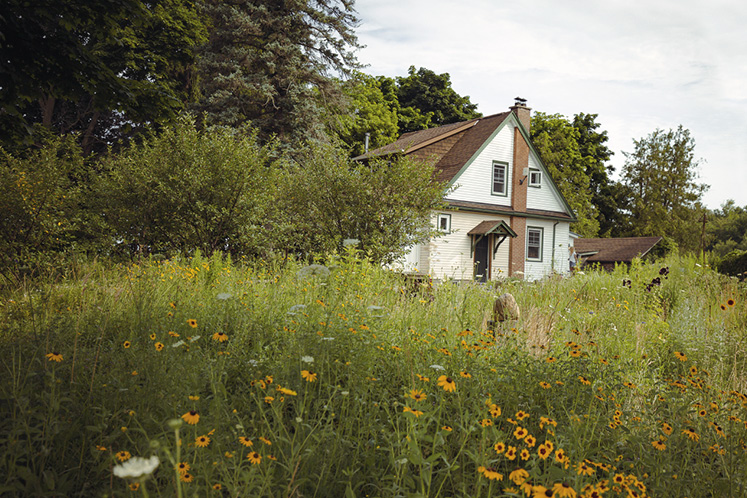
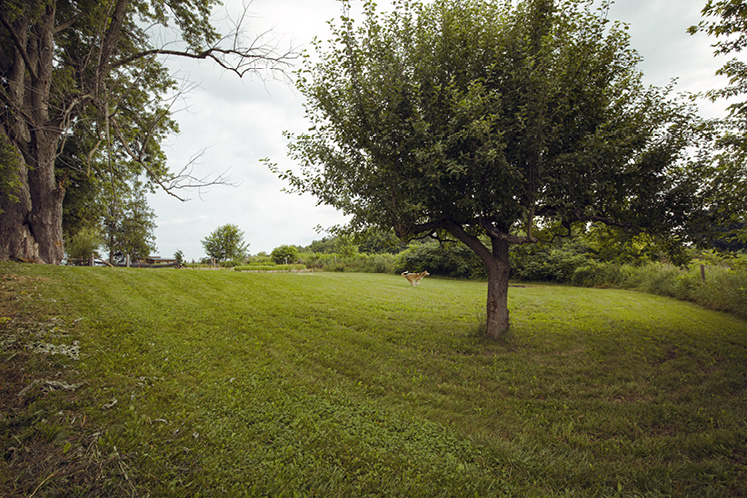
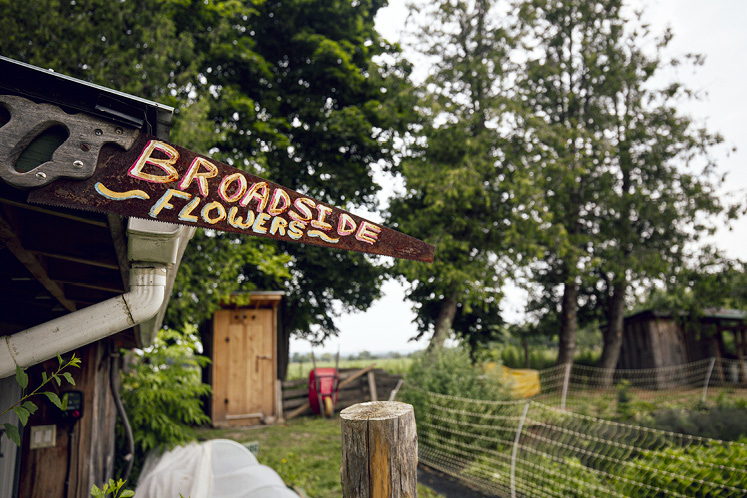
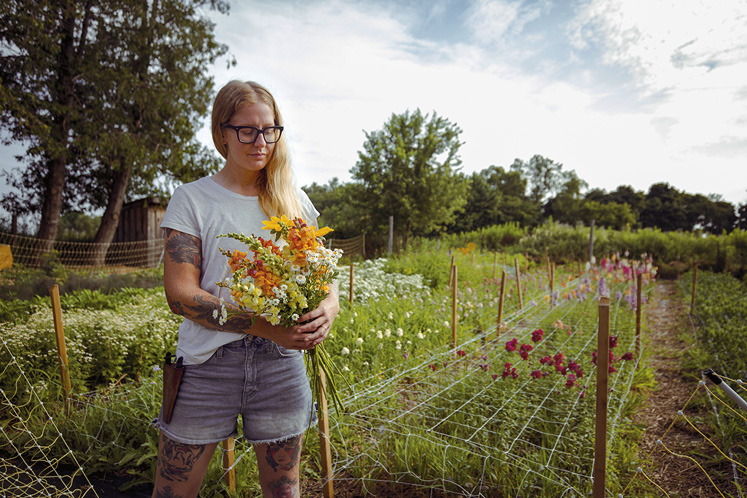
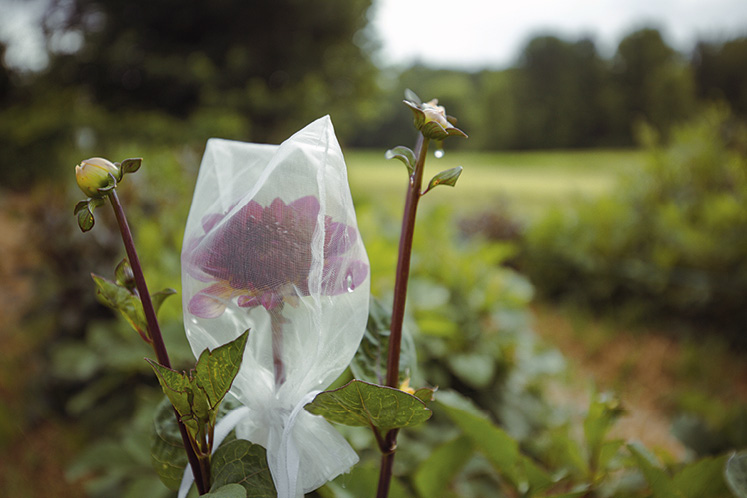
The two have followed in the Andersons’ footsteps as keen caretakers of the land. White, for example, put her years of experience as a landscape gardener to work and started growing flowers. Then, in 2018, she opened Broadside Flowers, a small flower farm that produces snapdragons, dahlias, zinnias, ranunculus and tulips, among others.
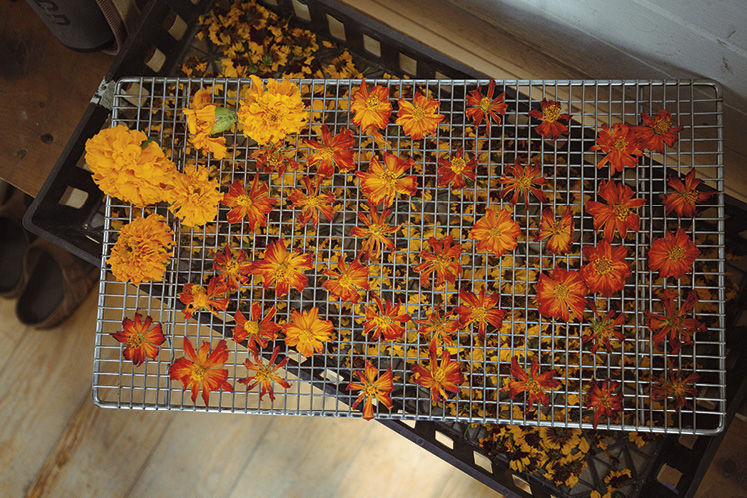
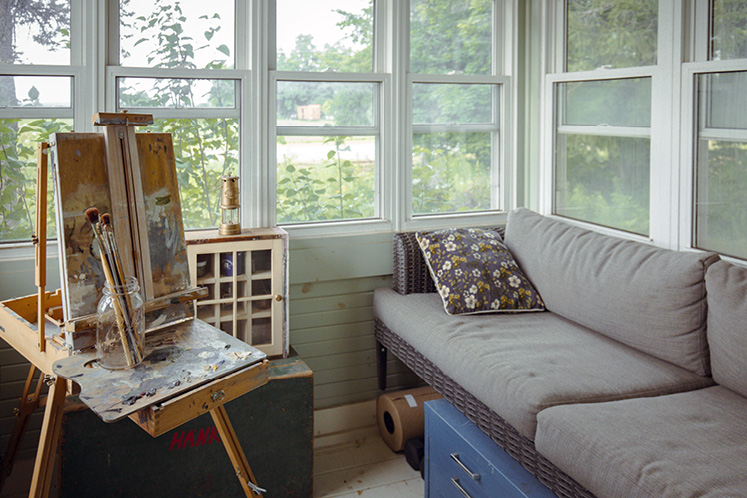
Last year, she experimented with growing plants to create dyes for the cotton she quilts with. She enjoyed the process so much that she has increased the variety of dye plants to include indigo, marigold, cosmos, coreopsis, weld and madder.
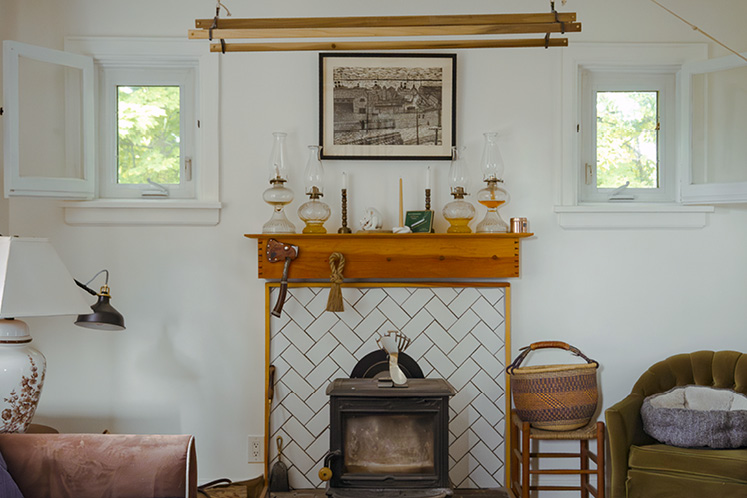
The name Broadside Flowers is a nod to White’s printing background: a broadside is a large printed poster. In addition to quilting and flower farming, she specializes in linocut and woodcut printing, a craft she honed at OCAD University, where she and Rollings met. Above the woodstove in the living room hangs a print featuring Toronto Harbour in about 1926, part of a series she created based on photos in the Toronto Archives.
But it wasn’t only the garden that received love and attention. When the couple bought the one-acre property, the house had been sitting empty for a time, but was in good shape. Nevertheless, updates were required, as it hadn’t been renovated since the 1950s.
Rollings, an electrical contractor, did the rewiring with help from his father. Floors were sanded and refinished, and most of the walls were painted in Benjamin Moore’s Capitol White, though the company’s Salisbury Green was used to accent the wall under the stairs.
But stripping the wallpaper in the guest bedroom changed White’s plans to paint the entire interior. “We discovered a wall that had been signed by the kids in the family, circa the late 1940s, including our Dave Anderson – the neighbour, not the cat,” she says. “It seemed so final to paint over that bit of history. By choosing wallpaper, we felt we could preserve the signatures, which now include our own!”
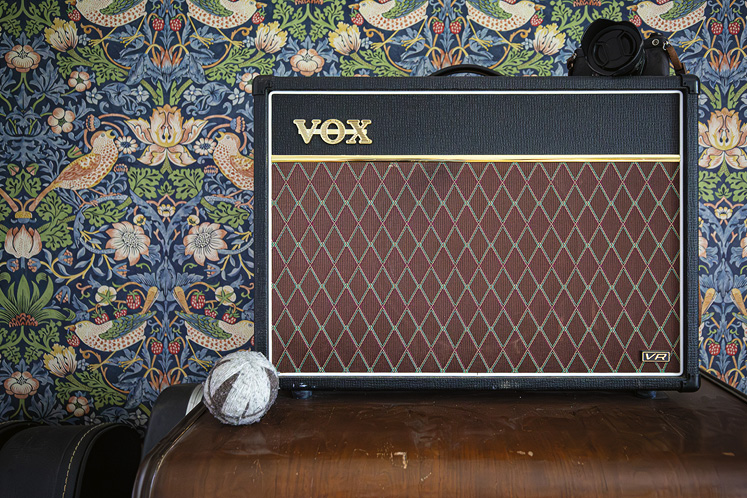
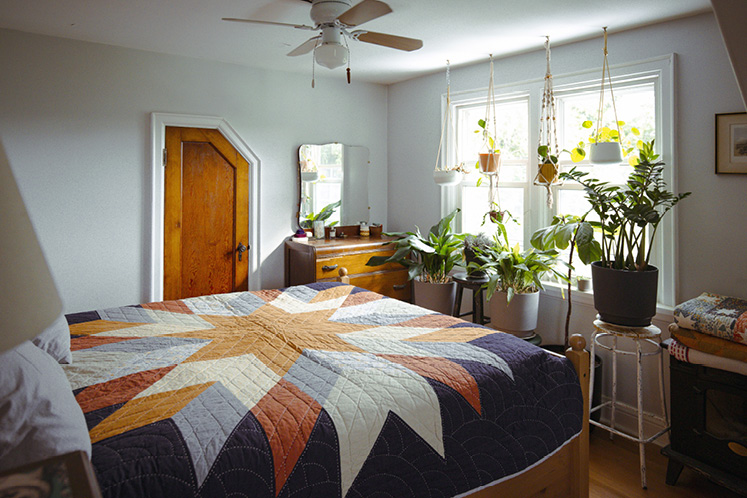
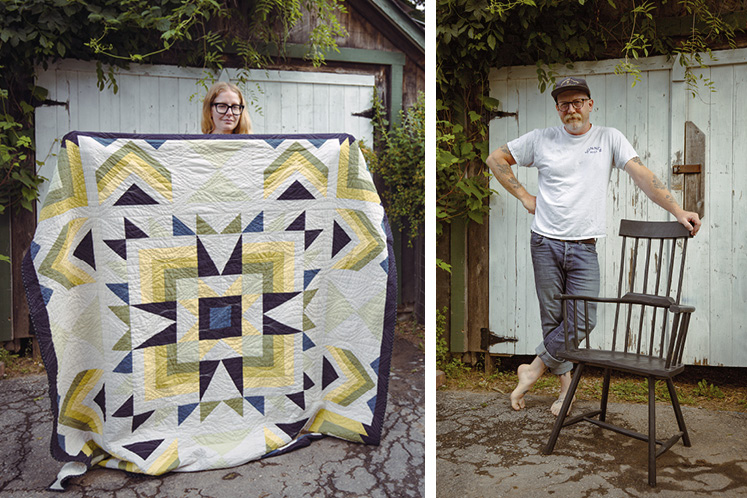
So White decided to splurge on William Morris wallpaper in the Strawberry Thief pattern, a dense nature print featuring birds, fruit and foliage in forest greens, taupes and blues. This paper now graces a wall in the guest room and a small wall in the primary bedroom. It provides the perfect complement to White’s “modern traditional” quilts, which cover the beds in both bedrooms and are within easy reach in other cozy corners.
Rollings’ handiwork is also evident throughout the house. He spent most of his time at OCAD U in the wood shop and enjoys the meditative process of making furniture. He has built or repaired most of the chairs, stools and end tables in the house, as well as the cherry coffee table.
“I subscribe to the make-it-to-use-it school of thought. When it comes to art, I am definitely on the craft end of the spectrum. I made most of our wood bowls and utensils,” he says. “In terms of style and materials, I lean toward traditional – early 19th-century Upper Canada furniture, to be specific, and I use only hand tools.” The ceramic bowls, soap dishes, candle holders and mugs (many mugs!) are from Andrea Raymond’s Common Sense Pottery in Alliston. A fellow OCAD U alum, Raymond is one of the couple’s best friends.
White and Rollings relied on their handiness to build a new bathroom, the only structural change they have made. The house originally featured three bedrooms and a bathroom the size of a closet at the top of the stairs. The bathtub sat under the slanted roof, allowing no room for a shower. Needing only two bedrooms, the couple transformed the smallest of the three into a larger bathroom and gave the primary suite some added space.
Doing their own work has made home ownership both financially feasible and more environmentally sustainable. “Most of the lights you see in the house I saved from rewiring projects,” says Rollings, indicating the living and dining room lights salvaged from old schools or farmhouses. “One of my favourites is the light over the kitchen sink, a heavy brass and ceramic vintage piece that I removed from Dave and Joyce’s closet when they were updating. They were surprised that it wasn’t headed for the trash, but we love it.”
The green easy chair in the living room and the dining table belonged to Rollings’ grandmother. The couch, often covered in one of White’s quilts to manage pet fur, sat in the Alton Mill’s Noodle Gallery before it closed. The writing desk in the corner came from florist friends, and the piano from the church attended by the family of Rollings’ sister-in-law. Other musical instruments scattered throughout the house, including guitars and banjos, recall Rollings’ musical upbringing.
Every room in the farmhouse is well-used. By early March every year, White has started seedlings in the basement under lights. She focuses this first planting on hardy annuals such as ranunculus, anemones and lisianthus, which can handle frost and are planted out very early, in mid-April. Everything else is planted outside in early to mid-May, depending on the weather.
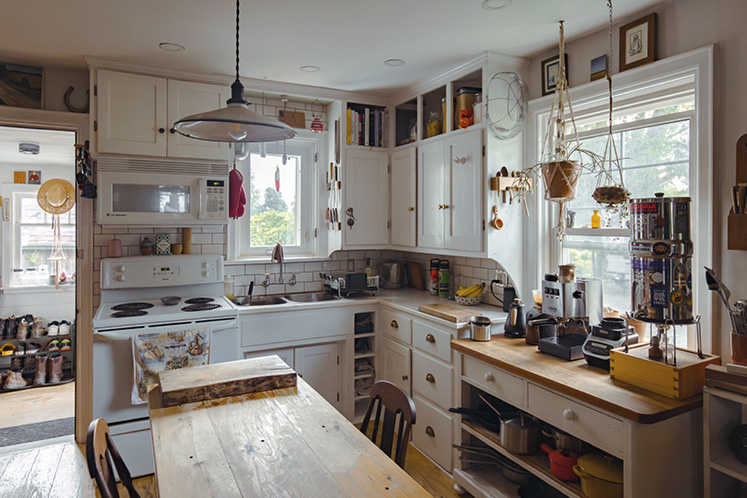
As is fitting for a farmhouse, the kitchen is a hub of activity. “Friday nights are for flowers,” White laughs. “Steve will come home from work, and I will have flowers everywhere prepping for Saturday mornings at the Georgetown Farmers’ Market. From starting seeds to flower arranging, it all happens in the sink and buckets in the kitchen.”
That kitchen has barely been touched since the 1930s, so it might become their next project. “We painted the kitchen, but the original melamine countertops are still there,” White says. “I want to keep the cabinets, but maybe a new sink, faucet and countertops are in order.”
One comfort the pair doesn’t plan on installing is air conditioning. “In the summer, we open the windows at night and, if it’s really hot, close them in the morning to keep the cool air in,” says Rollings. “That breeze coming off the fields is incredible.”
Another energy-conserving technique is the drying rack suspended from the ceiling above the woodstove. A pulley system allows it to be lowered and draped with laundry and quilts for drying in front of the fire. “We ordered it from England,” says White. “It’s called a Sheila Maid, and they’re very popular over there.”
With an eye to the future, but clearly grounded in the past, White and Rollings love their home and surroundings. “In this house, we don’t feel separate from the environment,” says White. “As nature lovers, that’s important to us.”
Rollings agrees. “I believe in being part of the landscape. A house should look like it grew there.”
Related Stories

The House Built on Friendship
When the McLean family set out to build a new home in Caledon, friends and neighbours stepped up to help.
Her Bright Idea
A 178-year-old Caledon farmhouse is a peaceful yet exuberant testament to the owner’s singlemindedness and the nearly 20 years she has worked to bring her vision to life.

Country Whimsy
A Caledon country home reflects the lighthearted spirit of its owners with art, collectibles and a couple of amusing sight gags.

Leaving Their Mark
An Orangeville family reflects on their time living in one of the century homes that give Zina Street its heritage charm, and on their addition to another chapter in its history.