How to Grow a Green Roof
Naturalistic gardening booster Tony Spencer created a Mono rooftop garden that benefits the environment and nurtures the spirit.
From the second floor of his rustic Mono cabin, Tony Spencer steps out onto the roof of the mudroom below and into a wildflower meadow carpeted by grasses and sedums and spangled by wildflowers. Bees and flower flies buzz in the sunshine, sipping nectar and harvesting pollen. From his elevated perch, Spencer has a bird’s-eye view of the more conventional ground-level gardens he has coaxed from the sand and gravel dropped on his property by ice-age glaciers.
It’s summertime and Spencer is exultant. His green roof is thriving. He compares it to a “coral reef, aglow in fantastical shapes and glorious technicolour.” Installed in 2022, Spencer’s bold experiment has proven to be an early success. His green roof has already been celebrated by the gardening world, winning a Landscape Design Award of Excellence from the United States-based Perennial Plant Association. When he makes presentations to gardening and horticultural groups, images of his green roof in full summer glory evoke exhalations of wonder.

Spencer is a writer with a résumé that includes working at an advertising firm in Toronto and later as a freelancer. While in Toronto, he also achieved modest fame playing guitar in an instrumental band. But as a lifelong gardener, he longed for a larger canvas to work with. His wife, Troy, was willing to give country living a try, and she was besotted by the prospect of swimming in the deep pond that came along with the property. In 2014 Spencer and Troy moved in.
Spencer rebranded himself as “The New Perennialist” and, shortly after relocating to Mono, began to transform the spaces around the cabin and pond into naturalistic gardens. Before winning the award for his rooftop garden, he won a 2020 PPA Honor Award for his pond garden, an achievement that bolstered his reputation in gardening circles.
A self-described “puckish ringleader for the naturalistic movement,” Spencer has become a gardening influencer, blogging about plants, gardens and naturalistic landscaping for more than 90,000 followers on social media.

He refers to his gardening philosophy as “wildscaping,” a naturalistic approach that uses “plant-driven landscape design to create and sustain dynamic garden spaces, filled with beauty and wildlife, to rekindle our relationship to the natural world.” He is currently writing a book for Timber Press, the well-known publisher of books about gardening, about this philosophy, how it has guided the creation of his Mono gardens, and how it has helped him develop relationships and share ideas with others active in the naturalistic movement.
Spencer’s wildscaping invites native plants to play a key role in his gardens, but he is not driven by the “strictly native” doctrine. Rather, he uses a diversity of plants that combine artfully to nurture the soul and the environment with beauty, bees and butterflies. Dynamism is a key element of his approach. Gardens evolve, plants reveal their character and acceptance of place, and combinations of plants change organically.
Spencer’s decision to expand his naturalistic garden design to a rooftop was perhaps inevitable, for he boldly seeks new gardening frontiers. An addition to his house sparked his passion. With a green roof in mind, the addition was completed in 2017. And in 2022, after intensive research into practicalities and plant selection, his roof garden became a reality.


His is known in the landscaping trade as an “extensive green roof,” or EGR, which is characterized by a thin (10–15 cm) layer of “soil” or, more precisely, “growing media” consisting of crushed brick and organic matter. Spencer’s green roof has a 10-centimetre base and five tapered mounds topping out at 15 centimetres. A height variation even this slight introduces habitat complexity that Spencer’s plants respond to.
(Note that the term “extensive” is somewhat misleading, though it is the standard trade term for green roofs with shallow growing media. Some EGRs, like Spencer’s at about 72 square metres, are quite small. The term for a green roof with growing media deeper than Spencer’s – from 20 to 75 centimetres – is “intensive green roof,” or IGR. This deeper “soil” allows the planting of shrubs and trees.)
The crushed brick that serves as “soil” on Spencer’s roof is airy and surprisingly light. It allows water and air to easily reach roots while the added organics nourish them.
Spencer acknowledges that his green roof, though outwardly naturalistic, is an artificial construct. The plants and growing media are underlain by a sophisticated layered structure installed by ZinCo, a German green roof company with an office in Ontario.
A dimpled layer made of recycled plastic captures rainwater and holds it for uptake by plant roots. Excessive water overflows into drainage channels that carry it to rain gutters and downspouts that direct the water into a rain garden and a ground-level bioswale, a planted area designed to absorb runoff and filter out pollutants. A waterproofing membrane protects the underlying roof from damage.
Spencer looked to alvar habitats for guidance and inspiration. Alvars are rare habitats found in only a few places in the world, including Ontario. These extreme environments, characterized by shallow soils over limestone or dolostone bedrock, are often saturated by rain and snowmelt in spring, then baked by sun in summer. These conditions are hostile to many plants, but nature finds a way. Many interesting, often beautiful, plants flourish in alvars because the extreme conditions eliminate competition from larger, more robust species.


EGRs like Spencer’s also have shallow soils exposed to extremes of sun, wind, temperature and moisture, meaning that alvars offer a useful analogue to guide planting. As Spencer says, “In our climate-changed world, the garden imperative is to aim to be ready for almost anything. Thus far, our alvar green roof is rising beautifully to the challenge.”
But using only alvar plants isn’t Spencer’s goal. Some native alvar plants make the grade, but other plants, not necessarily native to alvars, are also incorporated. Besides, many alvar plants are simply not available in the nursery trade. EGRs are, in Spencer’s words, “notoriously unpredictable and site specific.” Flexibility in plant choice is called for and governed by availability and by the response of the plants to specific conditions. This is where the dynamism Spencer espouses comes in. He watches how the plants grow and makes changes when necessary.
Three years on, Spencer has watched two lovely grasses assert their presence in his rooftop garden. Prairie dropseed, a native notable for its fine foliage, is a low-growing “bunch” grass (a grass that doesn’t spread rampantly via stolons beneath the soil surface). The other is a type of little bluestem grass called Ha Ha Tonka, named after a state park in Missouri. For Spencer, this grass is a favourite, especially as its wispy blue-green leaves catch the rays of the setting sun.
Flourishing among the grasses are wildflowers. One, nodding onion, is an Ontario alvar species offering a cautionary note: rooftop gardens, like their ground-level counterparts, must be tended. Spencer has found this native onion is a little too at home on his rooftop, for it seeds prolifically and threatens domination. He now deadheads the onions in the fall before they can drop their seeds.
Another wildflower that has done well on Spencer’s rooftop is rough blazing star, its spires tufted by purple blossoms that attract butterflies and rise above the grasses in summer. Selections of non-native Russian sage and questionably native yarrow (Achillea) are pollinators’ favourites and add colour. Spring-blooming prairie smoke and summer-blooming hairy beardtongue, both Ontario alvar natives, also grow on the roof.


To ensure continuity of bloom, Spencer has selected plants that flower at different times. This means that from spring through early fall, he can enjoy the cheerful and productive buzzing of honeybees, hoverflies, bumblebees and wasps.
He isn’t aware of any other green roofs in Headwaters, but his project has relations all over the world. Europeans have been building green roofs since at least the 1960s, and Germany is a leader in the green roof movement.
Other northern European countries are also well ahead of Canada and North America in adopting green roofs. But we’re catching up. The City of Toronto, for example, requires developers of commercial, residential and industrial buildings whose floor space measures more than 2,000 square metres to devote some space to green roofs.
The environmental benefits of green roofs are driving this trend. The plants and the green roof-growing media capture rain. Some of this water is released back into the atmosphere via transpiration from plant leaves, but green roofs also play a role in slowing the runoff of rainwater into overtaxed urban storm sewers.
And perhaps counterintuitively, green roofs extend the lifespan of rooftops. Properly engineered, they protect the roof structure from moisture and ultraviolet radiation. They also serve to cool the interior of buildings in summer, decreasing the need for air conditioning and, in winter, provide extra insulation against the cold.
EGRs are generally the type installed to deliver these benefits, topped with shallow growing media and easy-to-maintain plants such as sedums. Many are placed high and out of view of the public, for their chief function is to enhance environmental health, not the psychological well-being of people.
But green roofs are diverse. Spencer’s roof, for example, not only benefits the environment, but also supports bees and butterflies. Its beauty and vibrant growth throughout the season delight Spencer’s aesthetic sense. Green roofs are also beginning to be used to grow food in Canada, though the most productive of these are closed systems using greenhouse technology.
Tyler Brown, a project co-ordinator for NAK Design Strategies, a Toronto landscape architecture and urban design firm, works with developers, architects and engineers to plan green roofs in the GTA. Some, like a green roof currently in the works for a retirement home, fall into the purely utilitarian category of EGRs. It was designed not as an aesthetic showpiece or wildlife habitat, but primarily to reduce heating and cooling costs, and to manage rainwater. But other projects Brown works on are designed to satisfy different needs, among them a rooftop garden atop a college residence. It will become a herb garden.
Among the more frequent green roof designs Brown is involved with are “amenity gardens,” increasingly being added to new condo developments as selling features. These are elevated walkouts analogous to backyards, with abundant plantings, barbecues and seating areas. Metre-deep soil in fixed planters enables shrubs and trees to grow, offering privacy, windbreaks and habitat for birds.

Tony Spencer’s experience with rampantly self-seeding wild onion highlights that green roofs, like all gardens, require maintenance. Tyler Brown puts it bluntly: “If the property owner neglects the roof after installation, the plants die.”
Most of the typical chores associated with ground-level gardens, including managing aggressive plants, watering when necessary and weeding, also apply to green roofs. Brown considers the debacle that could unfold should a single seed of tree of heaven waft up and onto a green roof. This exotic Asian species is renowned (notorious?) for its ability to grow exuberantly in the cracks of urban sidewalks. Left untended on a green roof, a tree of heaven would soon compromise the roof’s layered structure.
Nevertheless, green roofs should be no more difficult to care for than typical gardens, and the plant selection and depth of the growing media can be adjusted to make that care more manageable.
The concept of “biophilic design” aspires to create ways to connect people with nature in the urban environment. This can be as simple as creating parks and planting trees. It can also mean water features, postage stamp-sized woodlots called “Miyawaki forests,” and green roofs like Spencer’s.
Biophilic design offers significant health, environmental and economic benefits to urban dwellers by melding nature with the built environment, something Spencer’s green roof does admirably. As he says, “Our log cabin home is once again a living part of the living landscape.”
Many residential suburbs built in the 20th century offered homeowners space to garden, plant trees and relax in spacious yards. Those opportunities are diminishing as the density of contemporary developments increases. Tiny yards, or no yards at all, are becoming the norm. The reasons are clear. Building densely and upwards is perceived as a way to mitigate sprawl and, by boosting the number of people in a given area, to make urban transit more viable.
But something is lost in the bargain. Many of us love nature and many of us love to garden. We are making a significant long-term mistake, with ramifications for our physical and mental health, if we densify without acknowledging these needs. With about 10.4 million people projected to live in the GTA alone by 2051, biophilic design will become increasingly important. As Spencer says, “We have a lot of catching up to do in Ontario to include nature as part of our residential experience.”
Green roofs are one way we can soften the intense urban development that will prevail as we attempt to accommodate an ever-growing population. Because of the benefits offered by various types of green roofs, there will likely come a time when they will become standard features in our communities. Futuristic thinkers like Tony Spencer are leading the way. His might be the only green roof in Headwaters in 2025, but that is sure to change.
MORE INFO
Elevated Veggies
In 2020 Lufa Farms, a Quebec-based company, opened the largest rooftop greenhouse in the world. Perched atop a former Sears distribution centre in Montreal, it covers more than 15,200 square metres and is planted with tomatoes, lettuce, onions and other veggies. Lufa has four other rooftop farms in the Montreal area including their newest, a nearly 11,800-square-metre facility on the roof of a Walmart in the city’s Ahuntsic-Cartierville district.
Growing produce in rooftop greenhouses has several benefits. An obvious one is expanding the traditional function of roofs to include food production. In densely settled urban areas in particular, roofs offer agricultural space not available on the ground.
Rooftop greenhouses also produce food where it is consumed, eliminating transportation costs and the environmental drawbacks associated with transporting food to cities via trucks, trains and airplanes. Hydroponic growing techniques further reduce environmental impacts by recycling water within a closed system, and captured rain and snowmelt help top up water needs. In addition, greenhouses permit year-round production.

At Lufa Farms’ rooftop greenhouse in Laval, Quebec, city water is recirculated, but it also has the capacity to capture rain. The farm yields 6,055 kg of vegetables every week.
Another plus is Lufa’s focus on biocontrols to manage pest outbreaks. Synthetic herbicides and pesticides are avoided. Instead, predatory insects are employed when necessary. Tyler Brown of NAK Design Strategies toured one of Lufa’s greenhouses and describes the process: “They use ‘sacrificial plants’ at the margins of the greenhouses. These include nasturtium and some pepper varieties that are highly appealing to insect pests, serving as an early warning system and as a focus for the release of biocontrol agents like ladybugs.”
Open-air rooftop vegetable gardens are also becoming more common. Again, in Montreal, Brown visited a community centre that manages a food program for vulnerable people. On the roof is a small open-air garden that provides about 12 per cent of the produce needed for the program.
Unsurprisingly, open-air rooftop vegetable gardening comes with challenges. These gardens are prone to all the slings and arrows of traditional ground-based agriculture, including insect pests, weeds and the vagaries of the weather. And of course, they can’t offer the same year-round production as greenhouse facilities. It is unlikely open-air rooftop gardens will ever be able to produce more than a small fraction of the food we eat.
But perhaps that’s not the point. Like small allotment gardens in dense urban settings, they offer the physical and psychological rewards of getting hands dirty and tending the soil. They can show city dwellers – especially children – where their food comes from and connect people to the rhythm of the seasons. And as Brown says, these gardens “provide opportunities for community celebration at harvest time.”
Related Stories
Piet Oudolf, Reimagined
Dedicated local gardener Tony Spencer channels the aesthetic of the famed Dutch plantsman into his corner of the rural countryside of Mono.

Roadside Attractions
Each year our roadside verges erupt in a bloom of wildflowers, only to be leveled by municipal mowers. Is there a better way to manage these habitats?
A Magnificent Obsession
Collecting and nurturing remarkable trees has been a 30-year passion for Caledon’s Gary Haslett.
From Pool to Pond
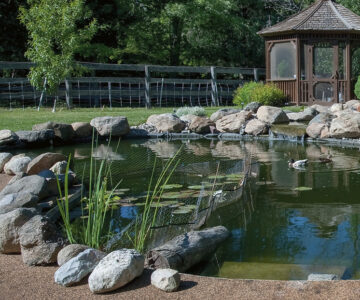
How a Mono nature lover transformed her swimming pool into a pond teeming with wildlife.