
Your Country Septic System, Demystified
How does a septic system work? Learn all about this vital part of rural life and avoid a messy meltdown.
Living off the urban grid means managing your wastewater – everything that drains from toilets, showers, bathtubs, sinks, washing machines and dishwashers. While townsfolk rely on a municipal sewer line to cart off, safely treat and dispose of wastewater, in the country you likely have your own septic system.
Here, wastewater flows through a main drainage pipe that leads to a septic tank installed underground outside your home. In the tank, solid material (sludge) sinks to the bottom while fats, oils and grease float to the top and form scum. Sludge and scum remain in the tank while the liquid (effluent) is carried out to a leach field.
There are two basic versions of septic setup in Ontario: traditional and chamber. In a traditional system, the liquid wastewater is dispersed from the tank through an outlet pipe to the drain field, where it seeps through a bed of sand and gravel before percolating through the ground – a filtration process that helps remove harmful contaminants, including bacteria and viruses.
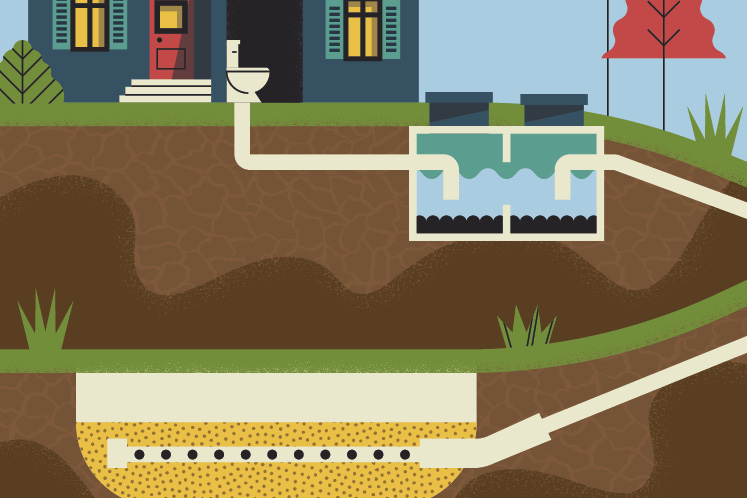
In a chamber system, primary treatment takes place in the tank itself. The clarified wastewater is then dispersed to a specialized drain field, which has plastic leaching chambers containing perforated pipes that release the effluent into the ground. In both systems, natural elements in the soil, including microbes, remove any remaining contaminants, completing the treatment process.
Septic care basics
“A lot of people who are new to septic systems are nervous because they’ve heard nightmare stories about what happens when they malfunction,” says Don Dillman, owner of Dillman Sanitation, a multigenerational family business that has served Dufferin County since 1966.
He offers two key pieces of advice: Have your tank pumped regularly and use common sense about what you put through your water system. “If you are good to your septic system, it will be good to you,” he says.
Septic owners also need to keep up with tank maintenance. According to the Ontario Onsite Wastewater Association, tanks should be pumped when sludge measurements reach about one-third of the working capacity of the receiving chamber – typically every three to five years. This depends on the size and condition of the tank, as well as water usage. For example, if there are just two people in a household, you may be able to go as long as six years between pumps, according to Dillman.
A typical septic pump service takes about an hour. A technician will arrive with a vacuum truck and remove the lids on your lawn to access your tank. A powerful hose sucks up the wastewater, sludge and scum into the truck’s holding tank. Once cleared, your septic tank is inspected for damage, leaks or blockages, then rinsed and flushed with clean water to remove any remaining debris.
When sh*t happens
If your tank is full, you will smell it. Your yard, household drains and toilets will have a strong sewage-tinged odour. If you have a backup or a clog in your system, your pipes will start to gurgle, creak and groan, and water will drain very slowly.
See bubbles coming from the toilet? Consider it a septic emergency. This is typically the precursor to a potentially massive home disaster – hazardous raw sewage seeping through your bathtub and shower drains. In this situation, shut off all water in your home and call a septic system professional.


Blockages are another concern. To prevent them, Dillman identifies a few offenders. Don’t flush wet wipes or facial tissues, as they don’t break down. Dishes should be rinsed and cleared of solids before being placed in the dishwasher. “Never put heavy grease directly down the drain, or any food scraps,” he adds. He also suggests being mindful of how often your septic pump motor needs to work each day, particularly when it comes to laundry and showers. Overuse over time can lead to system failure.
Pump motors have a shelf life, Dillman explains. “Like anything mechanical, pump motors don’t last forever. They are easy to pull out and replace, and I have many proactive clients who do this every second time we pump as a preventive measure.”
Buying and selling with septic in mind
When you buy a country home, a condition in the purchase agreement often requires that the septic tank is pumped before the deal closes. A septic inspection, which involves a professional evaluation of all system components, including the tank, drain field and connecting pipes, as well as water flow, is not legally required. However, in recent years, many financial institutions have started requesting them, Dillman says, and he recommends having one done. “If the inspection fails, it then comes down to a decision of how the potential buyer wants to proceed with the deal and fixing the issues.”
Related Stories

A Permit Primer
So, you want to build an addition on your country property? Be prepared to become an expert in zoning and building permits – as well as the needs of your local conservation authority.

Warming Trend
If rising fuel costs and environmental concerns have you considering a heat pump, here’s how to decide if one is right for you.

Compost Confidential
The art and science of breaking down kitchen and yard waste to create your own blend of nutrient-rich natural fertilizer.

Winter Preparedness for Rural Homes
How to prep your home, car – and psyche – for winter storm season and its inevitable hydro outages.