Toxic Tricks: Strategies Plants and Animals Use to Stay Alive
In Headwaters and beyond, plants and animals, from stinging nettles and poison ivy to ants and porcupines, rely on physical and chemical defences to stay alive. We tend only to notice when we get too close.
No one wants to be eaten. Not me, not you, and not the plants and animals that share our world. This imperative has led to a stunning number of evolutionary hacks designed to protect organisms from becoming easy meals.
Many of these defences are chemical. Mother Nature has had millions of years to dabble in her well-stocked laboratory and mix a witches’ brew of chemical cocktails designed to make hungry attackers gag. Or worse. Many plants sequester chemicals that make them unpalatable. And many animals – from ants to beetles, to skunks and rattlesnakes – also have potent chemical defences.
Chemical defence is an important survival strategy, but popular, too, are structural defences such as the shells of turtles and the quills of porcupines. Unsurprisingly, defence also extends to behaviour, as in the death-feigning of opossums and hognose snakes.
Don’t touch me!
In my early years of teaching, I championed the planting of a wildflower meadow in the schoolyard. The soil was tilled and planted with a variety of wildflower seeds. Aster and milkweed flourished, but unexpectedly, so did a bumper crop of stinging nettle.
One day, the school’s vice-principal, with whom I had a lukewarm relationship, strolled through the meadow in shorts – and became acquainted with this plant. With skin afire, he panicked and admitted himself to the ER at Peel Memorial Hospital. Though his misery was fleeting, our relationship became even more strained.
The stems and leaves of stinging nettle are cloaked in tiny hollow spines with caps that open when touched, allowing a diabolical mixture of chemicals to escape. The blend comprises formic acid, histamine, serotonin and something called acetylcholine. Serotonin, sometimes referred to as the “happy hormone” when produced within our bodies, is not nearly as jolly when delivered by nettle. The deep burning and itching effects of the nettles’ multi-faceted chemical assault are immediate and, to the uninitiated, alarming.
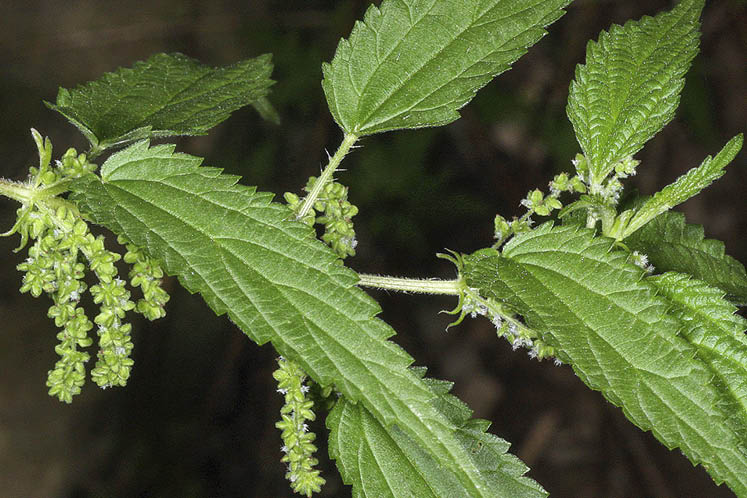
I could have sheepishly explained to the VP that his life wasn’t in peril – if only he had asked. In my youthful wandering up hills and down dales, I had blundered into stinging nettle too many times to count, and I knew, through painful trial and error, that the misery it provokes is temporary. A stoic response is to grimace and bear it. An hour should be long enough, though people’s responses may vary.
Interestingly, plants and animals sometimes share related chemical defences. Formic acid, one component of the sting of stinging nettle, is also wielded by ants to give a nasty jolt to attackers. The ants spray the acid from the tips of their abdomens.
Imagine then, the outrage ants might feel when birds co-opt their defence strategy and use it as a topical medicinal. Birds such as robins, cardinals and flickers pick up squirming ants in their bills and rub them on their feathers in a behaviour called “anting.” Speculation is that the formic acid sprayed by the struggling ants helps the birds rid themselves of parasitic feather mites.
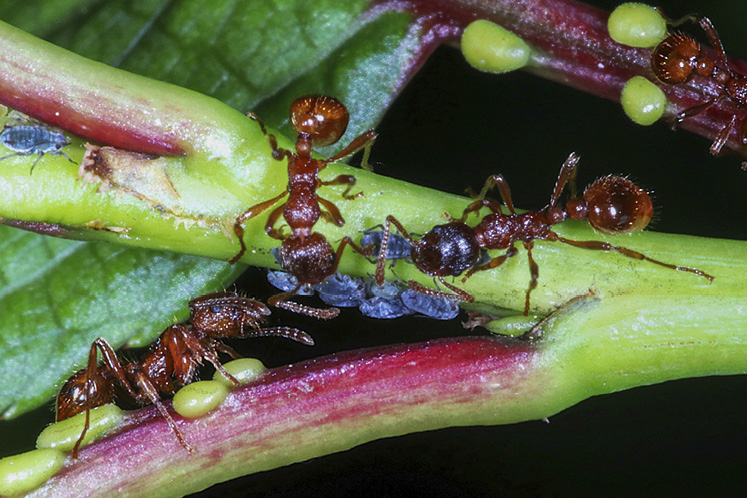
Regrettably, there are not enough “anters” to control the European fire ants – accidentally introduced to North America from across the pond – that have conquered my yard. Gone are the days when I could walk barefoot on my lawn in the summer. Kneeling to garden in shorts is also ill-advised.
Microlitre for microlitre, fire ant venom, a bespoke mix of alkaloids and proteins, is incredibly powerful. A droplet of this liquid misery from these tiny red ants can prompt groans and shocking language from human victims. I’d much rather be poked by a mosquito or chewed by the mandibles of a black fly than stung by one of these little sadists.
Taste me at your peril!
Cardiac glycosides, in carefully prescribed doses, can slow heartbeats and strengthen heart contractions in people suffering heart failure. Initially derived from foxglove plants, these chemicals have saved many lives. That’s the good news.
The bad news is that too much cardiac glycoside can cause a potentially life-threatening irregular heartbeat. For plants and animals that don’t want to be eaten, this is the protective value of cardiac glycosides.
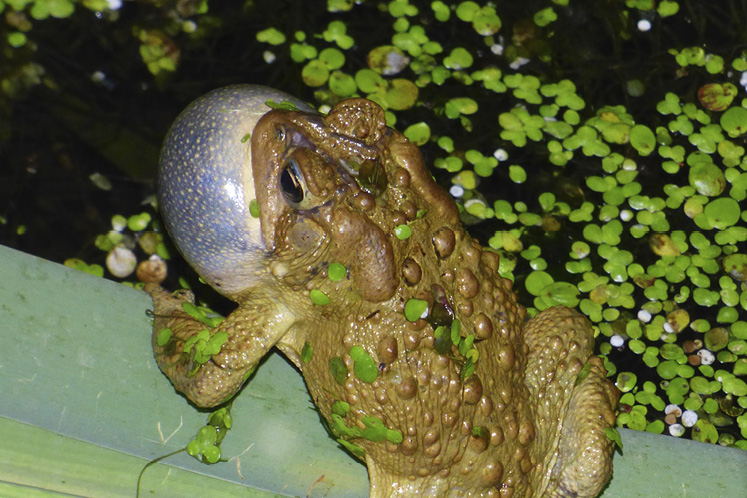
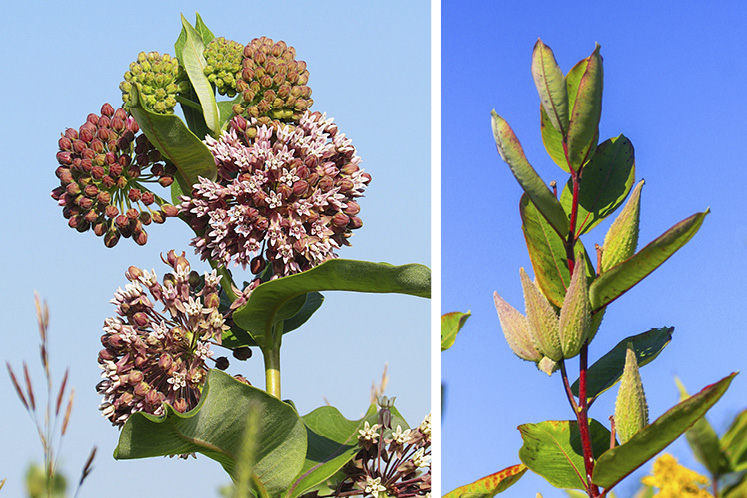
Animals and plants as diverse as toads and milkweed use cardiac glycosides to defend themselves. In toads, these chemicals, concentrated in two sacks positioned just behind their heads, pack enough punch to kill small mammals. Foolish dogs that mouth a toad usually survive, but often show signs of distress, including vomiting.
In milkweed, the cardiac glycosides reside in the thick white sap that gives this plant its name. Only a few insect herbivores, such as monarch butterfly caterpillars, can stomach this chemical defence.
Keep your distance!
One of the first things many parents teach children is to avoid skunks. I learned this lesson early on, even before I could properly pronounce “skunk.” Crazy about critters from a tender age, I toddled after a skunk on Mount Royal in Montreal, shouting “kunk, kunk!” My mother reined me in and reinforced the message that getting up close and personal with a skunk is a bad idea. And that, of course, is just the reaction a skunk desires.
In their anal scent glands, skunks manufacture a pea-soup yellow liquid that is rich in sulfur compounds. With uncanny accuracy, they can spray this out of their anuses for a distance of several metres. The targeted animals (including humans!) suffer a burning sensation on the skin and sometimes even temporary blindness.
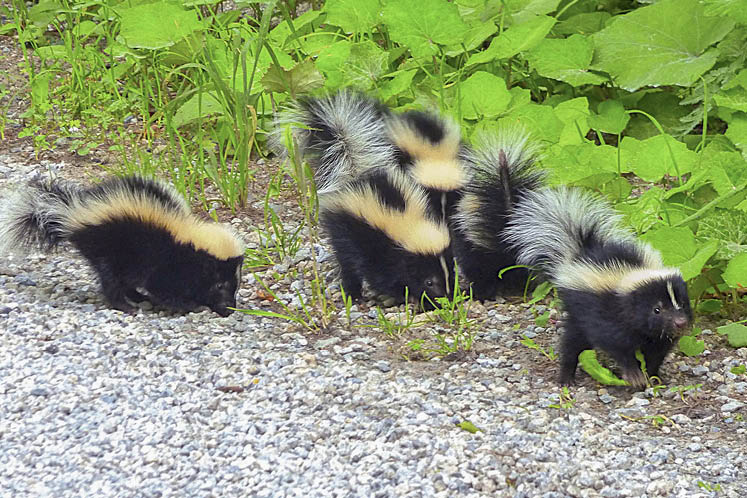
But what isn’t temporary is the stench – unless thorough cleaning is undertaken. A school principal I once worked with was sprayed by a skunk in his garage. He returned to work soon afterward, oblivious to the scent of eau de Pepé Le Pew he still emanated. The office manager held her nose and begged him to return home.
I grew up believing the old chestnut that bathing in tomato juice was the solution to skunk stink. I also believed that hummingbirds migrated under the wings of Canada geese and that ostriches buried their heads in the sand. Tomato juice doesn’t work. But a dousing with a mixture of hydrogen peroxide, baking soda and dish soap apparently does.
Skunks are not the swiftest of animals. They don’t need to be, because of their potent chemical weaponry. But like all well-protected organisms, their defence is not infallible. Great horned owls, with little or no ability to smell, reputedly hunt them.
Beware. We are deadly!
In 399 BCE, the Athenian philosopher Socrates was sentenced to death because his teachings challenged existing norms. The prevailing narrative is that he questioned the pantheon of Gods that presided over Athens and corrupted youth by encouraging them to challenge the actions of their elders. Shocking! To carry out the sentence, he famously drank hemlock.
More than 460 years later, Seneca, a Stoic philosopher of Rome, was implicated in a plot to depose the tyrant Nero. Apparently Seneca, who had once tutored Nero, recoiled at the emperor’s brutality. Alas, the plot was uncovered, and Nero demanded that Seneca take his own life. Seneca, perhaps with a nod to Socrates in ancient Greece, selected hemlock to do the job.
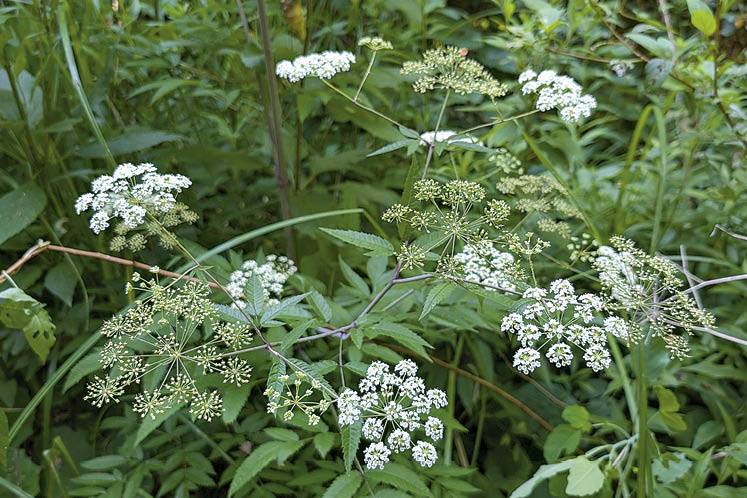
But the poisonous hemlock of classical history has nothing in common with the hemlock trees that grow in Headwaters and beyond. The hemlock that killed Socrates and Seneca is a herbaceous plant with the scientific name Conium maculatum. This old-world perennial is found only occasionally in Headwaters, having been introduced to North America, astonishingly, as a garden plant.
More common here is its close relative, water hemlock or Cicuta maculata, a native wetland species that also has poison coursing through its tissues. Both hemlock species are in the carrot family (Apiaceae), and both can be mistaken for the abundant Queen Anne’s lace of local meadows and roadsides.
But unlike the Queen Anne’s lace that is an ancestor of today’s cultivated carrots, water hemlock can be deadly. A nibble of its root will lead to the quick death that was the fate of Socrates and Seneca.
In fact, the United States Department of Agriculture calls water hemlock “the most violently toxic plant that grows in North America.” Though the USDA was referring to Cicuta douglasii, the western North American version of water hemlock, the warning about extreme toxicity also applies to Cicuta maculata.


If water hemlock is North America’s most dangerous plant, the ominously named “destroying angel” may be the most dangerous fungus. The “angel” part of this mushroom’s name probably stems from its lovely, benign appearance. It is a graceful, pure white mushroom with a saucer-shaped cap and a stalk ornamented with a distinctive “veil,” the remains of a membrane that once protected the emerging mushroom.
But this angel is far from angelic, as experienced mushroom foragers know only too well. The Cornell Mushroom Blog includes fungi gourmand Richard Eshelman’s harrowing account of what happened when he inadvertently collected, cooked and ate three destroying angels – and survived.
Eating destroying angels provokes an array of frightening symptoms. Violent upchucking and diarrhea signal the poisoning, then symptoms may temporarily ease as the victim breathes a sigh of relief that the worst is over.
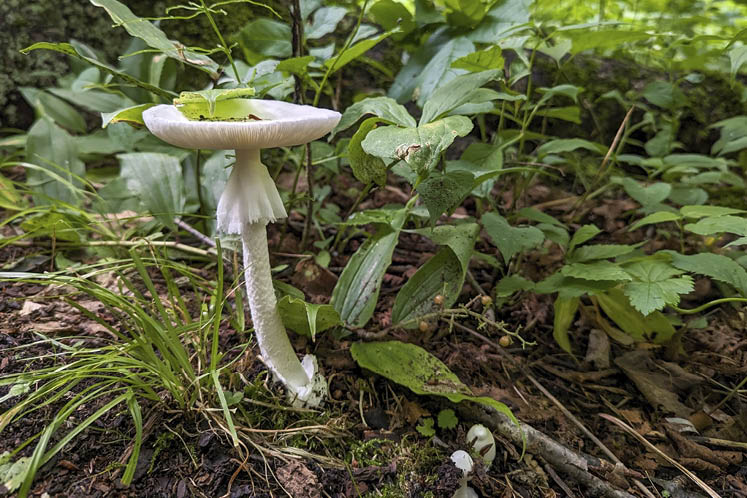
Symptom relief, however, is just the eye of the storm. Agony soon returns as the mushroom toxins perform their devilish work deep within the body, where they destroy liver and kidney functions. Death or permanent damage to these vital organs is the usual outcome, a fate that Eshelman barely escaped.
The toxicity of destroying angels and other poisonous mushrooms may have evolved to deter herbivores from eating them before they’ve dispersed their spores. Or perhaps the toxicity is simply a chance byproduct of the mushroom’s metabolism. Scientists really don’t know.
Fungi are mysterious. Psilocybin mushrooms, for example, show promise as possible treatments for psychological distress in humans. Perhaps this is simply an accidental side effect, but more creative speculation suggests that their mind-altering chemistry developed to encourage mammals like humans to eat and disperse them. Can their spores travel intact through gastrointestinal tracts?
Don’t tread on me!
My brother’s rash erupted over much of his legs and torso after he slept on the beach at Sandbanks Provincial Park – in a patch of poison ivy. Insidiously, the rash bided its time until Dean embarked on a road trip to Baltimore three days later. First his lower legs blushed red and erupted in small blisters. Then the rash colonized his upper legs and much of his torso.
The itching was intense. Movement was agony. Despite this, he kept a promise to himself that he would take in a baseball game at Camden Yards. The night before the game was low-grade torture, sleep almost impossible. At the game the next day, he remembers almost passing out, plagued by the rash and the lack of sleep.
Poison ivy is abundant in Headwaters and Ontario. This plant likes sun and is frequently encountered along the edges of forest paths. Though it can grow in a variety of soils, it thrives in sandy places, such as Sandbanks.
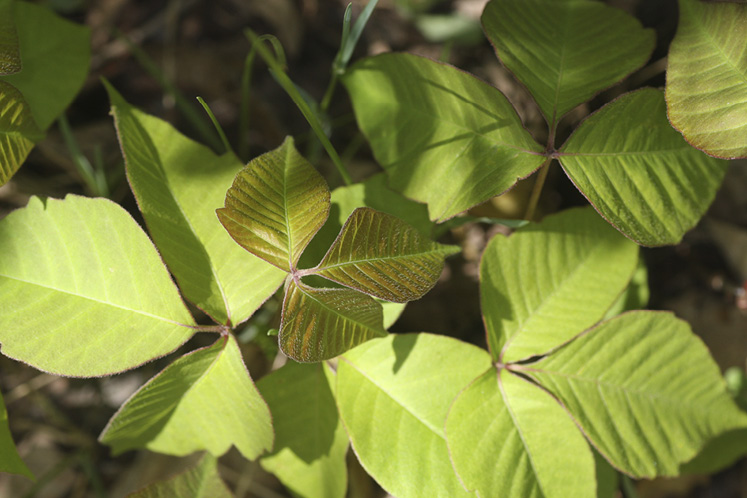
In Ontario poison ivy comes in two forms. One is familiar as a spreading groundcover. Less common is its guise as a woody vine able to climb into the canopies of trees.
Poison ivy contains urushiol, a resin that incites an allergic reaction in most people. Urushiol is also found in the tissues of mangos and cashews, which belong to the same family as poison ivy.
If chewed along with the delicious flesh, mango skins can cause a rash in the mouth. And cashews should be eaten only after being shelled and thoroughly roasted to eliminate all traces of urushiol.
Curiously, only humans and perhaps some of our primate relatives seem to be allergic to urushiol. In dogs, cats and other mammals, it rarely causes a reaction. This, of course, raises the question: why us? Scientists suggests that urushiol’s real targets are bacteria that could injure the plants. Humans may just happen to be collateral victims.
A more imaginative answer could tap into the fact that most relatives of poison ivy reside in the tropics. Could the toxic response of primates to urushiol have evolved to stop monkeys from eating the fruit? Perhaps mangos, with origins in Asia, want to be spread in elephant patties, and maybe cashews, originating in Brazil, prefer to be dispersed by birds such as toucans.
Don’t risk a bite!
I spent much of my childhood in the woods, and as far back as I can remember, I was smitten by wildflowers. My favourite was Jack-in-the-pulpit. It couldn’t compete with the showiness of trilliums, but it was imbued with character. As a little boy, I loved finding Jack standing upright in his pulpit.
The late Stuart McLean, the iconic Canadian humorist and storyteller, wove Jack-in-the-pulpit into one of his Vinyl Cafe tales. In the story titled “A Letter from Camp,” McLean uses the outdated term Indian turnip instead of “Jack-in-the-pulpit.”
Dave, the father character in the Vinyl Cafe series, recalls a misadventure that happened when he was a teenager at camp. Equipped with a wildflower field guide, teenage Dave wandered into the woods and found an Indian turnip. Hungry, he pulled the “turnip” out of the ground and took a bite.
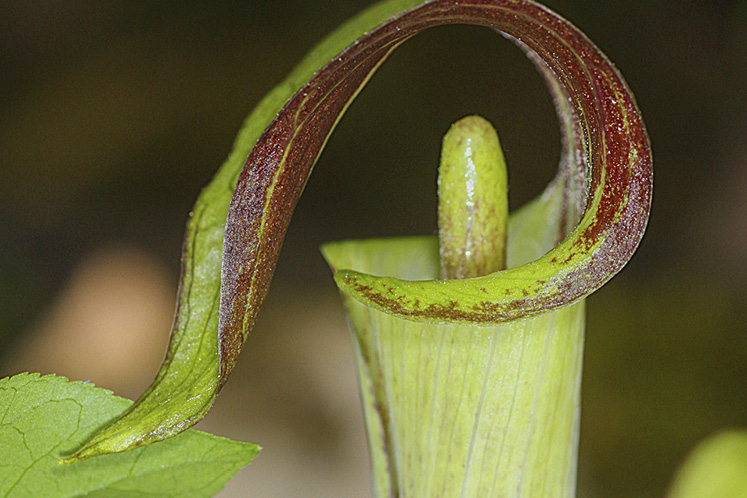
McLean may have invoked a little artistic licence when he described Dave’s reaction: as if “a small nuclear device had been detonated in the vicinity of his tonsils.” Of course, Dave survives and emerges a little wiser about the ways of the woods.
Jack-in-the-pulpit corms can be eaten, as Indigenous peoples are aware, but not until elaborate steps have been taken to neutralize the calcium oxalate crystals that Dave struggled with. These crystals are like tiny shards of glass. When in contact with water – as in a mouth – they swell and penetrate soft tissues. Not pleasant.
Many common plants, both household plants and native wildflowers, contain oxalate crystals designed to inflict pain in the mouths of herbivores. Rhubarb, calla lilies, pothos and peace lilies are among them. Many of our favourite vegetables are also endowed with these crystals, but not in sufficient amounts to cause harm.
Respect my personal space!
The ability of plants such as Jack-in-the-pulpit to protect themselves with needle-like structures is replicated on a macro scale by a common Headwaters mammal. Porcupines are covered by 30,000 or more sharp quills that dislodge on contact with the probing noses of predators.
The quills are modified hairs sporting microscopic downward angled barbs that make dislodging them a challenge. So effective is this defence that porcupines, like skunks, move at a leisurely pace, largely unconcerned about fleeter-footed predators.
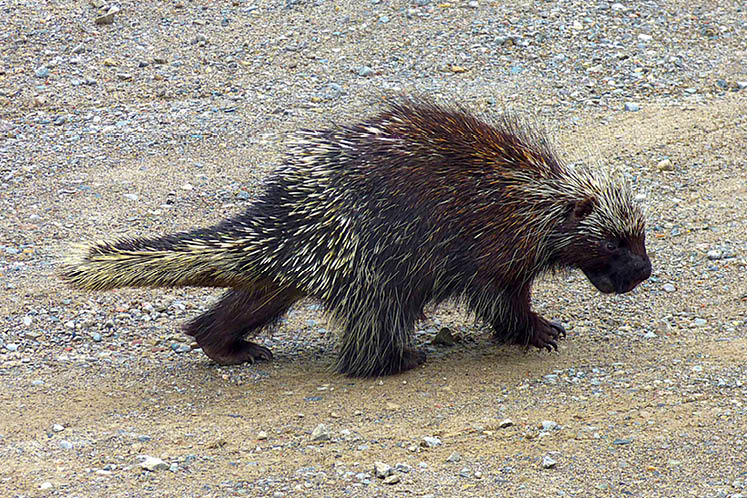
But no defence, no matter how effective, is unassailable. A porcupine’s nemesis is the fisher, a member of the weasel or mustelid clan. Like most mustelids – think badgers and wolverines – fishers are aggressive hunters. They dispatch porcupines in brutal fashion, reportedly biting the porcupines’ unprotected faces until they succumb to injury and blood loss.
Headwaters porcupines enjoyed a long respite from these dangerous enemies, but those halcyon days are now over. After being expelled years ago by habitat loss and trapping, fishers have reasserted their claim to southern Ontario. Porcupines now look over their bristly shoulders in fear.
Nature is a theatre of competition, with plants and animals doing what they must to live another day. They may inspire us with their beauty, diversity and wonder, but they exist because they can defend themselves. No one wants to be eaten.
Related Stories
Alice and the Mushroom
Fly agaric, long known for its potent psychoactive properties, is an iconic woodland fungus that has made many an appearance in pop culture.

Stayin’ Alive
Using venom, camouflage and jump scare tactics, snakes find many ways to survive and escape danger.