
Sundews: Hidden Hunters of the Bog
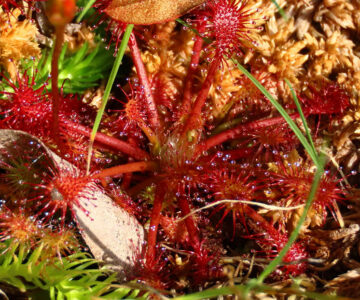
Sporting sticky tentacles covered with sugary dew, this carnivorous plant gets nitrogen from unsuspecting insects that wander into its grasp.
Among the most intriguing of plants are those with leaves that trap insects. These include pitcher plants, sundews and the iconic Venus flytraps. Sundews so fascinated Charles Darwin that he reputedly once said, “At this present moment, I care more about drosera (sundews) than the origin of all the species in the world.”
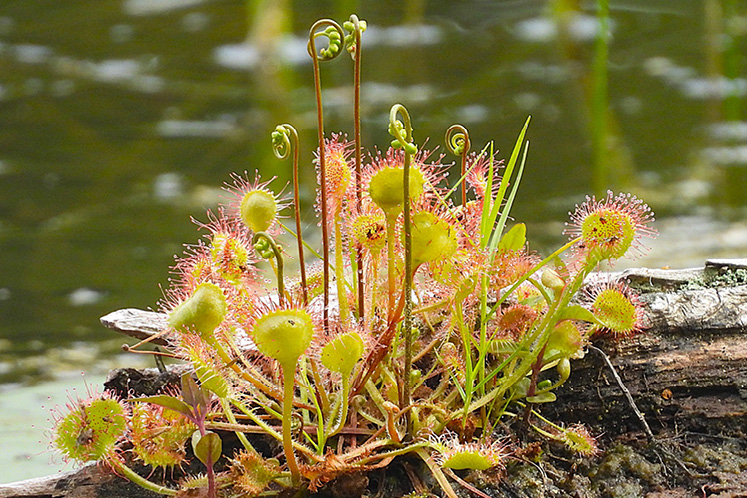
Darwin studied round-leaved sundews in Britain, a species that is also common in Canada. In fact, in at least one special Headwaters bog, they grow in profusion. To Darwin, the leaves of these plants were “great chemists” able to detect tiny amounts of nitrogen in various substances he “fed” to them.
Those substances included hair, milk, cheese, wood, paper, gold foil and a selection of insects. Darwin found that his sundews were only interested in offerings that contained nitrogen.
Nitrogen, crucial for plant growth, is largely absent in the bogs and shorelines where sundews typically grow. This deficiency makes such places unsuitable for many plants, but a boon for sundews. Because they “eat” nitrogen-rich bugs, sundews can thrive in nutrient-poor places, thumbing their sticky leaves at larger, needier plants.
That stickiness is courtesy of profuse tentacles capped by glistening beads of sugary liquid that attract and ensnare tiny flies and other insects. In response to the struggling insects, the tentacles then curl over and hold them in a deadly embrace. Digestion of their nitrogen-rich bodies soon follows. Be very happy sundews aren’t the size of trees!
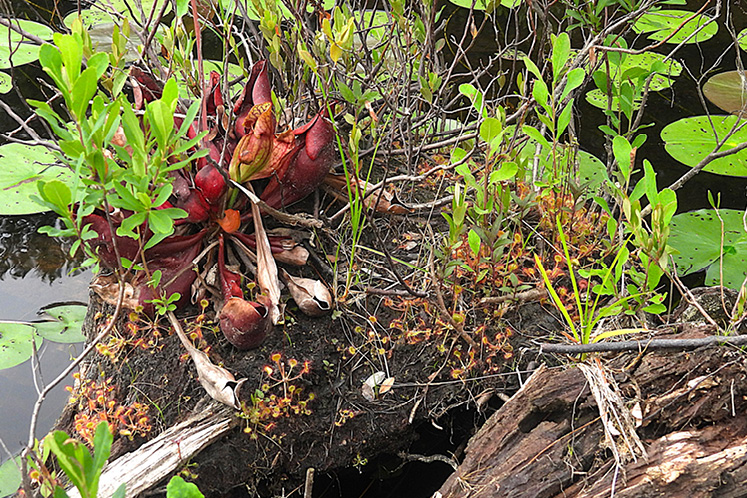
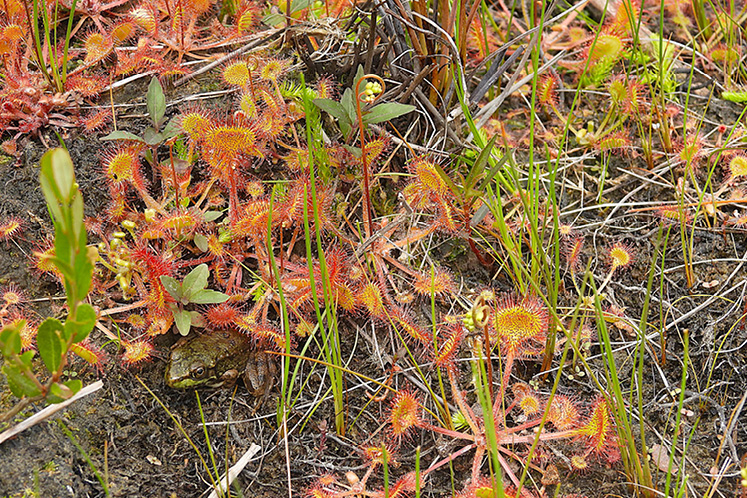
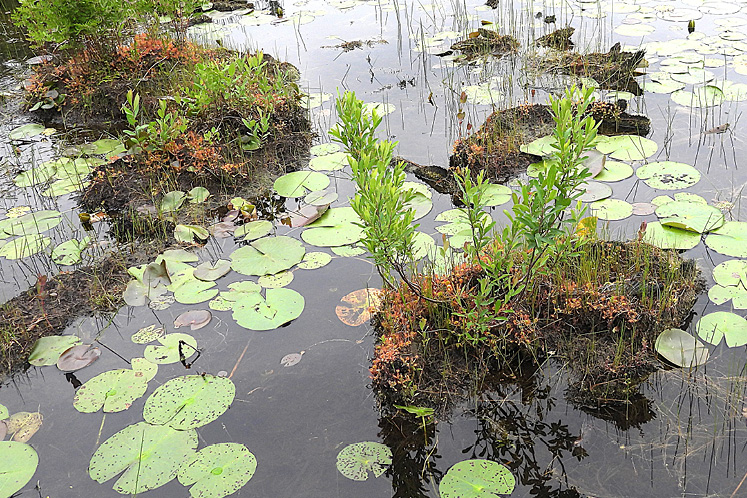
Sundews usually grow in the company of sphagnum mosses in acidic environments like bogs and nutrient-poor fens, often alongside much larger pitcher plants that also attract and consume insects, albeit with water-filled leaves instead of sticky tentacles.
Sundews also grow directly on water-saturated logs and stumps found along the edges of lakes and ponds. Perpetual moisture is an absolute must.
Charles Darwin found his sundews in Sussex, England, but these fascinating plants with a brilliantly unique way of making a living await discovery right here in Ontario.
Related Stories
Carnivorous Plants
Plants can be killers too, and in Headwaters we have at least three varieties of carnivorous plants that consume small animals.
Toxic Tricks: Strategies Plants and Animals Use to Stay Alive
In Headwaters and beyond, plants and animals, from stinging nettles and poison ivy to ants and porcupines, rely on physical and chemical defences to stay alive. We tend only to notice when we get too close.