Timber Rattlesnakes: Finding a Lost Species South of the Border
Once common in the Niagara region, these impressive snakes have not been seen in the wild for eight decades.
In 1941, an impressive serpent was collected in Ontario’s Niagara Gorge among the dolomite boulders that prevail there. Its body ended up at the Royal Ontario Museum. It was a timber rattlesnake – the last one ever found in our province.
Timber rattlesnakes, thick-bodied snakes that can reach about 1.5 metres in length, formerly reached their northern limit in southern Ontario.
They once lived in the Hamilton area and parts of the Niagara Escarpment offering the rocky, forested habitat they prefer. There is even an old record from Rockside in Caledon, though historic records of rattlesnakes need to be taken with a dose of skepticism – large, patterned snakes of other species have always been mistaken for rattlesnakes.
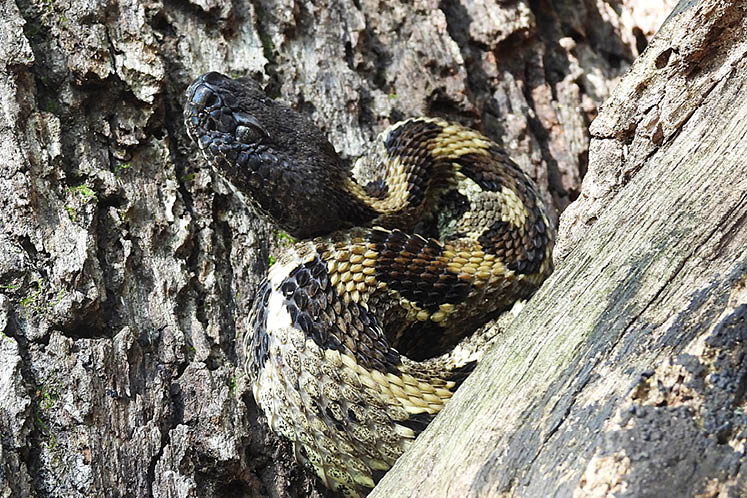
Despite the scientific name of timber rattlesnakes (Crotalus horridus) we have little to fear. The state of West Virginia, where I found the snake pictured here, keeps track of deaths from timber rattlesnakes. From 1961 to 2023, 13 people died from their bites.
Alarming? Not really. It turns out that ten of those deaths occurred from bites resulting from the bizarre practice of preachers handling snakes during church services. Another West Virginian died after being bitten by his pet rattlesnake.
That leaves only two deaths from rattlesnakes in natural settings over a period of 63 years in West Virginia – a state that has a lot of rattlesnakes. The risk of being killed by a timber rattlesnake isn’t zero, but hovers nearby.


Here in Ontario, our fear of snakes led to their extirpation (local extinction). Pigs were released to find and kill them. And, because rattlesnakes hibernate communally, they could be slaughtered easily with guns, clubs, explosives and fires at their overwintering den sites.
Timber rattlesnakes are almost certainly gone for good north of the border. They can’t reach us naturally given the vast swaths of agriculture and development between their current range and Ontario. How about re-introduction? That won’t happen. Many people still view snakes as dangerous, perhaps even as evil. The outcry would be deafening.
Related Stories

Stayin’ Alive
Using venom, camouflage and jump scare tactics, snakes find many ways to survive and escape danger.

Ontario Rattlesnakes and Their Mimics
Rattlesnakes in Ontario are largely harmless, save for the Massasauga rattlesnake, the only venomous one in the province.