Calvin the Salamander Returns!
Calvin and his kin depend on two things for their survival: forest and fishless ponds.
Most evenings in April find me pondside, observing the behaviour of spotted and Jefferson salamanders. This year I did metaphorical backflips when I encountered Calvin the piebald salamander once again. I wrote about Calvin last year – a striking piebald spotted salamander now at least 14 years old.
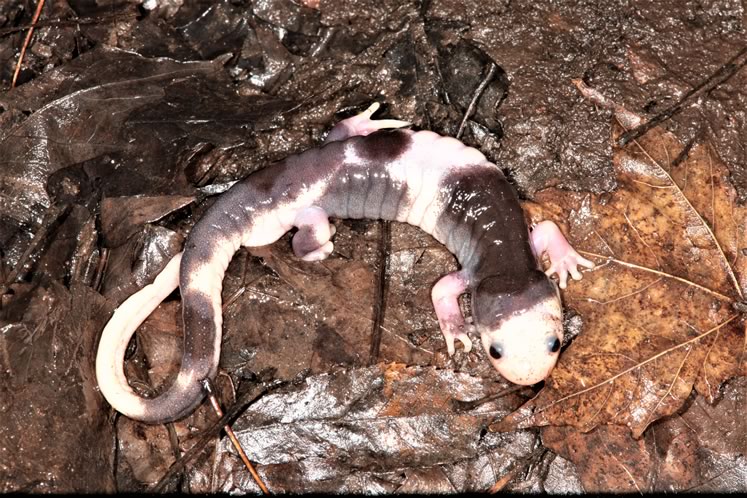
Calvin the piebald salamander in 2022. Photo by Don Scallen.
I mused in last year’s column about Calvin’s ability to find his pond every year. As a spotted salamander he may walk 500 metres or more to get there. I wondered if Calvin used scent or magnetic fields to find his way. Calvin’s homing ability is incredibly precise for he returns not only to the same pond every year, but to precisely the same spot in that pond – an area no larger than a typical bedroom. I’m baffled.
Calvin, a male spotted salamander, deposits bright white packets of sperm on the pond bottom to be picked up by a female salamander in her anal vent or cloaca. These salamanders practise safe sex – no intimate contact for them. The females then lay beautiful egg masses, with each embryo surrounded by a distinct protective membrane.


Larvae hatch in about a month and become voracious ambush predators on the pond bottom. They are easily distinguished from frog tadpoles by the prominent feathery gills on the sides of their heads.
Then in mid to late summer, if a drying pond hasn’t claimed their lives, they transform into air-breathing juveniles and leave the water to live on land. Two or three years later, they return to the pond as adults to breed for the first time. As Calvin has taught me, they may reprise this incredible annual journey for more than a decade.
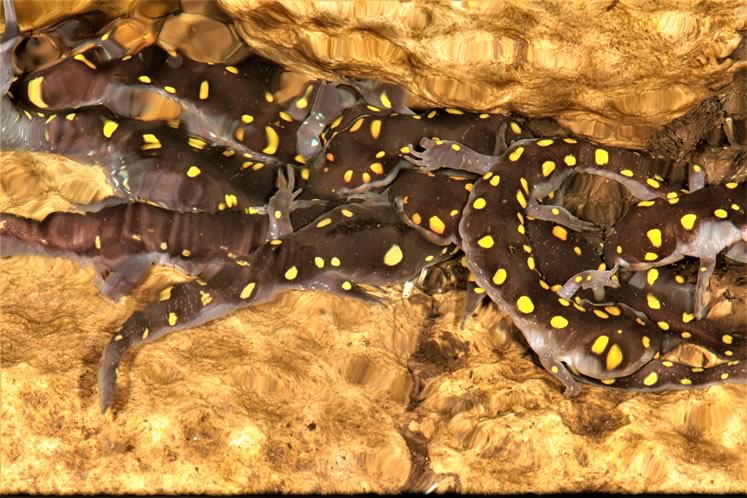
Spotted salamander mating aggregation. Photo by Don Scallen.
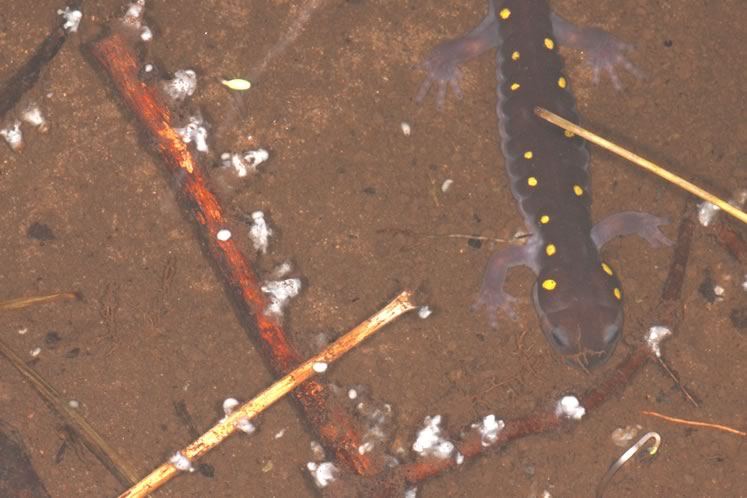
Sperm packets (spermatophores). Photo by Don Scallen.
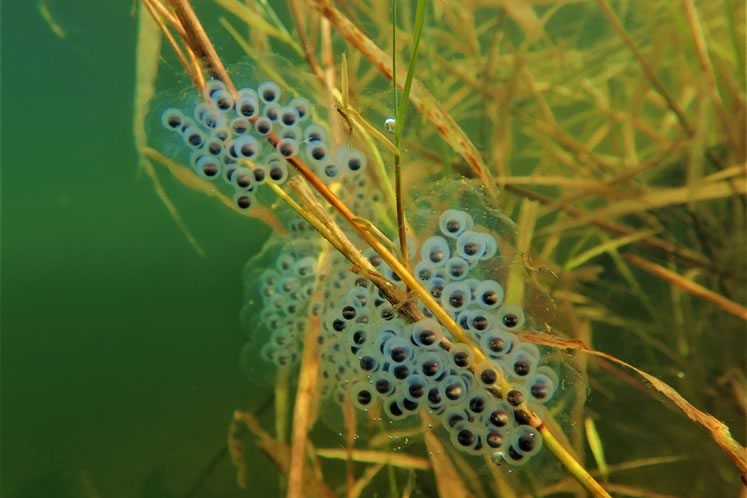
Spotted salamander eggs. Photo by Don Scallen.
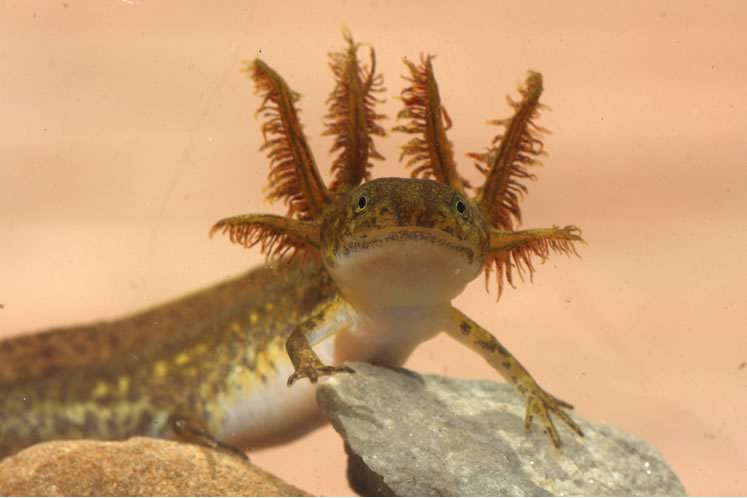
Spotted salamander larva. Photo by Don Scallen.
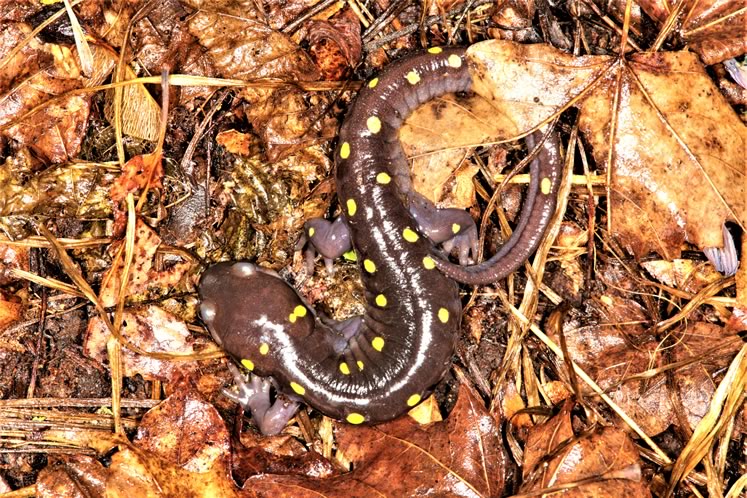
Typical spotted salamander. Photo by Don Scallen.
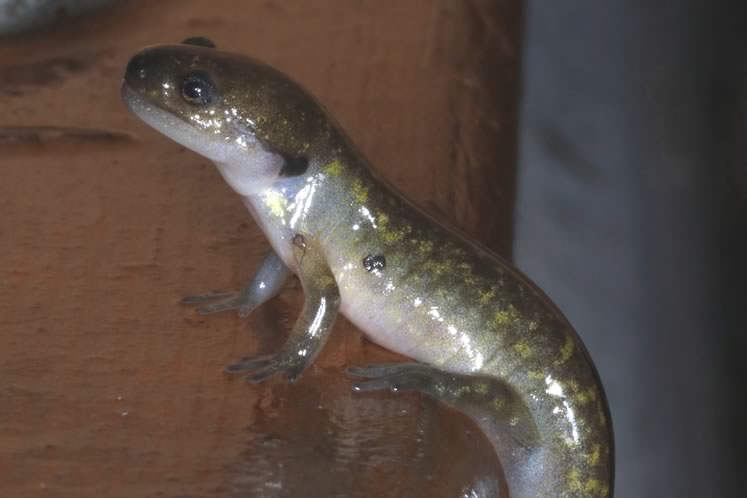
Spotted salamander juvenile. Photo by Don Scallen.
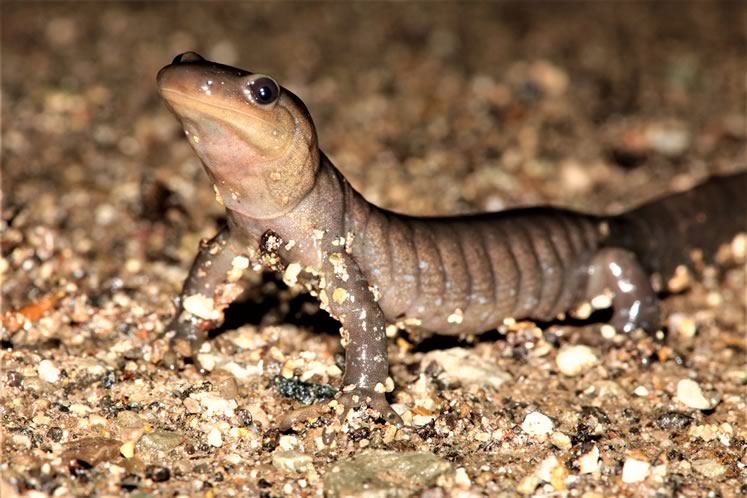
Jefferson salamander. Photo by Don Scallen.
Calvin and his kin depend on two things for their survival: forest and fishless ponds. Where these exist in concert, you’ll find salamanders. For Calvin’s sake, and for the welfare of myriad other animals, we need plenty of both.
Related Stories
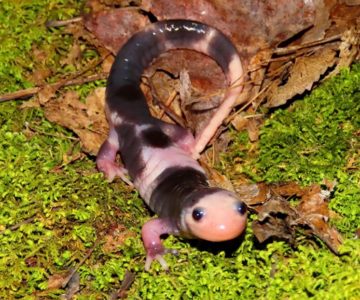
Calvin the Salamander
Calvin is a rare piebald version of a spotted salamander.
Adapting to Survive
Animals use camouflage, poison and deception to live another day.
CSI: Natureworld The Case of Burying Beetle Bob
A CSI probe into Bob’s disappearance has revealed damning evidence linking Sam to the incident!
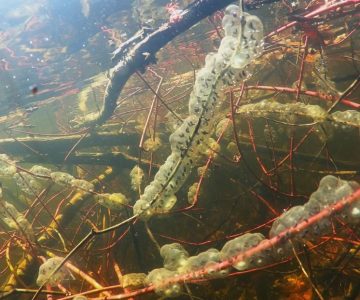
Dispatches from a Vernal Pool
Vernal pools, like coral reefs, are theatres showcasing life and death struggles between prey and predators.
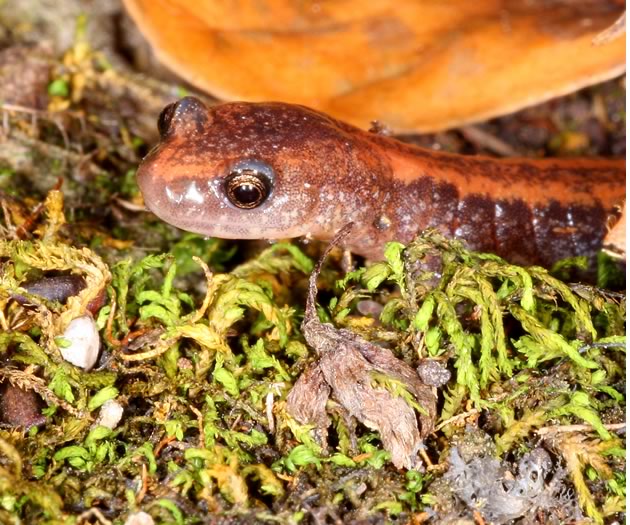
Red-backed salamander
Red-backed salamanders are abundant, outnumbering all of the reptiles, rodents and birds that share their forest habitat.
The Return of the Salamanders
This year I managed to take video of the underwater breeding of spotted salamanders.
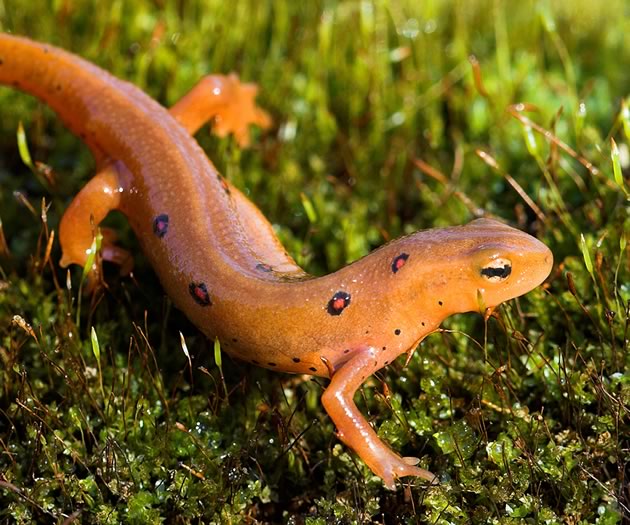
Vernal Pools
These fleeting spring wetlands are factories of biodiversity. Unusual winters threaten vernal pools, as do hot, dry summers.
Autumn Salamanders
Small wonder so many salamanders are active at this time of year, seeking last suppers of grubs and spiders, crickets and millipedes.
Hopping and Walkin’ in the Rain
This is the time of year to get out after dark and explore… especially as the rain falls.
Mudpuppies
I was invited to search for mudpuppies in a Wellington County stream last December.