Meet the Maker: Fabienne Good
Artist Fabienne Good twists glossy magazine pages into sticks and weaves them into sturdy, modern containers.
Tucked away in a dark blue cabin studio in the Mono woods, accompanied by the sounds of the wind in the trees and birdsong, peripatetic artist Fabienne Good is making herself at home. For now.
While her modern take on basket weaving is front of mind, Fabienne also draws, designs and makes textiles and quilts, creates cyanotypes and produces inks from foraged plants.
The multi-hyphenate creator, who is spending time with her parents in East Luther, says her wanderlust took her travelling over the course of about 15 years. She returned to Canada two years ago and came by the cabin studio after being introduced to local weaver and spinner Darlene Hostrawser at the International Plowing Match last fall.
Darlene offered to share the cabin on her property with Fabienne. In addition to creating her own art, Fabienne also teaches basket weaving in the tranquil space, and she and Darlene have held popular foraged ink workshops there.

Fabienne earned a bachelor of fine arts from OCAD University and a master’s degree in art and education in Switzerland, where for 10 years, she taught art and design to high school students. It was there that she came up with her technique for creating baskets woven not from traditional wicker, but from flexible “sticks” made from upcycled magazine pages.
“Because it was for teens, I knew the upcycled baskets had to be convincingly beautiful and functional,” says Fabienne. “Eventually, through trial and error, I came up with this process that allowed my students to make impressive baskets they were really happy with.”
She adds that the pragmatic, planning-based design training at OCAD University may have laid the groundwork for seeing the potential of paper. “For example, in one design class I had to make a pair of functional shoes completely from paper. I think that sort of problem-solving approach has informed my practice.”
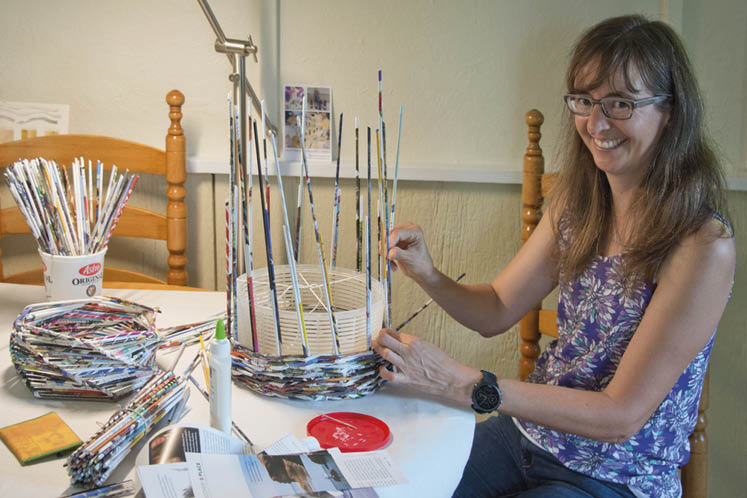
Fabienne says her approach is somewhat like the Japanese technique of twisting paper to make baskets. To make her sturdy weaving “sticks,” she wraps the inside pages of recycled catalogues or magazines, often library castoffs, around wooden skewers.
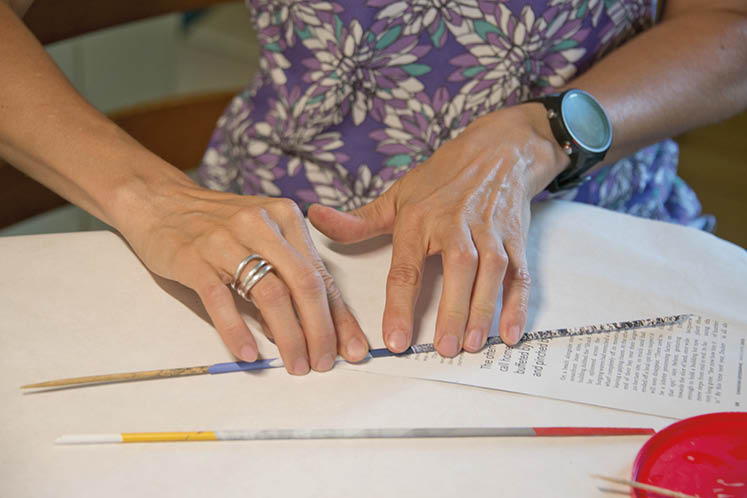
“Canadian Geographic magazines are one of my favourites,” she says. “The paper has a wonderful feel and rolls really nicely around the skewers, not to mention all the beautiful colours.” (Fabienne reveals she has not yet used In The Hills for her baskets, but given permission, might construct one from this issue. Permission granted!)
Selecting a magazine page with a minimum of white space, she uses a craft knife to cut it in half vertically. This gives her the paper shape she needs to achieve the length and thickness she’s after.
Fabienne then places a wooden skewer in the corner of the halved sheet and rolls it on the diagonal, wrapping the paper around it as she goes. A dab of white glue in the final corner holds the paper in place. Then she removes the skewer. “One end is larger and the other is more tapered, which allows the sticks to slot into each other.”
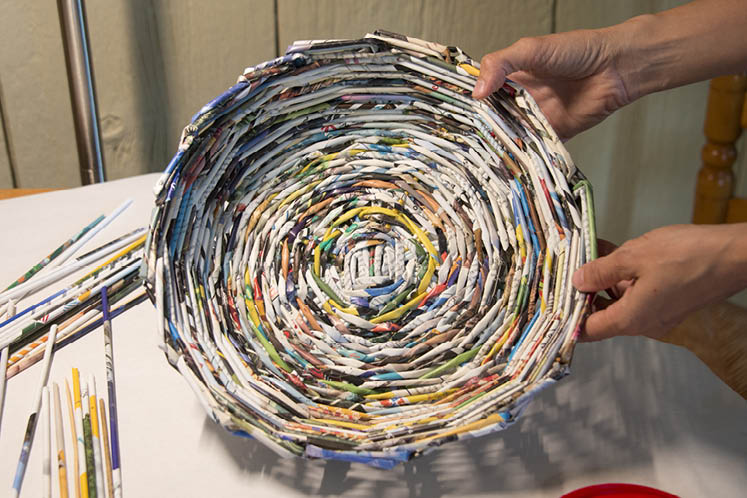
The bases of her hexagonal and rectangular baskets are heavy cardboard recycled from boxes, and she often also covers these bases in magazine pages. She particularly enjoys working with hexagonal bases, which result in an interesting, curved edge that produces a spiral basket.
To create the spiral, she attaches the sticks to the hexagonal base and weaves them by bringing the longer of a pair over the other. When the sticks get too short, she connects new ones to the original “threads” and continues the pattern. The curve is produced because each corner is slightly offset, adding to the spiral shape with every round. When the basket reaches the desired height, Fabienne finishes the weave by tucking in the ends and cutting off the excess.
Fabienne also makes round baskets solely from sticks, foregoing the cardboard bottom and starting with a base made by linking a few sticks. She weaves two sticks in an under-over pattern, forming a radiating wheel, and uses clothespins to temporarily secure the construction. When building the sides, she uses a salad spinner basket as a temporary frame.
“Honestly, it’s a bit of a tedious process but very meditative,” she says. “When I first started producing the curved-edge baskets in 2015, there wasn’t anything else like it that I could find online. Now there are more examples, but at the time I really had to develop my own method, which was both frustrating and rewarding.”

Fabienne has spent time in Australia, India and Asia, saying she has learned a lot from the often-jarring differences between locales. “I went from visiting the big city of Tokyo to living in a small town in Australia with a population of 12. I experienced the noise of Singapore in contrast to the peaceful idyll of my work and home surroundings in Dufferin. I think a lot about the juxtaposition of these extremes and believe my art expresses my experiences.”
Watch for her work at forthcoming holiday markets and shows, where they wow in person. “I’ve learned that my work is more appreciated, especially by art lovers, when it is seen and touched. That’s when people can see that creativity is truly all about connection.”
Find Fabienne online at fabiennegood.com.
Related Stories

Meet the Maker: Branson Giles
Orangeville native Branson Giles designs and crafts his wood furniture pieces both to honour the designs of the past and to ensure they live long into the future.
Meet the Maker: Andrea Trace
Artist Andrea Trace picked up stamp making to add dimension to her mixed media artworks – but the stamps became art unto themselves.
Meet the Maker: Jo Thomson
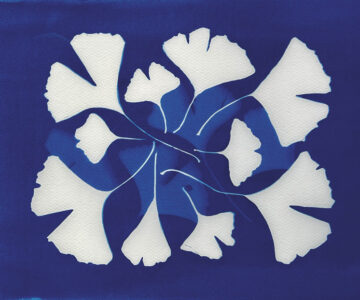
Mono artist Jo Thomson harnesses the power of sunlight – and the power of her darkroom – to create bright cyanotypes and photograms of local flora.
Meet the Maker: Wendy Mitchell-Burke
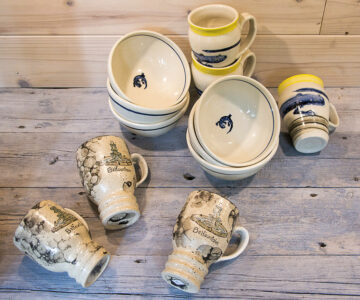
Belfountain potter Wendy Mitchell-Burke connects with her community and nature through clay.