Aging Gets a Makeover at Small-Town Gyms
Seniors are embracing functional fitness to get fit for everyday life, and stay strong and independent in their later years.
A new kind of fitness culture is taking hold – less about ego, more about staying strong enough for real life.
Walk into a gym or fitness studio these days and you might notice something new: septuagenarians or octogenarians working out at the pulldown or leg press machines. Sure, there are still the usual 20- and 30-somethings pounding the treadmills, but now sweating alongside them are people of older ages.
On a recent morning at Erin Fitness and Body Clinic, a bright and welcoming small-town gym on the main street in Erin, three gymgoers over 70 are working out. They’re here for different reasons – staying fit for passions such as skiing, hiking or horseback riding – but there’s also a common goal: preventing everyday tasks from becoming more difficult. That means being able to carry heavy groceries, having good balance to avoid falls and feeling confident about getting down to the floor – and back up again – without hesitation.
That’s the motivation for Mary Lawson, 80, who works out here. The Erin resident, still working at an active career in the construction industry, played a wide variety of sports in her youth. But as happens for many people, activity faded into the background over the years. “I’ve always known the benefits of exercise,” she says, but it wasn’t until the pandemic that she noticed something had changed.
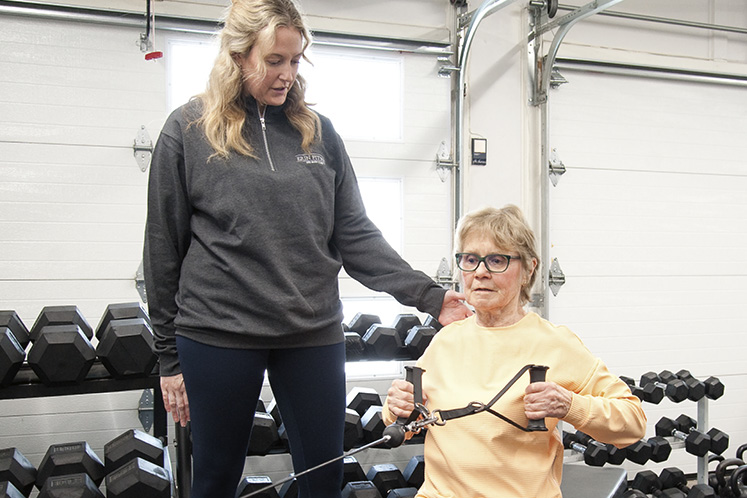
“I didn’t feel energetic and strong,” she says. She wanted the energy for daily trips up the 13 stairs in her century home, and to keep up with gardening and yard work. So she decided to do something about it. That meant working on regaining upper body and core strength.
Supporting movement for real life is a particular focus for Christine Deemert and Sierra Tremble, who started Erin Fitness in 2015. “It’s about helping people keep doing the things they love,” says Deemert. “Whether that’s playing with grandchildren, rediscovering their favourite sport or just having the energy to get outside more.”
It’s also about connectedness. People are often surprised by the sense of community that has formed at the gym, Tremble shares. “A lot of our members have become friends. It’s supportive. You can show up exactly as you are.”
Rural residents can sometimes face significant barriers when it comes to fitness. Living in a small town or in the countryside often means having access to hiking trails, ski hills or open roads for cycling. However, research suggests that beyond the physical work for some occupations – farmers, for example – rural residents aren’t getting enough exercise. That’s thanks in part to car-focused lifestyles, long distances to reach fitness facilities, poor walkability in some neighbourhoods and a lack of social support.
A growing number of Headwaters gyms and studios are stepping up to fill that void. Some local churches and community centres also offer free or low-cost, all-ages options focused on weights or movement. The Mono Community Centre, for example, hosts tai chi, qigong and yoga programs. For seniors less likely to travel, Caledon Community Services runs roving fitness classes in seniors’ residences and neighbourhoods.
Why work out?
Stuart Phillips, a professor of kinesiology at McMaster University, is a leading researcher in skeletal muscle health and aging. “We fail to appreciate what muscles do for us, until we can’t do certain things or mobility is reduced,” he says.
Slowing muscle loss as we age – through physical activity, good diet and resistance training – is key. “It’s an investment in the future you,” Phillips says. “It’s much greater than what you put in.” Muscle loss is about 1 per cent per year starting in the mid-30s for women, he explains. Changing that to 0.8 per cent by age 65 “is almost a decade’s worth of age you saved yourself.”


Muscle loss shows up in small ways. Over time, you might notice a new tendency to choose the elevator over stairs, that you’re walking less, or that it takes longer to recover from activity. This isn’t just about strength, Phillips says. It’s about independence. Exercising slows all aspects of aging, he says. “The link between muscle and function is cognitive function.”
Strength and power are a form of insurance as we age, he says. “Strength is the foundation for everyday tasks; power helps you recover balance, climb stairs, rise from a chair and prevent falls.” Losing either means even small setbacks can have much bigger impacts.
What is ‘functional fitness’?
For Don Fysh, this notion of insurance crept in gradually. A lifelong skier and hiker, he never considered himself anything but active – until his mid-70s, that is, when something shifted. “About three years ago, I was noticing difficulties with my legs,” says the Erin resident. Tests revealed spinal stenosis, which pinches the nerves in the legs. His doctor recommended surgery or focused physical training. Fysh chose the training.
He began training at Erin Fitness, with a focus on core and balance. He had to completely rethink how he trains, he says, including adding variety and new ways to move.
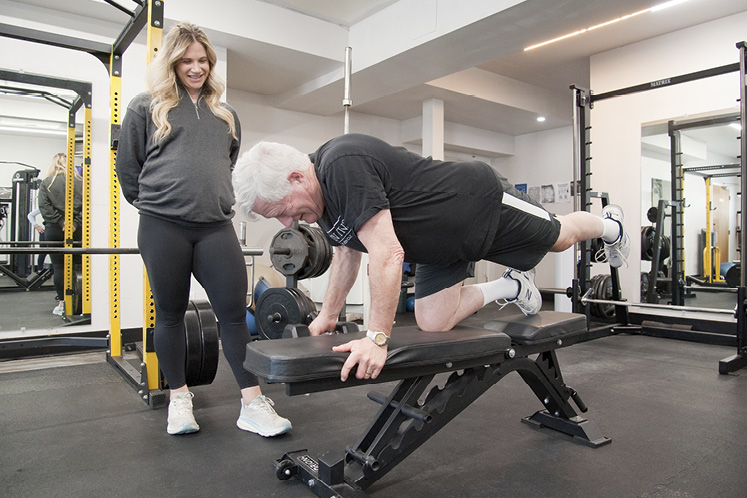
This, in a nutshell, is “functional fitness.” It’s not just about hitting all the lifting machines or even isolating muscle groups. It’s about training movement patterns that show up in everyday life: squatting, lifting, bending, carrying, walking, climbing stairs and getting up off the floor.
At Strong Studio in Orangeville, trainer Kendal Merrill focuses on keeping fitness accessible. The relaxed atmosphere of the boutique space is designed to be comfortable and confidence-boosting and it caters to “clients who want a more private and personalized experience.”
Merrill has seen how muscle loss unfolds. It’s subtle at first. Then it slowly reshapes how people move through their day, she says. Things feel heavier. Recovery takes longer. Everyday tasks require more effort. That’s why fundamentals matter, she explains. “A squat is your go-to,” Merrill says. “It incorporates 90 per cent of your joint movement and muscle awareness – it’s an all-in-one.”
Pilates and yoga, too
At Purple Owl Pilates in Mono, owner Megan Fuda sees similar scenarios play out in her studio. She has witnessed people regain confidence in movements they once found challenging, from getting out of bed more easily to standing up from a kneeling position.
Class members come in looking for strength and mobility, she says, but they also gain confidence, balance, co-ordination and a greater awareness of how they move.
Shelley Wishart, owner of Orangeville’s GoYoga, agrees. She says a sense of balance and calm can have the added benefit of affecting mood and how we interact with others – certainly a bonus at any age. “Any time we are moving our bodies in a particular way, and paying attention to how we are feeling in our bodies as we move, we develop a practice that we carry with us throughout our day.”
Mindfulness can help us move more comfortably or gracefully, Wishart says, and it can also translate into other things such as helping to remember where we put our keys.
Strength that carries into life
At Riverdale Fitness Mill in Inglewood, trainer Jon Matzov sees people of all ages. One client is a 70-year-old woman whose fitness level he finds particularly inspiring. The gym has a community-driven, familiar and low-pressure vibe. People know each other. Conversations happen between sets. “Fitness keeps you honest with a focus on the future,” he says, “and gives you the clear observation that it is possible to still be active.”
People go there to work out for different reasons. Some are rebuilding strength after injury. Some are maintaining fitness. Some are trying to stay ahead of the decline they’ve seen in others.
“A lot of people’s goals are practical, not superficial,” Matzov says. “The work we do is applicable in real life, and it’s more about effectiveness and efficiency.”
That’s the plan for Willa Gauthier. A lifelong horse rider and owner of a farm located between Erin and Belfountain, she now trains with longevity in mind at Erin Fitness. There’s no debating the benefits of strength training, she says, adding that flexibility and mobility are essential to keep doing what you love.
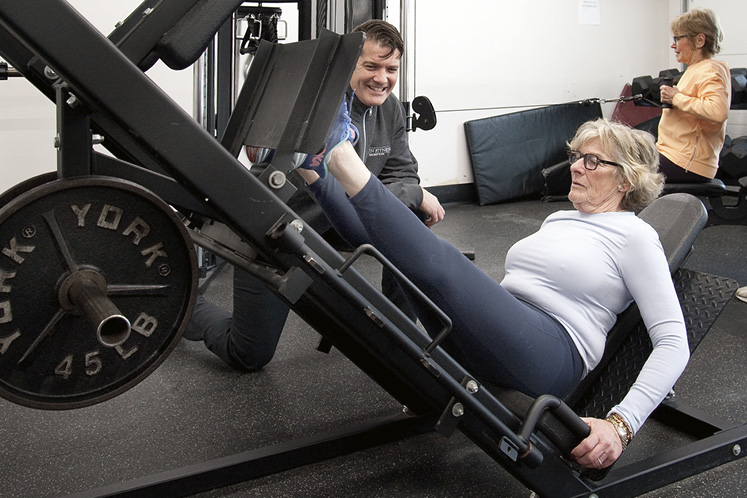
But what if you’ve let your fitness slide? How do you begin? It’s always a good idea to speak to your doctor before starting an exercise program. Once you get the green light, it’s just about taking that first step.
“The number one misconception is that you have to be fit to start,” says Caitlin Jerome, co-owner of Total Athletics Training & Rehab in Orangeville, which blends high-energy training with rehab-informed coaching. The studio trains people from their 20s through their 70s, and everyone works at their own level, says co-owner Shawn Pontone. However, the goal is the same: staying functional.
“A lot of people stop moving when they feel stiff or can’t do what they did 20 years ago,” says Jerome. “Everything is modifiable based on where you are at in your fitness journey. Motion is lotion – we need to find your entry point.”
Move more, right at home
If there’s a common thread among local trainers, it’s this: You don’t need complicated routines to stay strong; you need the right movements, done consistently.
For Jon Matzov at Riverdale Fitness Mill, that starts with foundational strength. Deadlifts (or hip hinges with weights in hand) – feet hip-width apart, hinging at the hips with a neutral spine – builds the kind of strength used to safely lift and carry. Pair that with squats – sitting back and down as if into a chair. As Kendal Merrill of Strong Studio says, it’s one of the most effective full-body movements for glute strength, hip mobility and bone density.
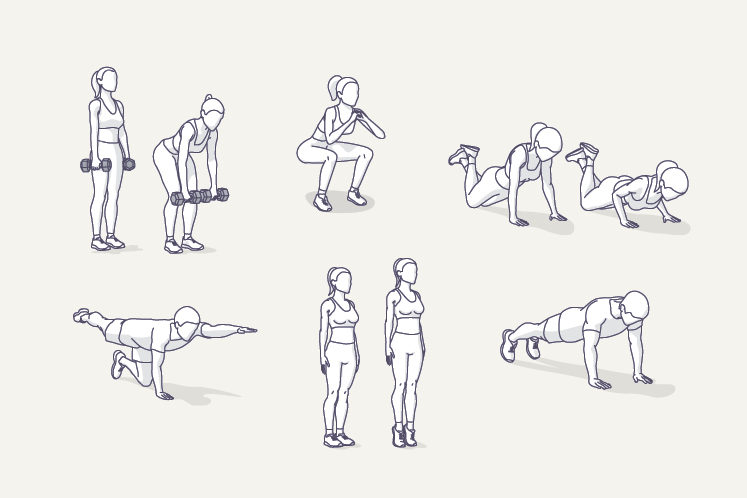
Upper body work rounds it out. Matzov recommends push-ups (on the floor, knees or elevated) alongside rows (pulling a weight toward your body while keeping your back straight).
You can easily add these to a simple home circuit: a lower-body move (squat or hinge); an upper-body push (push-ups); an upper-body pull (rows); stability work like bird dogs, a move where you extend one arm and the opposite leg while keeping your core steady; or calf raises; finished with a core hold like a plank.
Shelley Wishart from GoYoga also recommends seated twists – sit cross-legged, one hand to the opposite knee, the other behind you, gently rotating the spine – and tree pose, standing tall with one foot pressed into the inner calf, to build balance and focus.
Want to read more about functional fitness? Be sure to read Bethany Lee’s latest column, “Staying Strong in My Second Half.”
More Info
Finding Fitness in Headwaters
Wherever you live, you’ll find fitness options that reflect a community-first vibe – whether you’re lifting, stretching, rehabbing or just getting started.
Anytime Fitness Bolton – anytimefitness.ca
Bird-Dog Fitness- birddogfitness.ca
Caledon Centre for Recreation and Wellness – caledon.ca
Caledon Community Services – ccs4u.org
Caledon Fitness – caledon-fitness.ca
Erin Fitness and Body Clinic – erinfitness.com
Explore Yoga – exploreyoga.ca
5 Elements Yoga School – 5elementsyoga.com
GoYoga – goyogaorangeville.com
Headwaters Fitness & Racquet Club – headwatersracquetclub.com
Mono Community Centre – townofmono.com
Orangetheory Fitness Orangeville–Shelburne – orangetheory.com
Purple Owl Pilates – purpleowlpilates.ca
Riverdale Fitness Mill – riverdalefitnessmill.com
Shelburne Pilates Club – shelburnepilatesclub.com
Strong Studio, Orangeville – strongstudio-orangeville.com
The Mega Gym – themegagym.ca
Total Athletics Training & Rehab – totalathleticsorangeville.ca
Trailside Yoga – trailsideyoga.ca
Related Stories
Staying Strong in My Second Half
Starting to feel your age? It’s never too late to get up and start moving, as Bethany Lee finds out.

Life in the Blue Zone
Aiming to reach 100? Learn about life in Blue Zones, the places on earth where people live beyond a century.