
When Critters Come Calling
Got squirrels in the shed or raccoons in the rafters? If you hear uninvited houseguests, here’s how to show them the door – humanely.
As the temperatures drop, wild animals start seeking warmth, protection and reliable shelter, all of which are difficult to find outdoors. Your garden shed, covered garage, basement and attic are all prime real estate for squirrels, raccoons and even skunks. Humane critter removal is best left to the professionals – here’s what they tell us.
How do they get in?
Bill Dowd, founder of Skedaddle Humane Wildlife Control, which operates in Dufferin County and all over North America, says common entry points include roof and wall vents, gaps in fascia, loose shingles, soffits, overhangs, loose doors, chimneys and fireplaces – to name a few.
“Any animal that can climb can get in,” says Dowd, who adds that even the tiniest gaps will do. Ground dwellers like skunks and groundhogs burrow beneath sheds, decks and steps to build dens. Whether moving into your house or an outdoor structure, these animals can cause many safety issues, from chewed electrical wires (a fire hazard) to damaged insulation and joists. There’s also a health risk associated with urine and feces. Raccoon droppings, for example, can carry roundworm, a dangerous parasite. This is why if you notice an infestation, you should act fast.
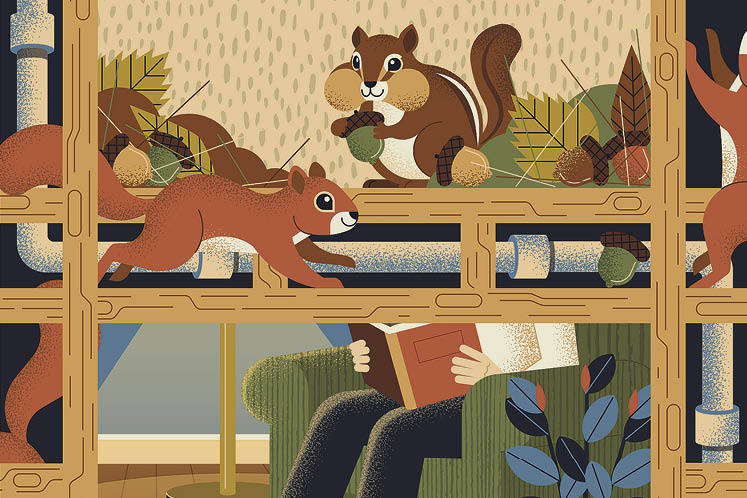
Homeowners should never try to trap or kill wildlife, says Dowd. Attempting your own trap-and-release increases the risk of bites, injuries (both to you and to the animal) and exposure to diseases. Poison is dangerous as it may kill or sicken any wildlife, pets or people.
The humane solution
Getting an animal out safely and humanely is a three-step process. First, it requires a thorough property assessment to identify vulnerable entry points. Second is the removal of the animals, which can mean using one-way doors, physically chasing them out of the entry point or, if necessary, trapping them for release. Third – and crucially – every entry is blocked and reinforced so they can’t get back in again. And they will try. If a shed has a den under it, Dowd’s crew will dig a trench around the entire perimeter and put a screen into the earth a foot deep so wildlife can’t dig under it. “We have to outsmart them,” says Dowd. “And they’re really smart.”
The ones you don’t see
Another consideration is baby season. While adults may be easy to spot, babies can be hidden out of sight. Skunks and raccoons give birth in the spring, while squirrels give birth twice a year, in spring and late summer. Using one-way doors or trapping animals isn’t humane during the birthing season, Dowd says. “It’s a cruel, inhumane death for the babies who get left behind, suckling on insulation in your attic.”


Instead, Dowd’s team will chase the adults out of the space, carefully collect the babies, and put them in a heated “baby reunion box” outside the entry point so the mother can relocate them to another den. “These animals all have multiple dens in the area, so if one is no longer accessible, they’ll go to a different one,” Dowd says. This is why it’s important to release them in their own territory.
So no long trips?
In all these cases and any trapping cases, animals are released back onto the property instead of a faraway location, because this is their home range.
“Catching an animal in Orangeville and driving it to Erin and releasing it is not humane,” says Dowd. “Their chance of survival is very low because of competition for dens and food sources.”
Furthermore, Dowd says regulations from Ontario’s Ministry of Natural Resources state that it is illegal to catch and relocate animals more than a kilometre from where they were caught. Relocating animals to other regions also raises the risk of spreading diseases, such as rabies, to new areas.
Preventive measures
Once the animals have been removed and entry points blocked, be sure to remove anything that could be attracting them, such as birdseed or garbage. “One simple thing you can do is put your trash out in the morning, instead of overnight when nocturnal creatures are roaming,” says Dowd. Keep garbage bins securely covered. Also avoid putting pet food outside, and if you feed birds, keep the feeder well away from the home. And undertake regular inspections of your property for spots that need attention.
Related Stories
How to Prepare Your Roof For Winter
If snow and ice wreak havoc on your roof every year, try these tips to weather the storms.
A Watch on the Wild Side
A trail cam – or several – is an ideal way to delight in the diverse wildlife that visits your country property.