
Echo Evasion: How Moths Outsmart Hungry Bats
In a high-stakes game of hide-and-seek conducted in the cover of night, moths employ stealth strategies and elusive manoeuvres to stay alive.
Most bats can echolocate. Simplified, this means voicing “clicks” – generally beyond the range of human hearing – that bounce off objects and return detailed information to a bat’s oversized ears. Bats use this auditory feedback to navigate in the darkness and, importantly, to identify and pursue prey.
Moths are high on the list of desired prey items for bats in Headwaters and elsewhere. Many moths are large and nutritious, flying filet mignon for discriminating bat gourmands.
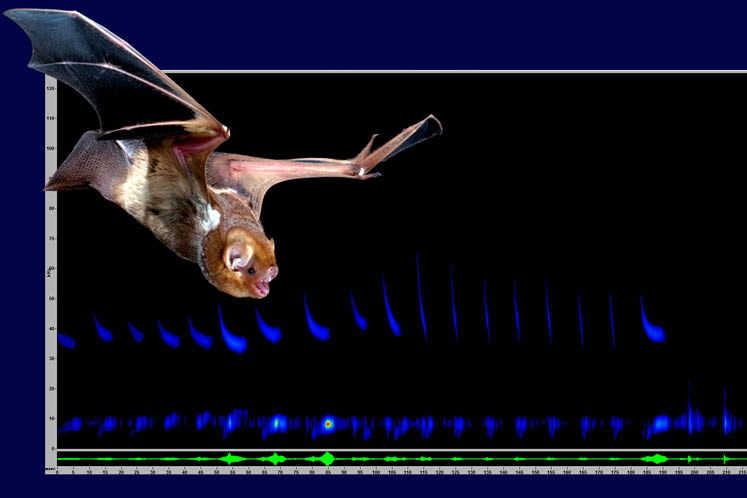
However, there is a problem. The moths, unsurprisingly, don’t want to be on the bats’ menu and they have evolved a suite of ingenious countermeasures to foil attacks.
Moths able to hear the clicks (not all moths have ears!) that bats emit can simply drop to the ground and shelter in place. But several other strategies to avoid being eaten are far more creative.
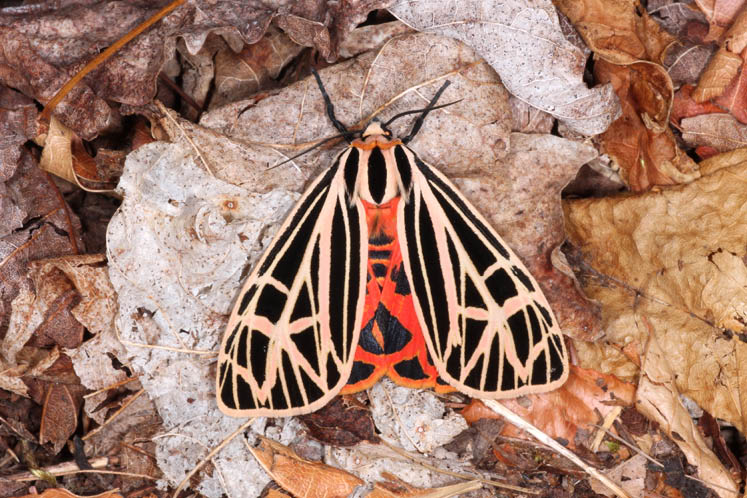
Tiger moth species – several of which fly in Headwaters – speak to bats with clicks of their own, telling the bats that they taste awful.
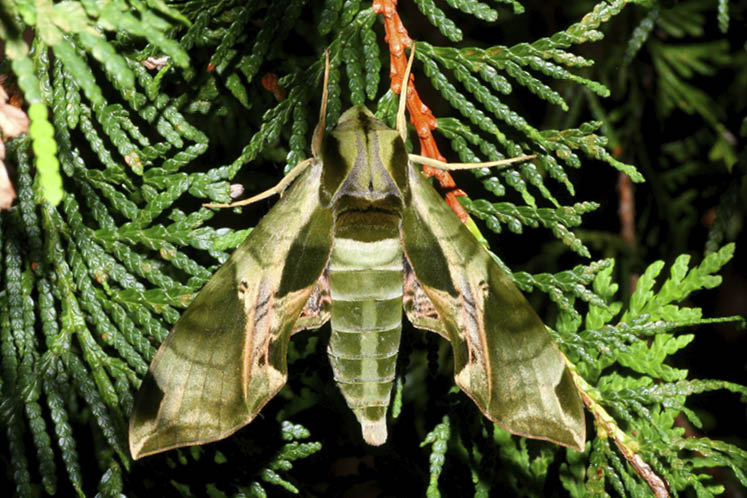
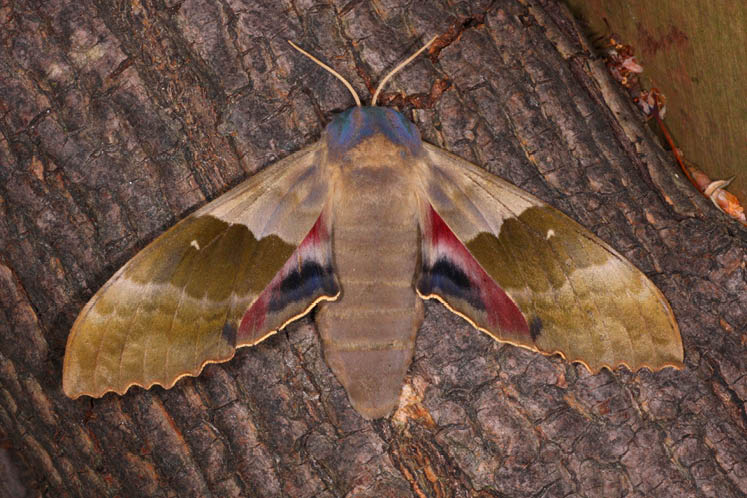
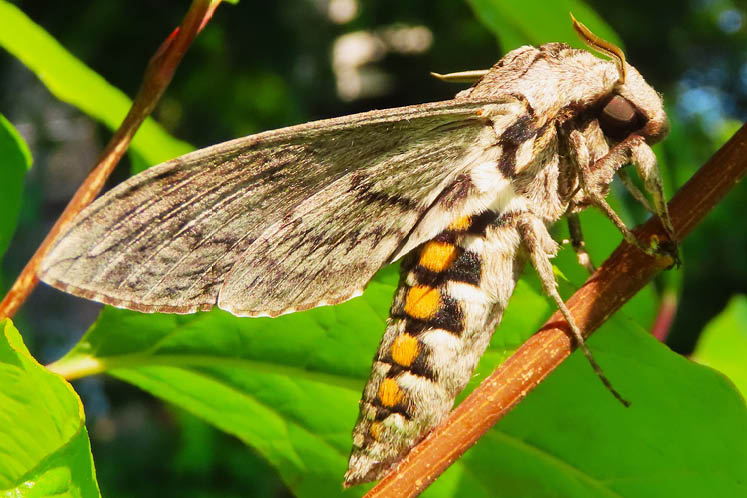
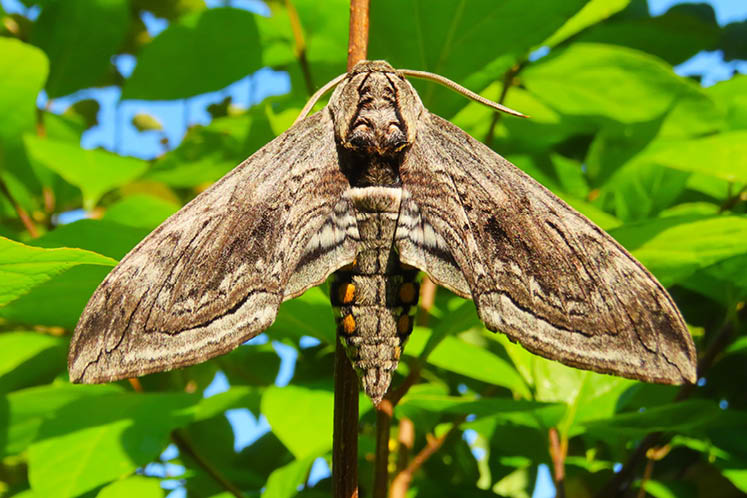
Hawk moths, aka sphinx moths, are among the most common large moths inhabiting our hills. Like tiger moths, these fast-flying nectar feeders also produce clicks. But those clicks don’t tell bats that the moths are unpalatable. Instead, they “jam” the echolocation powers of the pursuing bats.
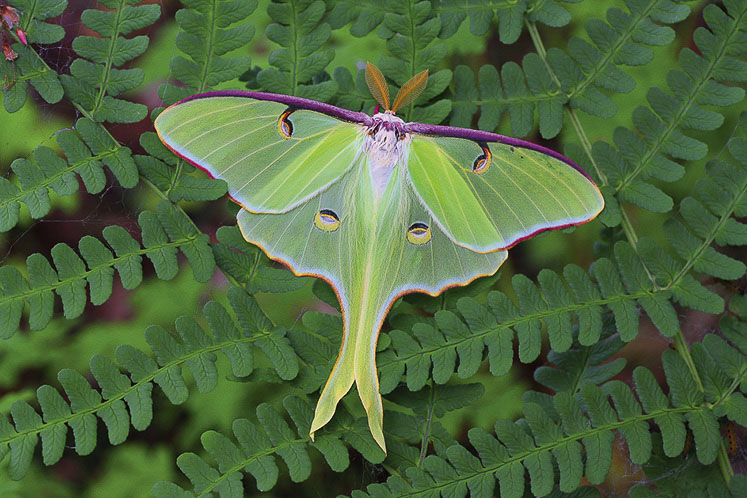
Some of our impressively large moths don’t have ears and can’t hear approaching bats. No matter. Luna moths have evolved long twisted “tails” on their lower wings that somehow appeal to hunting bats, luring them away from the moths’ heads and abdomens. The bats get mouthfuls of expendable “tails” leaving the vital parts of the luna intact.
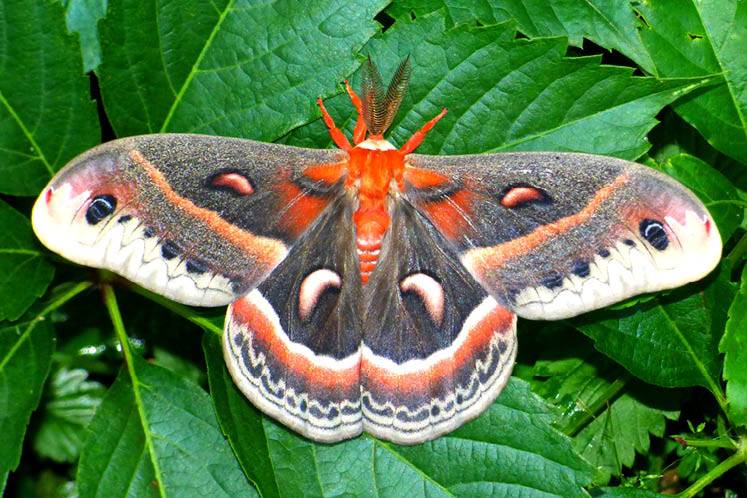
Other earless moths like cecropias and polyphemus have plush wings that absorb bat clicks and cloak their presence.
Bats aren’t about to go hungry. They don’t get fooled all the time. But the marvelous anti-bat strategies of moths work well enough to ensure that enough moths survive to reproduce. And they also remind us that after dark, fascinating life and death gambits unfold in our yards and natural spaces.
Related Stories
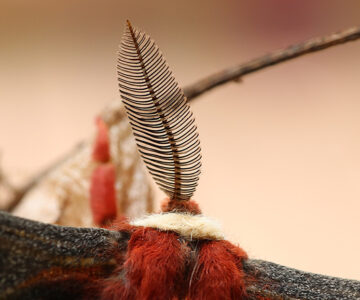
The Wonders of Moth Antennae
From helping with navigation to filtering out pheromones, these delicate but powerful sensory organs are crucial tools for moth survival.
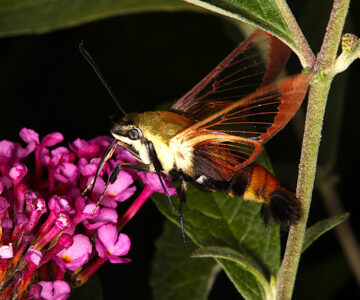
Moths of the Limberlost
These furry little moths sporting tiny faces with big eyes are delightful companions in the garden.