
Singing Insects
You likely won’t see many of these without a little dedicated searching.
Before reading on, pause a moment, open a window and listen. No matter where you are, urban or rural, you should hear insects. The lusty voices of breeding birds have faded. In late summer and early fall, nature’s soundtrack is provided by the trilling, chirping, and buzzing of insects.
Though all around us, these singers are seldom seen. Most are cryptic – green among greenery. Others hide on the ground, concealed in grass or under logs and stones.
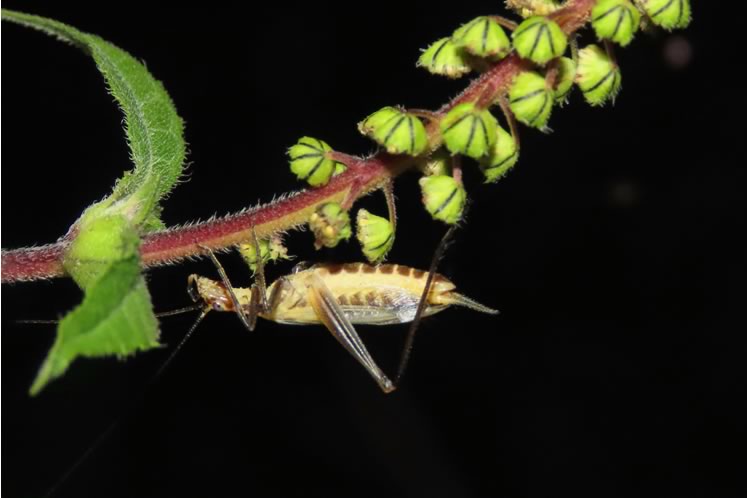
Black horned tree cricket. Photo by Don Scallen.

Cicada. Photo by Don Scallen.
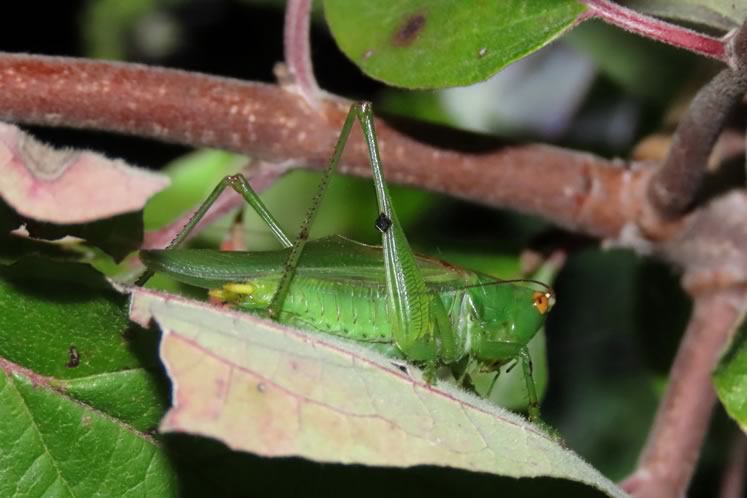
Common or gladiator meadow katydid. Photo by Don Scallen.
The familiar chirping of fall field crickets, heard day and night at this time of year, provides a soothing background rhythm as we get on with our day or snuggle into our beds. You know these singers well. They are the black crickets that scuttle away when you move a planter or bag of soil in your yard.
But field crickets are only one section of a great insect orchestra. Several species of tree crickets trill in our shrubs and trees. Cicadas accent sultry afternoons with high-pitched buzzing, and various katydids, superb leaf mimics, chime in too.


You likely won’t see many of these without a little dedicated searching. The diminutive musicians usually press mute as you approach and rely on their superb camouflage to hide in plain sight. But the search is worth it. Many of these insect singers are lovely.
My guess is that more and more naturalists will come to cherish singing insects. Birds are usually the entry level passion of naturalists who then get smitten by butterflies and dragonflies. Many naturalists are now agog over moths. Singing insects may be the next big thing. And why not? They are diverse, musical and beautiful.
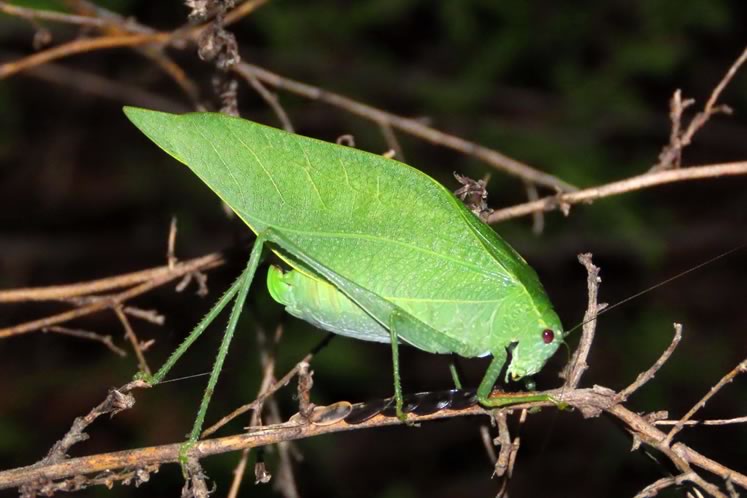
Greater anglewing. Photo by Don Scallen.
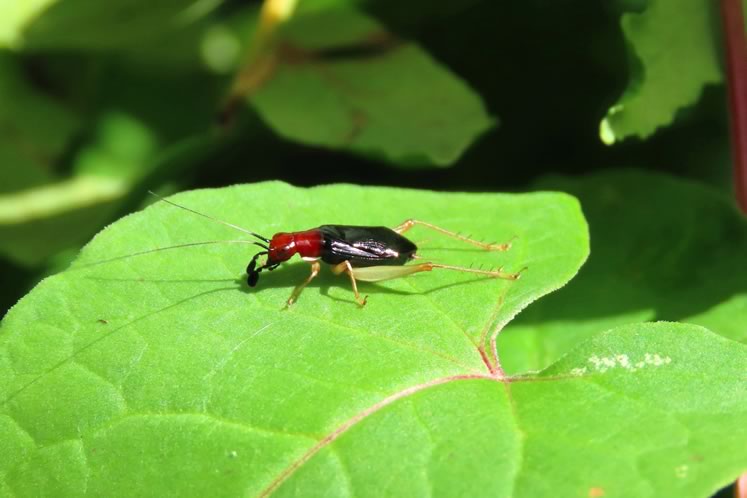
Handsome trig (cricket). Photo by Don Scallen.
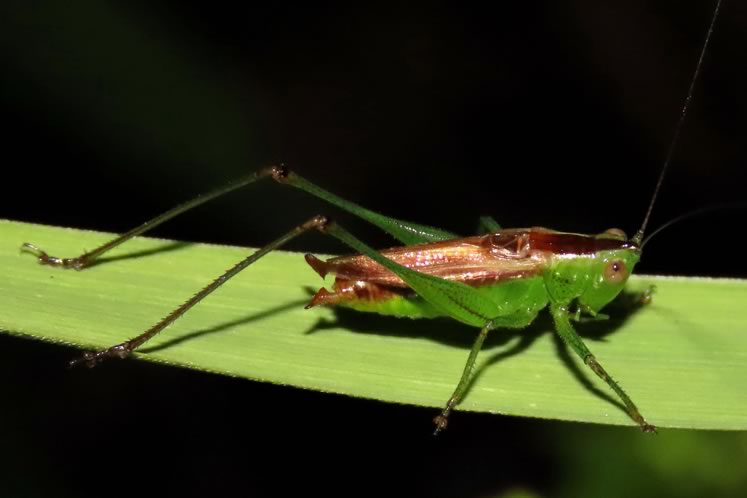
Short winged meadow katydid. Photo by Don Scallen.
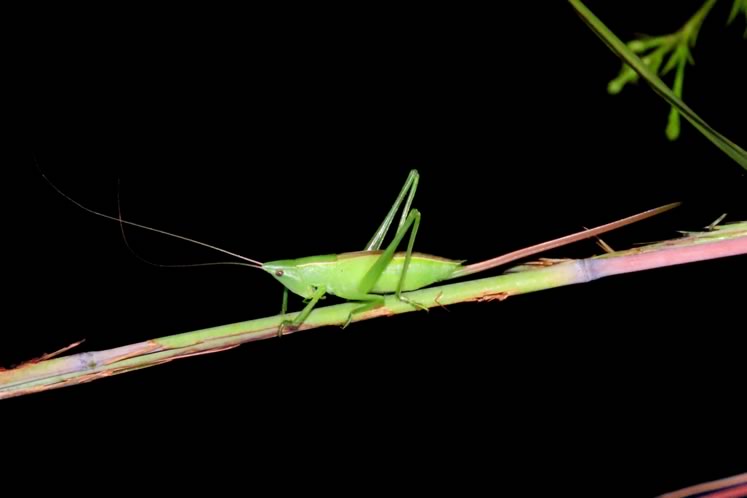
Sword bearing conehead female. The long spike is called an ovipositor. It is an egg laying organ. Photo by Don Scallen.
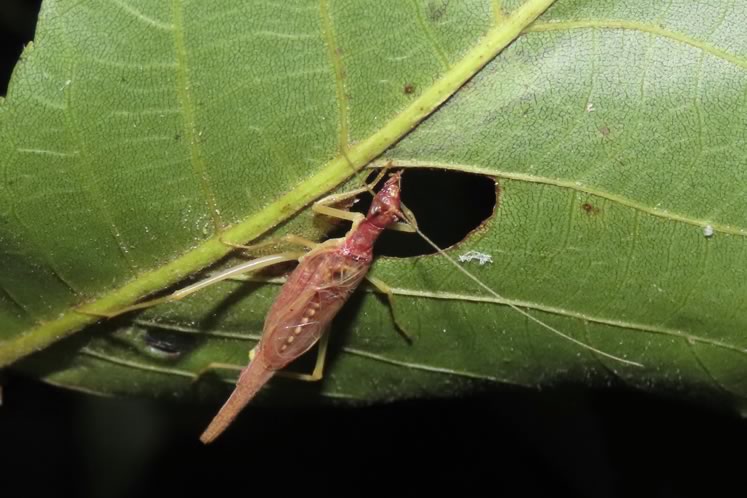
Two spotted tree cricket and its singing hole. The male cricket cuts a hole in a leaf, hides underneath and broadcasts its call through the hole. Photo by Don Scallen.
Please check the links below to learn more about singing insects and to hear their wonderful voices.
Learn more
Related Stories
Beetle Mania
Four beetles among hundreds of thousands, each with a unique story to tell.
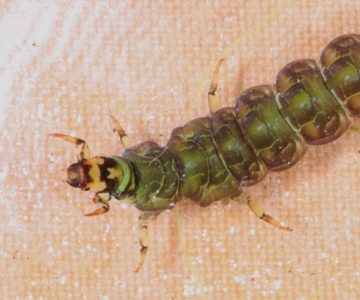
Benthic Invertebrates
The abundance of these aquatic larvae in our streams and rivers is a good thing.
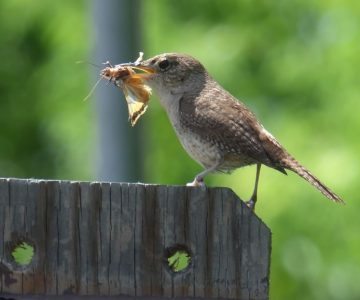
Birdsong – Brought to You by Bugs
I recently had the pleasure of watching a pair of house wren parents feed their babies in a backyard nest box.
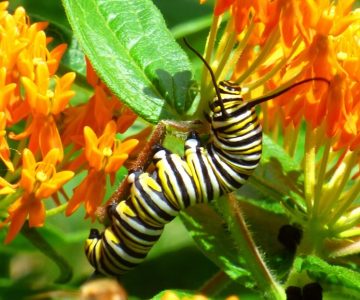
Caterpillars and Chrysalides
Caterpillar food plants will summon egg-laying female butterflies to your yard. Then, if sharp-eyed, you may find the minute eggs. More likely you’ll find the caterpillars.
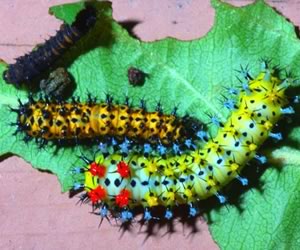
Cecropia Moths Stir Like Phantoms in the Twilight
Cecropia moths: Strange and wonderful phantoms of the twilight world.
Chrysalides
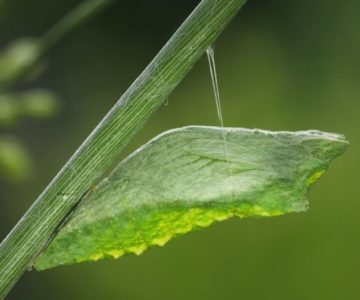
With a few exceptions, chrysalides are designed to be overlooked, to allow the wondrous alchemy of metamorphosis to proceed undisturbed.
CSI: Natureworld The Case of Burying Beetle Bob
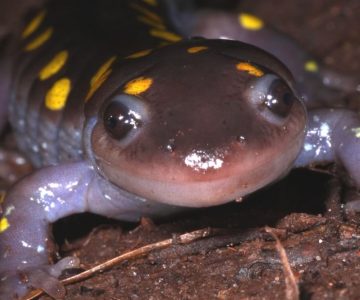
A CSI probe into Bob’s disappearance has revealed damning evidence linking Sam to the incident!
Katydids
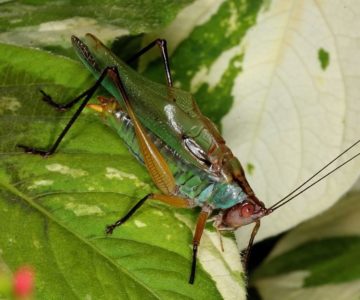
Katydids are seldom seen, because they camouflage so well with greenery.
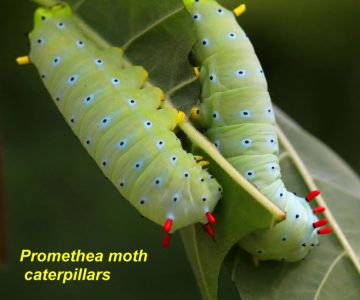
Promethea Moths
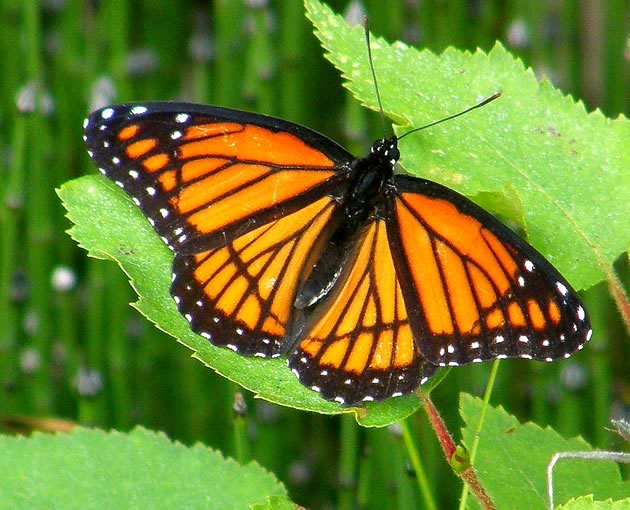
While most moths release their pheromones after dusk, promethea moth females are an exception.
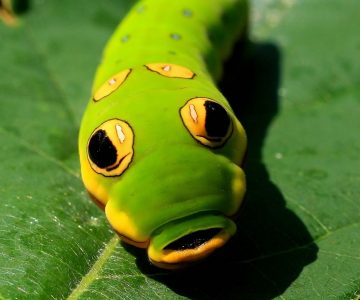
Spicebush Swallowtail Caterpillar
I’ve written about our remarkable caterpillars before, but so many interesting ones inhabit our hills that another look is warranted.
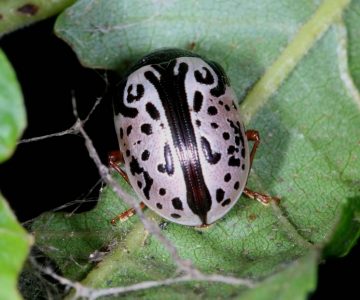
Night Creatures
Most of the nocturnal critters my friends and I find are insects, but spiders, millipedes and amphibians also appear in our flashlight beams.
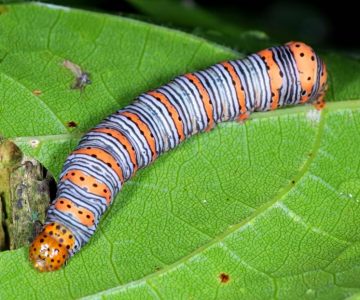
Night Hikes
Night Hikes – A purposeful walk along a path, playing a flashlight over leaves, branches and trunks will reveal wonders.
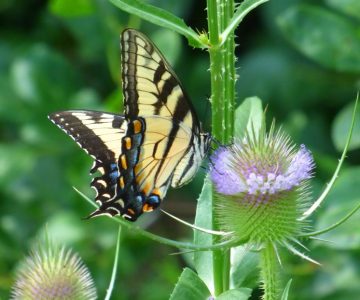
Flight of the Butterfly
To the casual observer the flight of a butterfly appears haphazard and inefficient, something like the bobbing of a cork on turbulent waters.






What a talent. I, like yourself and countless others, are fascinated by our insect and arachnid friends. I truly enjoy, as you say, a purposeful walk with camera in hand. People, for a large part, are oblivious of the small wonders that are not necessarily camouflaged, but sitting in plain sight. Keep up the great work.
Scott Morrow from Toronto, Ontario on Oct 24, 2025 at 8:46 am |