Wasps
I’ve walked through meadows teeming with wasps, innumerable times, without being stung.
My mother was stung by a wasp as she pinned shirts and socks on a clothesline in the 1960s. Her response was predictable. No swearing – Mom never swore – but a shriek and a hasty retreat indoors.
Witnessing Mom’s pain as a small boy, left a lasting impression on me. For years I was gripped by a great fear of wasps. I remember a pair of sandals with a black and yellow loop by the heel. Yellowjacket colours. My heart would jump, momentarily, when I glanced down at my feet.
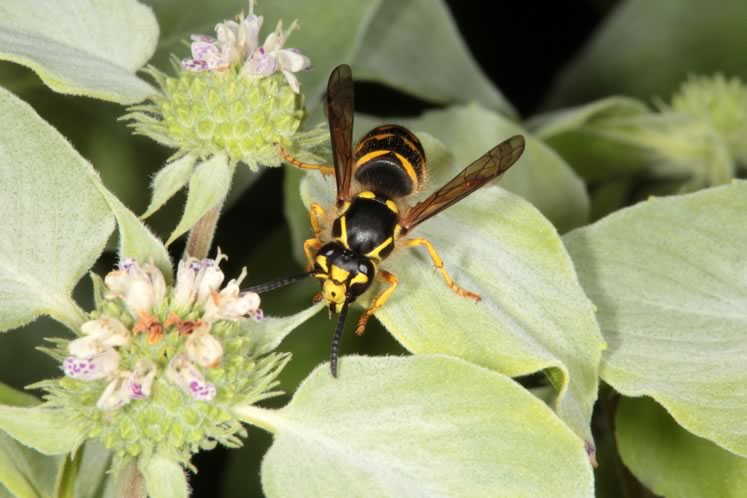
Yellow jacket species. Photo by Don Scallen.
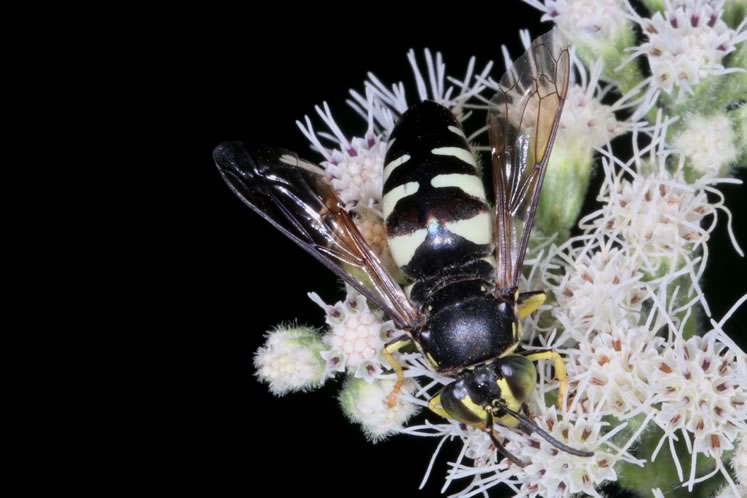
Sand wasp. Photo by Don Scallen.
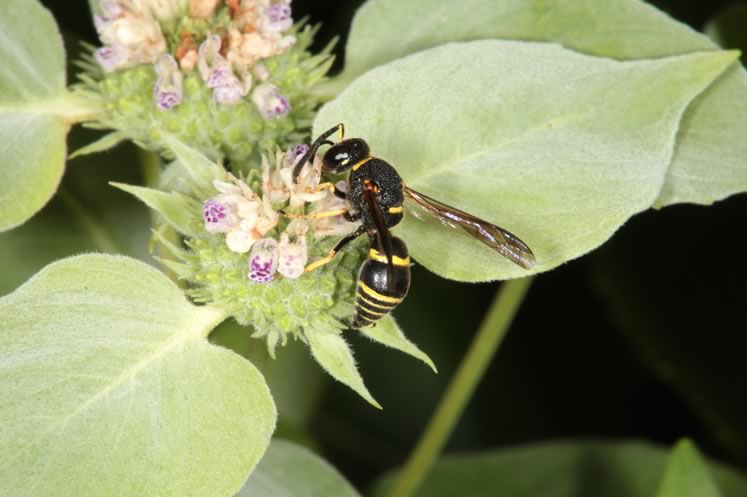
Mason wasp species. Photo by Don Scallen.
As an adult this fear gradually eased. I’ve been stung only a few times in decades of exploring the outdoors. Each of those stings happened when I inadvertently ventured too close to nests. Wasps defending their homes.
I’ve walked through meadows teeming with wasps, innumerable times, without being stung. Wasps aren’t aggressive, except when defending their home turf.
I’ve come to gradually admire and appreciate wasps as I do other wildlife. Many are beautiful and all of them play important roles in ecosystems.


Unlike honeybees and bumblebees, wasps are predators, consuming a wide variety of arthropods: spiders, caterpillars, crickets, grasshoppers, and many others. Wasps also visit flowers to sip nectar as an energy boost.
But beyond their contributions to ecologies, wasps dazzle with their diversity and lifestyles. Wasps were the first papermakers, a talent that may have inspired papermaking in our species. Various species of wasps use their mandibles to rasp wood and bark, masticate it into pulp and then build their paper nests.
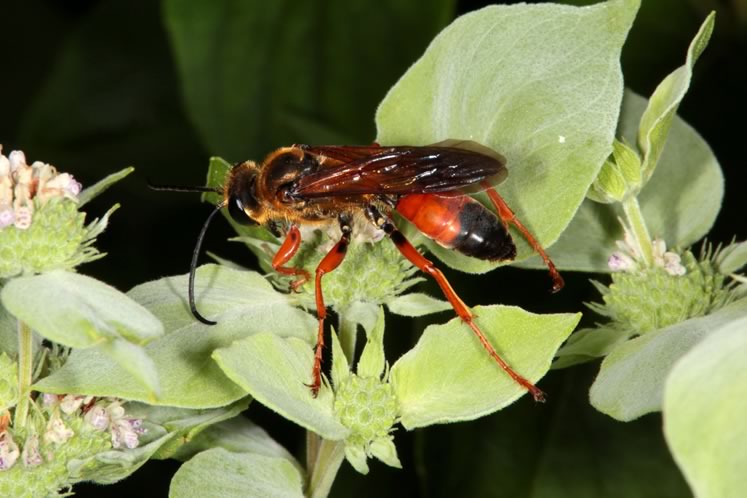
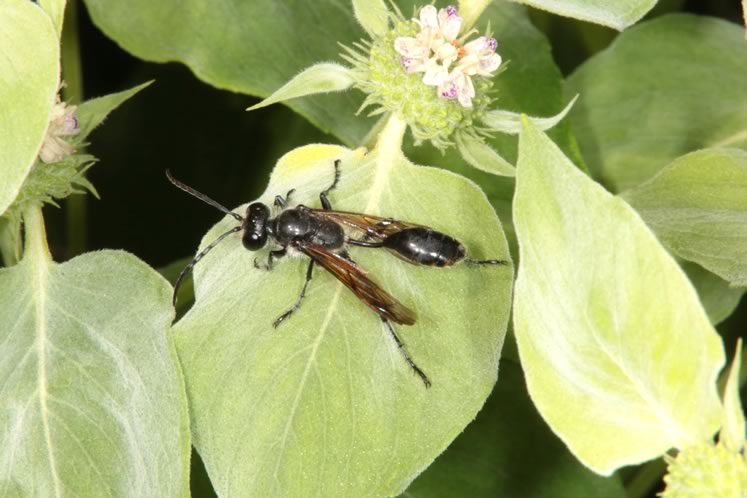
Great golden digger wasp. Photo by Don Scallen.
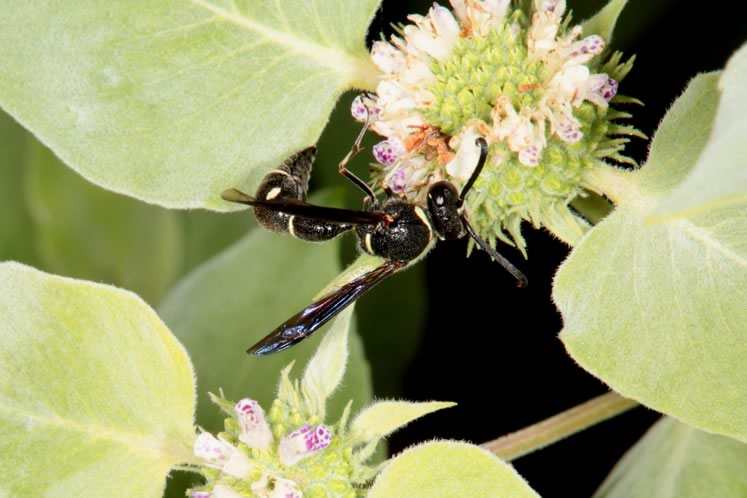
Fraternal potter wasp. Photo by Don Scallen.
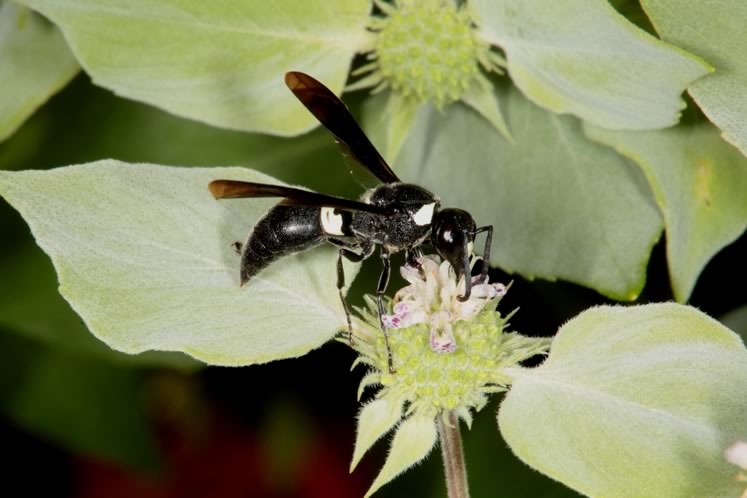
Four-toothed mason wasp. Photo by Don Scallen.
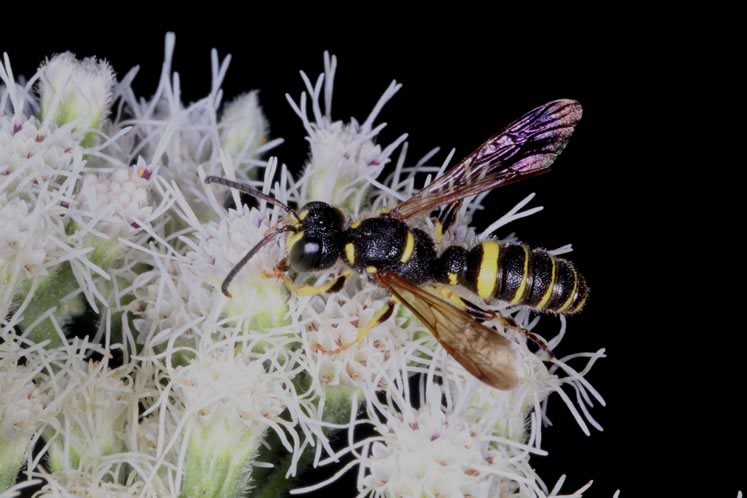
Bee wolf. Photo by Don Scallen.
Other wasps use different materials to make their nests. The appropriately named potter wasps shape delicate little globes out of mud to harbour their brood. Still others dig holes in sand to serve as their nests.
I haven’t forgotten Mom’s pain and, truth be told, I’m still wary of yellow jackets, the type of wasp that stung her, and the bane of late summer picnics. But in my garden, I welcome wasps of all stripes. Appreciation has trumped fear.
Related Stories
A Bee or not a Bee? That is the question.
Our understanding of the natural world is often rather muddled. Calling a yellow-jacket a bee is like calling a fox a woodchuck.
Beetle Mania
Four beetles among hundreds of thousands, each with a unique story to tell.
Flight of the Butterfly
To the casual observer the flight of a butterfly appears haphazard and inefficient, something like the bobbing of a cork on turbulent waters.
Goldenrod and Asters
Asters and goldenrods are tremendously important wildlife plants.