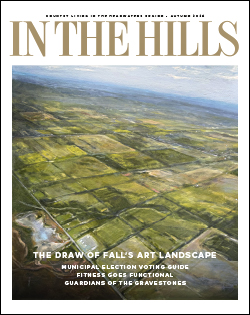
Are You Ready to Vote?
Voting in this October’s election may look a little different in some municipalities depending on where you live. Here’s our guide to make sure your voice is heard.
On Monday, October 26, 2026, municipal elections will take place in Ontario as residents across the province vote for political leadership at the local level.
There are some important changes this year as some municipalities embrace online, phone or mail-in voting, or a combination of options. So, it’s never too early to get ready by ensuring you’re on the voters’ list, learning about the candidates in your area and knowing how you’ll vote.
Depending where you live, your ballot may include candidates for mayor, deputy mayor, councillor, regional or county councillor and school board trustee positions.
The Association of Municipalities of Ontario details in their Turn Up the Turnout report that in 2022, Ontario experienced a record-low voter turnout in municipal elections. Less than a third of eligible voters participated.
Local organizations, such as the non-profit Headwaters Communities in Action, have been actively working to raise awareness about the poor turnout and to increase people’s interest in getting out to vote.
For example, Volunteer Dufferin, an HCIA initiative, ran an all-ages sticker design contest.
“A sticker contest is a fun way that people can have a real impact on civic engagement by doing something creative and fun. A simple ‘I Vote’ sticker has proven to increase voter turnout,” says Jennifer Payne, executive director of HCIA. What’s more, the campaign is aimed at strengthening the ties that bind neighbours together.
“Your municipal council members are locals; they are your neighbours,” says Payne. “They live here and are beholden to you and other residents, not a party. You can talk to them, and they can actually do something about an issue. Voting lets you pick which of your neighbours is going to be shaping what happens in your community.”
Here’s how to get ready.
Voting and voters’ list
To be eligible to register to vote in the municipal election, you must be 18 years of age or older, a Canadian citizen, a resident of the municipality, or a non-resident who owns or rents property in the municipality, or the spouse of an owner or tenant of property in the municipality.
It’s best to ensure you’re on the eligible voters’ list well in advance. You can confirm, add or update your personal information for provincial, municipal and school board elections at registertovoteon.ca.
Have questions or need assistance with voter registration? Help is available. Printable forms are also available for those who need them. Email Elections Ontario at [email protected] or call 1-888-668-8683 for support. Visit the Register to Vote website at registertovoteon.ca or call 1-866-242-3025.
The voters’ list was prepared on September 1, 2026. If you want to add, remove or change your listed information, you must contact your municipal clerk.
If you have safety concerns and having your name and address available on the voters’ list would endanger your life, health or security, you can request that the chief electoral officer redact your information.
The Ontario 2026 voters’ guide provides extensive information and explanations for those wanting to take a deep dive into the system.
Elections Ontario maintains three types of registers for provincial and/or municipal, district social services administration board and school board elections in Ontario: the Permanent Register of Electors for Ontario, the Register of Absentee Voters, and the Ontario Register of Future Voters for eligible individuals who are 16 or 17 years of age. (An exciting way to get municipal-minded youth engaged now, so they’re ready for the next election.)
And if you’re changing your school board support for election purposes, you must do this through the Municipal Property Assessment Corporation on their website at school-support.mpac.ca.
Acceptable ID you can use to update, add or remove voter information from the voters’ list
When checking, updating, adding or removing your information from the voters’ list, you must upload one piece of ID showing both your name and home address, such as a driver’s licence, utility bill, bank statement, a hospital record, a Band Council ID or another government-issued document.
Absentee voters and students – what you need to know
If you will be temporarily living outside Ontario during the election, you may still be eligible to vote by mail through the Register of Absentee Voters. Visit Elections Ontario for eligibility requirements and deadlines. Eligibility can include temporarily residing outside of Ontario, or other classifications such as being an active-duty member of the armed forces or attending an educational institution. Your last home address in Ontario determines your electoral district.
There is a special rule for students living away from home while attending school. If you are a student and consider your “home” to be the place where you live when you are not attending school (that is, you plan on returning there), then you may be eligible to vote in both your “home” municipality and in the municipality where you live while attending school – provided you meet the eligibility requirements in each.
Who is running in your municipality? And where do they stand?
Visit the website of your municipality for information on who is running for various positions. Candidate information will be shared, but platforms and priorities will not be listed on municipal websites. Candidates typically set up websites with their campaign materials, including their priorities, viewpoints, values, professional qualifications and what they hope to accomplish over their term.
For an explanation of the two-tier structure of municipal government in Headwaters, be sure to read Who’s In Charge Here? that looks at how local government works – and who’s responsible for what.
You can also visit In The Hills’ continuously updated candidate tracker: Meet the Candidates: Municipal Election 2026.
To learn about panels and candidate meetings open to the public, also visit 2026 Municipal Election Events.
Now, to vote
When planning to vote, you will need to check with your local municipality to ensure you know your options, which may have changed since you last voted – in an effort to ensure voting is more accessible or to suit current local trends.
Options for online and phone-in voting are on the rise, with many municipalities moving toward remote voting as their top option. Meanwhile, other municipalities have gone “old-school” with paper-only ballots. Some municipalities are providing all methods.
Orangeville, for instance, is introducing more ways to vote in October. Orangeville Clerk Raylene Martell says the decision was made by council back in 2024, when planning for the election began: “We are conducting a hybrid election that also includes a paper ballot option. Orangeville has historically only offered paper ballots, and this will be our first year introducing an electronic voting option.” Orangeville reached out to the community via a survey running in August, so the election team could understand how eligible electors planned to cast their ballot.
Caledon has chosen a different route and will use paper-only ballots on October 26. In the upcoming election, Caledon voters will vote by paper ballot to elect the mayor, ward and regional councillors, and school board trustees to serve during the 2026 to 2030 term, says Kevin Klingenberg, Caledon’s municipal clerk.
“The Town of Caledon council was presented with several options and selected paper ballots as the only method of voting for the 2026 regular municipal and school board elections for the 2026 to 2030 council term of office. As well, there are several measures taken to improve the accessibility of the election, including our home voting program during the advance period and curbside voting at polling locations,” Klingenberg said in an email interview.
Shelburne is one of the municipalities delivering phone- and internet-only voting, along with Mono, Grand Valley and others. According to the Shelburne website, this provides comfort and guaranteed access 24/7. “Voters in the Town of Shelburne will once again be able to cast their vote from the comfort of their home, or anywhere they can access the internet or telephone 24 hours a day,” it reads. “The election centre will be available during the voting period to provide assistance.”
These municipalities are not alone: In 2022, of the 417 municipalities eligible to hold elections, 151 (just over one-third) opted not to offer in-person voting. Voting from your couch has never been easier.
Some municipalities will also include in the mix plans for additional advance voting opportunities.
Be sure you know your options, and watch your municipality for details as October 26 approaches.
A note on a situation in which you might not vote at all: voting will only take place if more than one person is running for a position for at least one of the offices in your municipality. If there’s no contest for any position in your riding, there is no voting.
Your municipality
Amaranth: internet or phone
Caledon: in-person
Creemore: internet or phone
East Garafraxa: internet or phone
Erin: mail-in ballot
Grand Valley: internet or phone
Melancthon: internet or phone
Mono: internet or phone
Mulmur: internet or phone
Orangeville: internet, phone or in-person
Shelburne: internet or phone
In-person voting
Voting can feel a little nerve-racking, so here’s what to expect if your municipality offers in-person voting. If your name is on the voters’ list, you will be required to show one piece of identification that has your name and address. Your photo and signature are not required. (We shared a number of acceptable documents above that qualify as voter identification. Be sure that the document has your address printed on it – an example of a document that is not acceptable is a Canadian passport, because you write your own address inside!)
Now you are ready to vote – and maybe it’s your first time! Here’s how to mark your ballot.
1. Upon receiving your ballot from a deputy returning officer, you will go to a private area, typically a desk with a privacy screen. Make a cross or other mark on the ballot, within the space designated for the marking of the ballot, beside the name of your choice of candidate for each office listed on the ballot.
2. Fold the ballot in a manner that conceals the information.
3. Return the folded ballot to the deputy returning officer.
As the rules state: “On receiving the ballot from the elector, the deputy returning officer shall immediately deposit it in the ballot box, in the full view of the elector.” Recyclable cardboard ballot boxes were introduced in 1988 in a provincial general election for the first time. The switch from metal to cardboard means the ballot boxes are easier to store and ship and are generally reused election after election.
Mail-in voting
Voting by mail offers an alternative to traditional polling stations. Where this option is available (see list on facing page), you will receive a voting kit in your mailbox. Typically, this kit will include a sheet of instructions, a declaration form (in which you must declare you are eligible to vote), a ballot, a “secrecy envelope” and a return envelope. Read through the instructions, ensure you sign the eligibility box and include this in your envelope. Vote using the ballot for your preferred candidate. Now, seal your filled-out ballot in your secrecy envelope, as indicated, and place everything inside the postage-paid return envelope.
Typically, you will return your vote by mail, though some municipalities will accept your voting ballot in person during regular business hours.
Online and phone voting
For online or phone voting, you will receive a letter or kit in the mail with an identifying PIN or code. Don’t share your PIN with anyone. Online and phone voting options can be convenient and are probably the quickest way to vote. To vote online or by phone, go to the website or call the number provided in the kit during the voting time period stated – in many cases from 10 a.m. on October 16 to 8 p.m. on October 26. Follow all prompts, and remember, you will need to enter your unique PIN in order to vote.
The reveal
Election candidates will often gather with their supporters and families while they await the results. Municipalities typically report unofficial voting results on election night; however, the election results will not be official until the clerk makes the declaration. This usually happens a few days after voting day, after the clerk has had time to check the results and make sure that all votes have been counted properly.
The new term begins November 15, and new councils will be sworn in by the clerk no later than 31 days after that. The newly elected and those returning will be welcomed with some pomp and circumstance in what will surely be an interesting four years before the next election day in 2030.
MORE INFO
Did You Know?
Who pays for the election? Your municipality. The Ontario Municipal Elections Act, 1996, states: “The costs incurred by the clerk of a local municipality in conducting an election shall be paid by the local municipality.”
Protect Your Ballot
While we are here, an important reminder that if you’re voting in person: you are not permitted to show your marked ballot to anyone. No voting selfies with your ballot, no pictures or videos of your ballot. The only time you may show your ballot is if someone is officially assisting you. More seriously, election laws protect the integrity of the voting process. It is illegal to vote if you are not eligible, vote more than once, interfere with ballots, or offer or accept bribes in exchange for votes.
The 2022 Vote
In the last municipal election in Ontario, just 32.9% of eligible voters cast their ballots, according to the Association of Municipalities of Ontario. Shelburne had the highest overall voter turnout at 36.24%. Grand Valley had the lowest, at just 22.75%. In East Garafraxa, 6.2% of voters turned out to vote for school trustees, but this is not part of the AMO figures.
DUFFERIN COUNTY
- AMARANTH: 32.86%
- EAST GARAFRAXA: N/A†*
- GRAND VALLEY: 22.75%*
- MELANCTHON: 32.5%
- MONO: 25.11%*
- MULMUR: 36.1%*
- ORANGEVILLE: 26.93%
- SHELBURNE: 36.24%*
PEEL REGION
TOWN OF CALEDON: 31.73%
WELLINGTON COUNTY
TOWN OF ERIN: 36.11%
†ALL SEATS ACCLAIMED
*MAYOR ACCLAIMED
Related Stories

Meet the Candidates: Municipal Election 2026
Find out who’s running for local government in Headwaters.

2026 Municipal Election Events
Want to ask a question or find out more about the candidates running for election in your town or township? Here are the panel and Q&A events currently planned for the Headwaters communities.
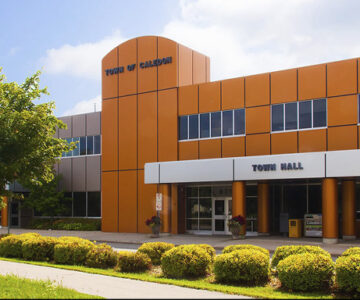
Municipal Election 2026: Who’s Running in the Town of Caledon
Here are the candidates running for mayor, regional councillor, local councillor and school board trustee in Caledon.

Municipal Election 2026: Who’s Running in the Town of Orangeville
Here are the candidates running for mayor, deputy mayor, councillor and school board trustee in Orangeville.